Fragrance Notes Are Layers Of Scent That Are Layered To Form The Final Fragrance. Fragrance Notes Are Categorised Into Three Main Elements Based On How Long They Take To Evaporate, And How Long They Typically Last Following Application: Top Notes, Heart Notes And Base Notes.
Genipapo
The Genipapo note offers a bright, tropical, and complex aroma, often characterized as a blend of juicy green fruit and subtle floral-sweet nuances. It provides a unique, sophisticated tropical freshness with light, slightly green-citrus facets, sometimes developing into a soft, sweet, almost gourmand, or gardenia-like scent in the drydown.

Origin & Extraction Of Genipapo
Genipapo, derived from the fruit of the *Genipa americana* tree native to tropical regions of Central and South America, has a significant historical presence in indigenous cultures, where it was traditionally used for body painting and medicine. Its unique aroma, a complex mix of green, fruity, and subtle floral notes, has made it a relatively recent addition to the global perfumer's palette, distinguishing it from traditional European citrus and fruit notes.
In modern perfumery, Genipapo is prized for lending a sophisticated, exotic, and unique tropical freshness that avoids typical coconut or sweet banana notes. Because the natural essential oil can be challenging to source and stabilize, the note is often reproduced as a high-quality synthetic accord. It is primarily featured in contemporary niche and high-end designer fragrances seeking to evoke lush, vibrant tropical landscapes and complex green fruit accords.
Extraction Methods of Genipapo
The extraction of the characteristic blue pigment from the genipapo fruit (Genipa americana) is primarily achieved by extracting the juice or pulp from the unripe fruit. Historically, indigenous communities in South America, such as the Tupinambás and Pataxós, used the fruit's juices for temporary body art and ritual tattoos. The traditional method involved picking the unripe fruit and masticating the inner part, or manually scraping and pressing the pulp to release the "genipina" (genipin), which reacts with proteins in the skin to create a long-lasting, deep indigo dye. For culinary use, Professor Valdely Kinupp popularized a process in 2014 that involved extracting edible pigments from the berries, which chefs later refined into a blue food base.
Modern and industrial methods have evolved to enhance purity, stability, and speed. Recent research utilizes solvent-free techniques, such as adding genipapo pulp directly to animal or vegetable milk, where the milk proteins react with the genipin to synthesize vivid blue compounds in approximately 20 minutes. Advanced commercial processes include mechanical pressing and filtration of frozen-then-thawed fruit, followed by the use of liquid nitrogen to remove oxygen and stabilize the juice. Other emerging technologies for pharmaceutical and cosmetic applications employ ultrasound-assisted extraction (UAE), supercritical CO2 extraction, and membrane filtration (ultrafiltration) to isolate bioactive polyphenols and genipin while preserving the fruit's functional properties without the use of toxic solvents.
The Genipapo note, with its complex tropical freshness—a blend of green fruit and subtle floral-sweet nuances—is primarily showcased in contemporary fragrances seeking an exotic, sophisticated twist on traditional fruit accords. Because the ingredient itself is relatively niche and modern to the global market, it is often featured by brands focusing on specific natural regions or unique scent profiles, offering a fresh departure from common tropical notes like coconut or sweet banana.
- The most prominent example of this note in mainstream perfumery is **Jenipapo** by L'Occitane Au Brésil (launched in 2013).
In **Jenipapo**, the note serves as the central theme, capturing the vibrant essence of the *Genipa americana* fruit native to Central and South America. The fragrance, often categorized as a Citrus Gourmand, leverages Genipapo's distinctive aroma to evoke lush, sun-drenched landscapes and unique Brazilian flora. The use of this note highlights its potential to provide a luminous, uplifting freshness that is both cheerful and complex, moving beyond a simple top-note burst to anchor the composition.
While **Jenipapo** remains the most recognizable fragrance built around this note, its sophisticated profile makes the Genipapo accord an increasingly valued element in niche and high-end perfumery. Perfumers often utilize the note to introduce a subtle gardenia-like sweetness in the drydown, bridging the initial green-citrus zest with a softer, almost gourmand, heart, which adds depth and uniqueness to tropical and green-fruity scent families.
Sustainability Of Genipapo
Sustainability of Genipapo
- Promoting the restoration of Brazilian riparian forests and the recovery of degraded areas due to its ecological characteristics as a selective hygrophyte and phytoremediator
- Supporting local economies and smallholder farmers by providing a sustainable source of income through the production and commercialization of its fruit, wood, and artisanal products like liquors and sweets
- Fostering biodiversity conservation by reducing pressure on wild populations through the development of nursery propagation techniques and sustainable harvesting programs
- Advancing research into high-quality seedling production using alternative organic substrates and in vitro germination to ensure the long-term survival and genetic diversity of the species
- Preserving cultural heritage and traditional knowledge by safeguarding the tree, which is vital to Indigenous and local communities for spiritual ceremonies, natural body painting, and regional festivities
Trivia
The genipapo fruit is the source of a natural blue-black dye that has been used for centuries by Amazonian tribes for temporary tattoos and was once so potent it was used as a "magical" trick to turn unsuspecting people's skin black with just a sprinkle of clear juice.
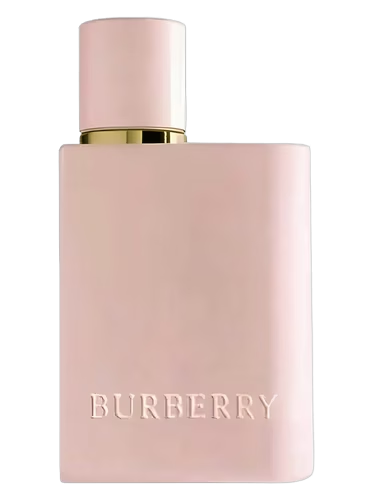
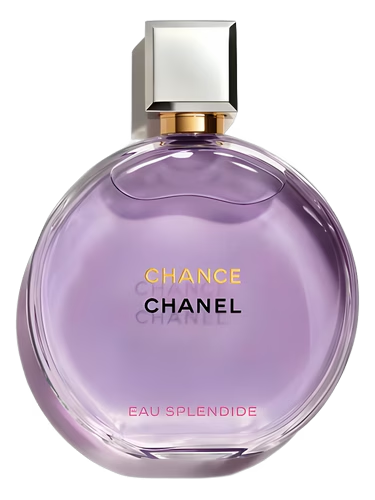
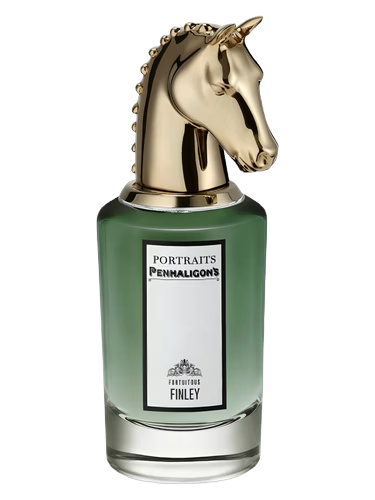
Most Popular Scents Using Genipapo
What is Genipapo?
Genipapo is a tropical fruit from the Genipa americana tree native to Central and South America, used in perfumery for its unique, exotic aroma and historically by indigenous tribes as a natural dye.What does Genipapo smell like?
It features a bright, tropical scent profile that blends juicy green fruit with subtle floral-sweet nuances, often described as a mix of fig and blackcurrant with a soft, gardenia-like drydown.How is the Genipapo note used in perfumes?
As a heart note, it provides a sophisticated tropical freshness that avoids typical coconut or banana scents, making it a valued element in niche and high-end designer fragrances.How is Genipapo essence extracted?
In perfumery, Genipapo is primarily a fantasy accord or created via solvent extraction and maceration, as there is no standard commercial essential oil; culinary and dye uses involve pressing the pulp or juice.What are some top perfumes featuring Genipapo?
The most prominent fragrance is Jenipapo by L'Occitane Au Brésil, where it serves as the central theme to evoke the lush flora of the Brazilian landscape.When is Genipapo in season?
The tree has a versatile cycle with flowering often occurring from July to December and fruiting between October and June, though harvest times vary significantly across different tropical regions.