Fragrance Notes Are Layers Of Scent That Are Layered To Form The Final Fragrance. Fragrance Notes Are Categorised Into Three Main Elements Based On How Long They Take To Evaporate, And How Long They Typically Last Following Application: Top Notes, Heart Notes And Base Notes.
Fuji Apple
Fuji Apple presents a crisp, brightly sweet, and intensely juicy aroma, characteristic of the ripe fruit. It offers a well-balanced profile with succulent red apple notes combined with a subtle citrus zest, lending a refreshing tartness and sparkle, often used for a cheerful, uplifting, and aqueous top note in fragrances.

Origin & Extraction Of Fuji Apple
The Fuji apple cultivar itself originated in Japan in the late 1930s, developed at the Tōhoku Research Station. Given its relatively modern agricultural history, its specific use as a distinct, named note in fine fragrance is contemporary, lacking the centuries-old tradition associated with classic European citrus notes like Bergamot or Lemon.
In modern perfumery, the Fuji Apple note has gained prominence for its intensely juicy, crisp, and brightly sweet profile. It is often employed in contemporary compositions to provide a cheerful, uplifting, and aqueous top note. Its popularity aligns with the demand for photorealistic fruit notes that lend sparkle and a refreshing, modern tartness to fragrances.
Extraction Methods of Fuji Apple
Historically, the aromatic and bioactive compounds of Fuji apples were primarily obtained through simple organic solvent extraction. This traditional approach involved selecting extractants such as water, ethanol, ethyl acetate, or acetone to isolate polyphenols based on their solubility. For culinary and early medicinal uses, methods often centered on juice expression followed by concentration or fermentation, as well as maceration in honey or sugar syrups to preserve the fruit's delicate profile.
Modern extraction techniques for Fuji apples have evolved to be more efficient and sustainable, particularly in repurposing apple pomace—the byproduct of juice production. Current methods include ultrasound-assisted extraction (UAE), which utilizes high-frequency sound waves to rupture cell walls and increase yield, and pressurized liquid extraction (PLE), which uses solvents at high temperatures and pressures. Other advanced techniques include microwave-assisted extraction (MAE) and supercritical fluid extraction (SFE), which allow for the precise isolation of specific antioxidants like phlorizin and chlorogenic acid without damaging their biological activity.
The Fuji Apple note, prized for its crisp, sweet, and intensely juicy aroma, is a modern addition to the perfumer's palette, often utilized to provide an uplifting, cheerful, and aqueous top note. While not having the centuries-old tradition of notes like Bergamot, it is increasingly featured in contemporary fragrance houses that seek photorealistic fruit notes to lend modern sparkle and tartness. This note is designed to create an immediate impression of vibrant, refreshing sweetness.
- Among the fragrances incorporating this delightful note is **Kimono Urara** by Decorté (2020), a feminine scent that showcases the apple's brightness.
- Other recent releases include **The First Bite** by Terra T. (2025) and **Eleganza** by Gerain Chan Parfums (2024), both aimed at a unisex audience, demonstrating the note's versatility.
- The Fuji Apple profile is also highlighted in gourmand-leaning compositions, such as **Candy Apple** by Alchemist Fragrances (2025), where its sweetness is likely amplified.
The popularity of Fuji Apple reflects a contemporary trend favoring light, modern scents with clear, recognizable fruit profiles. It often appears in compositions that aim to be energetic and cheerful, moving away from heavier, traditional floral or oriental openings. Its ability to blend subtle citrus zest with succulent apple sweetness makes it a sophisticated choice for defining the initial burst of a fragrance.
Furthermore, the note is found in diverse fragrance categories, from dedicated apple themes like **Fuji** by Mariná Rituals (2023) to broader collections, such as **Japanese Cherry Blossom** by Calgon (2012). In these uses, the Fuji Apple note ensures a lasting freshness and a sweet, slightly tart edge that contributes to the overall bright and clean character of the perfumes.
Sustainability Of Fuji Apple
Sustainability of Fuji Apple
- Promoting a circular economy by repurposing lower-grade or early-harvest fruit for secondary products such as cider, vinegar, and sauces to reduce food waste
- Adoption of efficient cooperative models and producer organizations to ensure advanced traceability and widespread implementation of quality and sustainability certifications
- Implementation of over-tree evaporative cooling and reflective materials to manage fruit temperature and enhance quality without excessive chemical intervention
- Utilizing integrated pest management and disease-resistant rootstocks to reduce reliance on synthetic fungicides and pesticides
- Supporting regenerative agriculture practices such as cover cropping and reduced tillage to increase soil organic carbon, improve soil health, and enhance biodiversity
Trivia
The Fuji apple was developed in Japan in the 1930s as a cross between the Red Delicious and Rawls Jennet varieties and is widely considered the sweetest apple in the world.
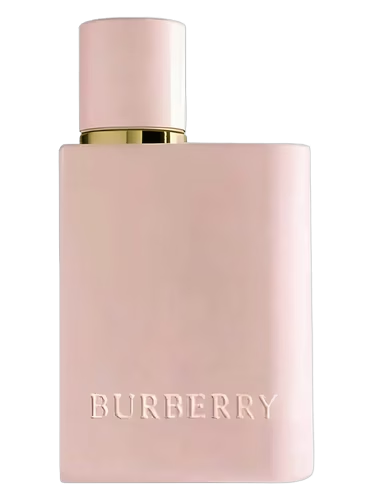
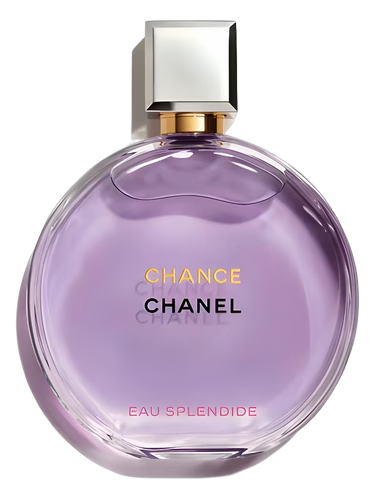
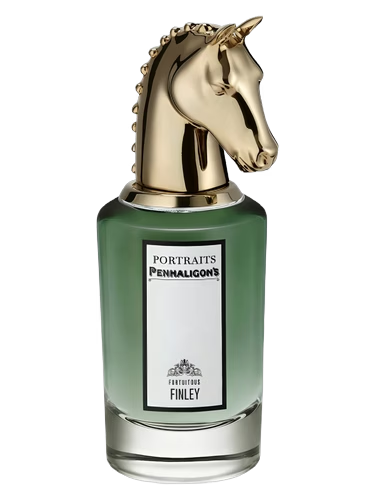
Most Popular Scents Using Fuji Apple
What is Fuji Apple?
Fuji Apple is a modern fragrance note inspired by the Japanese apple cultivar developed in the 1930s, prized in perfumery for its crisp, brightly sweet, and aqueous character.What does Fuji Apple smell like?
It features a vibrant, intensely juicy aroma of ripe red apple balanced by a subtle citrus zest and a refreshing, sparkling tartness.How is Fuji Apple essence extracted?
In commercial perfumery, it is a fantasy note recreated using aroma compounds like ethyl 2-methylbutyrate, as no natural essential oil is extracted from the fruit for fragrance use.What are some top perfumes featuring Fuji Apple?
Notable fragrances include Zoologist Macaque Fuji Apple Edition, Decorté Kimono Urara, and Mariná Rituals Fuji.When is Fuji Apple in season?
It is a late-season variety, typically ripening in mid to late October in the Northern Hemisphere and between February and April in the Southern Hemisphere.