Fragrance Notes Are Layers Of Scent That Are Layered To Form The Final Fragrance. Fragrance Notes Are Categorised Into Three Main Elements Based On How Long They Take To Evaporate, And How Long They Typically Last Following Application: Top Notes, Heart Notes And Base Notes.
Fruity Notes
Fruity Notes offer a diverse, often synthetic, profile ranging from sweet, juicy, and succulent (peach, berries) to tart and bright (apple, passionfruit). They introduce a cheerful, vibrant, and youthful burst, primarily in the top and heart, adding sparkle, richness, and mouth-watering sweetness to compositions, moving beyond simple citrus.

Origin & Extraction Of Fruity Notes
While natural fruit essences (primarily citrus) have been used in perfumery since the invention of Eau de Cologne in the 18th century, the concept of "Fruity Notes" as we know them today—representing red, juicy, and succulent fruits like peach, apple, and berries—is a relatively modern phenomenon. Due to the difficulty and expense of extracting stable, natural essences from most non-citrus fruits, the widespread use of these notes was dependent on the development of synthetic aroma molecules. Early examples, such as the C-14 Aldehyde (peach/apricot note) used famously in Guerlain's Mitsouko (1919), were foundational, allowing for rich, abstract, and long-lasting fruity accords that anchored the composition.
The fruity category experienced a major resurgence and defined a new genre in the late 20th and early 21st centuries with the emergence of the "Fruity Floral" and "Gourmand" families. Modern techniques made fruity scents brighter, more transparent, and more cheerful than their predecessors. The introduction of synthetic molecules like cis-3-hexenol (green/apple) and damascones (plum/berry) allowed perfumers to create vibrant, mouth-watering accords, making fruity notes synonymous with youth, vitality, and popular designer fragrances. Today, they are essential to adding sparkle, vibrancy, and richness to scents across nearly all categories.
Historically, the extraction of true fragrance from most fruits has been considered impossible due to their high water content and delicate chemical structures, which do not survive traditional steam distillation. While ancient techniques like infusion (steeping solids in liquids) and maceration (drawing out essence using sugar or solvents) were used to create flavored syrups and elixirs for culinary and medicinal purposes, these methods rarely captured a stable scent suitable for fine perfumery. Consequently, for much of fragrance history, fruity profiles were limited to citrus oils obtained through expression or were indirectly suggested through floral and resinous blends.
In modern perfumery, fruity notes are primarily achieved through molecular reconstruction using synthetic materials such as aldehydes, lactones, and esters. Specific molecules like Aldehyde C14 (peach), Aldehyde C18 (coconut), and Ethyl Acetate (banana) allow perfumers to build realistic accords that nature cannot provide through direct extraction. However, there are notable exceptions: Osmanthus and Blackcurrant Bud can be processed into absolutes via solvent extraction. Furthermore, latest advancements in flavor and fragrance technology include supercritical CO2 extraction and enzymatic extraction, which use lower temperatures and biological catalysts to isolate high-purity aromatic compounds and "natural isolates" from fruits like pink pepper, pineapple, and various berries without the degradation caused by heat.
The history of Fruity Notes being foundational to iconic fragrances can be traced back to the invention of synthetic fruity aldehydes. Most famously, the C-14 Aldehyde, which imparts a rich, velvety peach note, was central to the success of classic Chypres. This abstract fruity dimension helped create compositions that were simultaneously sweet, earthy, and long-lasting, establishing a blueprint for sophisticated fragrances where the fruit was not merely a fleeting top note but an anchor.
The Fruity Floral genre exploded in popularity in the late 20th and early 21st centuries, ushering in a new era of vibrant, often sweet and juicy, mainstream scents. A landmark fragrance that defined this movement was **DKNY Be Delicious**, which utilizes a crisp, green apple note to create a fresh, energetic, and highly recognizable signature. This trend continued with numerous designer releases, incorporating notes like bright berries and succulent tropical fruits to appeal to a younger, more dynamic consumer base seeking cheerful and uplifting compositions.
In modern niche and high-end perfumery, Fruity Notes are employed to add depth, richness, and often an exotic twist, moving beyond simple sweetness. An excellent contemporary example is **Creed Aventus**, where the note of pineapple provides a sparkling, masculine, and slightly smoky opening that has been widely imitated. Similarly, **Byredo Bal d'Afrique** uses a mix of African marigold and bucchu to create a unique, fruity-green accord, demonstrating how fruits are now utilized for their complex texture and ability to bridge diverse scent families.
Sustainability Of Fruity Notes
Sustainability of Fruity Notes
- Upcycling citrus fruit peels from the juice and beverage industries to extract essential oils, reducing agricultural waste and promoting a circular economy
- Utilizing biotech-derived and renewable aromatic compounds, such as esters like gamma-decalactone, to create biodegradable fragrance materials
- Adopting 100% plant-based and natural extraction methods that eliminate the use of petrochemical solvents and synthetic additives
- Sourcing raw materials from responsible suppliers who implement ethical labor practices and minimize the environmental impact of fruit cultivation
- Transitioning toward readily biodegradable ingredients to ensure that fruity fragrance profiles align with long-term environmental safety standards
Trivia
While many scents can be extracted naturally, it is almost impossible to create a natural fruity fragrance because most fruits have an extremely low essential oil content, making it too difficult and expensive to capture their essence.
Most Popular Scents Using Fruity Notes
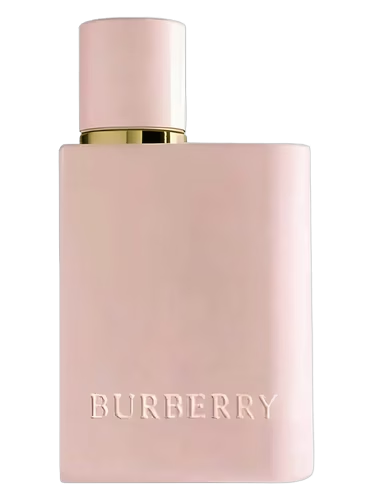
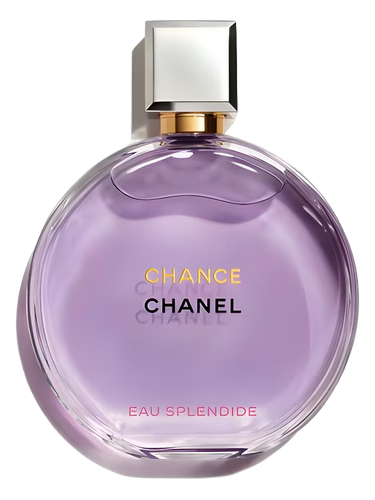

What are Fruity Notes in perfumery?
Fruity Notes are a diverse olfactory category representing the scents of non-citrus fruits like peaches, apples, and berries, primarily achieved through synthetic aroma molecules due to the difficulty of natural extraction.What do Fruity Notes smell like?
They offer a spectrum of aromas ranging from sweet, juicy, and succulent (like peach and mango) to tart and crisp (like green apple and passionfruit), adding a vibrant and cheerful character to fragrances.How are Fruity Notes extracted?
Most fruity notes are created synthetically using aldehydes and esters because the high water content of fruits makes natural steam distillation impossible, though some exceptions like blackcurrant bud use solvent extraction.Are Fruity Notes used in masculine or feminine perfumes?
While historically dominant in feminine "Fruity Floral" scents, modern perfumery increasingly uses fruity notes like pineapple and fig in masculine and unisex compositions to add depth and unique texture.What is the seasonality of Fruity Notes?
Fruity notes are highly versatile, with light, zesty fruits like pear being popular in spring and summer, while deeper, moodier fruits like plum and berries are preferred for fall and winter.