Fragrance Notes Are Layers Of Scent That Are Layered To Form The Final Fragrance. Fragrance Notes Are Categorised Into Three Main Elements Based On How Long They Take To Evaporate, And How Long They Typically Last Following Application: Top Notes, Heart Notes And Base Notes.
Fruit Salad
A bright, juicy, and cheerful blend of ripe fruits. It features sparkling top notes of Apple, Melon, and Citrus Accord, leading into a succulent heart of sweet Berries and tropical Pineapple. This profile is uplifting, fresh, and often used to evoke a vibrant, summery, and mouth-watering feeling.

Origin & Extraction Of Fruit Salad
The concept of "Fruit Salad" as a distinct perfumery note or accord is a modern phenomenon, reflecting a move away from traditional single fruit notes toward abstract, multi-faceted compositions. While natural fruit notes like Bergamot and Lemon have been central to perfumery since the invention of the Eau de Cologne in the 18th century, the idea of intentionally blending a full array of juicy, ripe, and sweet fruits (like melon, berries, and pineapple) gained significant traction with the rise of fruity-gourmand and highly synthetic tropical fragrances in the late 20th and early 21st centuries. This allowed perfumers to achieve a stable, vibrant, and highly expressive sweetness that was often difficult to obtain using volatile natural fruit oils.
The note is primarily valued today for its immediate cheerful, uplifting, and summery effect, designed to evoke the mouth-watering freshness of a mixed tropical platter. Because a "Fruit Salad" accord is built largely using synthetic aroma chemicals, it offers longevity and stability that pure citrus or natural fruit essences lack, enabling it to bridge the bright top notes with the warmer, sweeter heart and base notes. It is frequently employed in younger, mainstream, and celebrity fragrances that aim for a vibrant, energetic, and uncomplicatedly joyful scent profile.
Extraction Methods of Fruit Salad
The extraction of juice and flavor in a fruit salad is primarily achieved through maceration, a process where fruit pieces are combined with a sugar-based dressing or acid to draw out natural liquids. Historically, this involved simply tossing cut fruit with honey or sugar and letting it sit, a method used since the 14th century to preserve fruit and create medicinal syrups. Traditional preparation focuses on manual mechanical actions, such as peeling with knives and precise slicing to maintain structural integrity while allowing the dressing to penetrate and marinate the fruit fibers over several hours of refrigeration.
Modern culinary techniques have introduced more refined approaches, such as simmering a "cooked dressing" made of citrus juice, zest, and sweeteners to create a thick, syrupy glaze that coats the fruit more effectively. Recent developments also include the use of secret ingredients like instant pudding mix to create a chemical glaze when combined with the fruit's natural moisture. On a more technical level, advanced methods explore the use of chitosan-based coatings enriched with poppy seed phenolic extracts to extend shelf life and improve the safety of fresh-cut fruit salads by reducing microbial spoilage and enzymatic browning.
The "Fruit Salad" note, or related vibrant fruit accords, is a centerpiece in fragrances designed for youth, energy, and cheerfulness. These modern compositions use synthetic fruit molecules to capture a sparkling, long-lasting sweetness that natural volatile oils cannot sustain. A classic example of a brand leveraging this bright, juicy profile is **Demeter's Fruit Salad**, which focuses entirely on delivering a straightforward, nostalgic, and mouth-watering blend of tropical and garden fruits.
- The note is frequently employed by major design houses to achieve a mass-appealing, summery effect. For instance, brands like **Versace** and **Dolce &Gabbana** have utilized complex fruit accords, often reminiscent of a fruit salad blend, in their contemporary launches to create immediate freshness and a light, uplifting feel, distinguishing these vibrant modern scents from more traditional citrus colognes.
In the realm of niche and high-end perfumery, the "Fruit Salad" accord is treated with more complexity, often blended with rich bases to add depth and sophistication. Niche houses such as **Parfums de Marly** or **Byredo** may use sparkling, multi-fruit top notes (like the notes found in a fruit salad) to draw attention before revealing a heart of florals or a base of musk and woods, giving the fruit a longer, more luxurious presence on the skin.
Sustainability Of Fruit Salad
Sustainability of Fruit Salad
- Utilizing synthetic aroma molecules, such as esters and lactones, to replicate fruit scents that are difficult to extract naturally, thereby reducing the environmental impact of large-scale fruit harvesting
- Promoting the use of bio-based and renewable chemical building blocks in the creation of conceptual fruity accords
- Adopting circular economy principles by repurposing side-streams from the food industry, such as fruit peels and pulps, for natural essence extraction
- Implementing green chemistry techniques to develop more efficient and less energy-intensive manufacturing processes for fragrance components
- Sourcing natural raw materials through responsible supply chains that emphasize biodiversity protection and fair labor practices
Trivia
In perfumery, a fruit salad accord is often referred to as a "fantasy" note because, unlike citrus or flowers, many sweet fruits like peach and apple cannot have their scents naturally extracted and must be chemically reconstructed by perfumers using complex molecules called lactones.
Most Popular Scents Using Fruit Salad
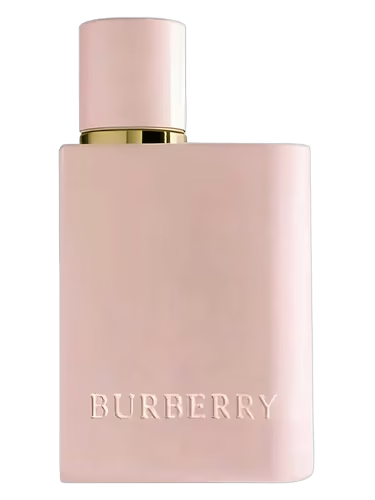
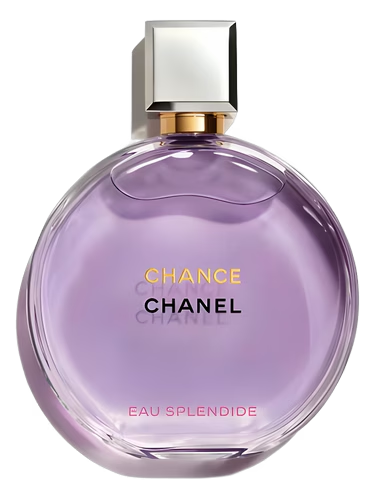
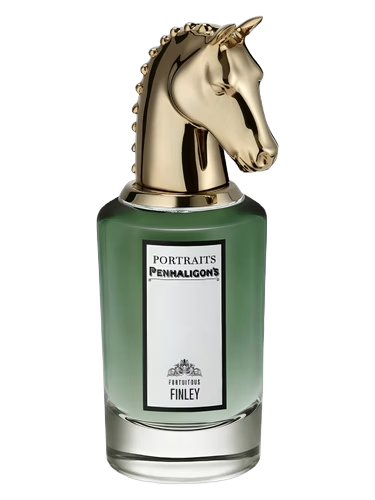
What is a Fruit Salad note in perfumery?
It is a modern fragrance accord consisting of a multi-faceted blend of juicy, ripe, and sweet fruits like melon, berries, and pineapple, designed to evoke a cheerful and summery effect.What does Fruit Salad smell like?
It offers a bright, juicy, and mouth-watering aroma with sparkling top notes of apple and citrus leading into a succulent heart of sweet berries and tropical pineapple.How is the Fruit Salad scent extracted?
Because many sweet fruits do not yield natural oils, the scent is typically created synthetically using aroma chemicals like esters and lactones to replicate the fruit profile.Why is Fruit Salad considered a fantasy note?
It is called a fantasy note because it cannot be naturally extracted from fruits like peaches or apples and must be chemically reconstructed by perfumers.What are some top perfumes featuring the Fruit Salad accord?
Notable examples include Demeter Fruit Salad, Louis Vuitton Pacific Chill, Dolce & Gabbana L'Imperatrice, Byredo Pulp, and Lattafa Tamima.