Fragrance Notes Are Layers Of Scent That Are Layered To Form The Final Fragrance. Fragrance Notes Are Categorised Into Three Main Elements Based On How Long They Take To Evaporate, And How Long They Typically Last Following Application: Top Notes, Heart Notes And Base Notes.
Fragonia
Fragonia offers a beautiful Australian oil profile. It is fresh, with cineolic (eucalyptus-like) facets. It possesses complex underlying citrus, subtle floral, and woody notes, giving it a balanced aroma. Therapeutically, it is known as an excellent respiratory oil and is highly anti-microbial.

Origin & Extraction Of Fragonia
Fragonia (Agonis fragrans) is a relatively new and specialized ingredient in fine perfumery, having been discovered and commercially developed in Western Australia in the late 1990s. Unlike classic perfume materials that boast centuries of history, Fragonia’s introduction to the fragrance world is contemporary, following extensive research into the unique Australian flora. Initially prized in aromatherapy for its balancing and anti-microbial properties, its complex and well-rounded oil profile—which blends cineolic freshness with subtle citrus, floral, and woody undertones—soon captured the attention of perfumers looking for unique, natural, and Australian-sourced aromatic compounds.
Due to its sophisticated, balanced aroma, Fragonia has been incorporated into niche and natural perfumery to offer a clean, invigorating, and slightly herbaceous freshness that transcends simple eucalyptus or tea tree notes. Its role in perfumery is often to provide a luminous top-to-mid note that enhances both fresh and woody compositions. While it is not yet a mainstream ingredient, its use is growing among artisanal perfumers seeking distinctive and complex natural materials that lend a modern, clear, and serene quality to their creations.
Extraction Methods of Fragonia
The primary method for extracting Fragonia essential oil is steam distillation of the plant's leaves, twigs, and branches. This process involves passing pressurized steam through the harvested material to vaporize the volatile aromatic compounds, which are then cooled in a condenser and separated from the water to yield a pure, solvent-free oil. This method is preferred for its ability to preserve the oil's delicate chemical balance—often referred to as the "golden triangle" of monoterpenes, oxides, and monoterpenols—without damaging its therapeutic properties.
Historically, Fragonia is a relatively recent addition to the essential oil industry, discovered and trademarked in Australia in the early 2000s. While traditional manual techniques like simple infusion or maceration have been used for similar botanical species, Fragonia production has focused on modern steam distillation from its inception to ensure consistency. Recent advancements include the use of automated PLC-based systems to precisely regulate temperature and pressure, as well as eco-friendly modular distillation units designed for high yield and the recovery of condensate to minimize waste.
Fragonia, being a relatively new and unique Australian aromatic oil, has primarily found its place in the world of niche and natural perfumery, where creators prioritize complex, authentic botanical profiles over mainstream synthetic accords. While not featured in the global bestsellers dominated by classic notes like Bergamot or Jasmine, Fragonia is cherished by artisanal perfumers for its ability to deliver a balanced, sophisticated freshness. Its profile—blending cineolic notes (eucalyptus-like) with subtle citrus, floral, and woody facets—allows it to integrate smoothly into compositions that aim for a serene, clean, and herbaceous quality. This complexity ensures that the fragrance maintains an invigorating lift without smelling overly medicinal.
In modern independent perfumery, Fragonia is often used to modernize the traditional 'Green' or 'Aromatic' fragrance category. An example of a house embracing Australian botanicals is Aether Arts Perfume, which featured the note in compositions like Fragonia Blossom, highlighting its floral-citrus aspects. Furthermore, essential oil brands that dabble in natural perfumes often use Fragonia as a prominent, balancing top/middle note. Its inclusion signals a move toward transparent, therapeutic-inspired scents that appeal to consumers seeking holistic wellness benefits alongside fine fragrance enjoyment, distinguishing them from mass-market launches.
Due to its versatility, Fragonia successfully enhances both fresh and woody fragrance structures. For instance, in fresh compositions, it can provide a sophisticated, herbaceous backbone that helps top notes like Lemon or Grapefruit endure longer. In deeper, woody scents, it introduces an airy, clean clarity that prevents the base from becoming heavy or muddy. While definitive, widely advertised designer examples are scarce, artisanal creators like the ones behind fragrances such as The Australian Wildflower Collection often utilize Fragonia to ground their compositions in authentic, natural Australian landscapes, leveraging its unique cineolic-floral balance for a distinctive signature.
- Flowering typically occurs between January and May, characterized by branches covered in clusters of small white to pinkish flowers
- Harvesting is primarily conducted during the short, hot summer months, specifically around November, to capitalize on the highest essential oil concentrations
- Autumn harvesting is strategically timed to avoid the risk of new growth appearing during winter, which could be killed by occasional frosts
- As a hardy evergreen shrub native to Western Australian wetlands, the plant maintains its presence year-round, though its primary growth cycle is most active from spring through summer
- The essential oil is frequently sought after during seasonal transitions and winter months for its significant respiratory support and immune-boosting properties
Sustainability Of Fragonia
Sustainability of Fragonia
- Utilizing sustainable farming practices on exclusive plantations in Western Australia to ensure minimal environmental impact and long-term crop availability
- Implementing water-efficient irrigation tapes to minimize water consumption and prevent loss from evaporation
- Promoting a circular economy by repurposing spent leaves as mulch and returning distilled water back to the plantation to recycle nutrients
- Maintaining a high proportion of native bush and remnant vegetation on the property to support biodiversity and act as natural windbreaks and water reservoirs
- Adopting minimal and careful use of herbicides and fertilizers to protect soil health and the surrounding wetland ecosystem
- Ensuring quality control and protecting the emerging industry's reputation through the trademarking of the Fragonia name to prevent the sale of inferior varieties
Trivia
Fragonia is unique for containing a near-perfect 1:1:1 ratio of monoterpenes, oxides, and monoterpenols—a rare chemical balance known as the "Golden Triangle" that is said to harmonize the body and mind.
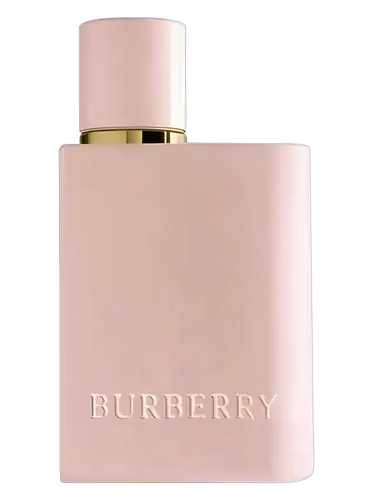
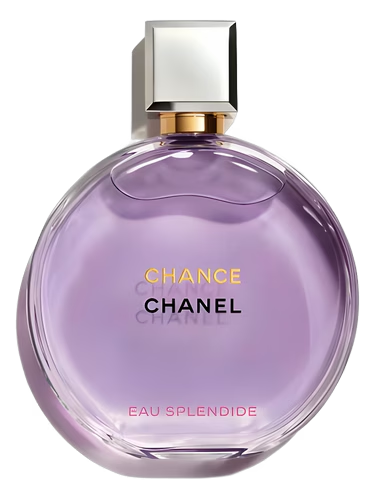
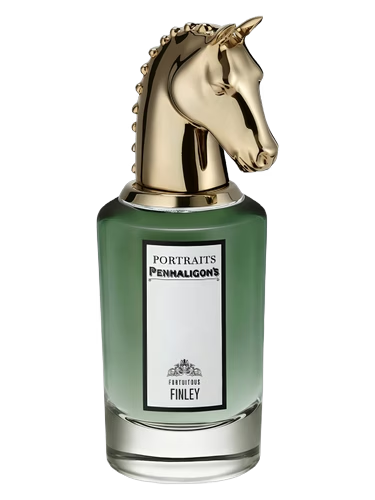
Most Popular Scents Using Fragonia
What is Fragonia?
Fragonia is a relatively new essential oil derived from the Agonis fragrans shrub native to the southwestern region of Western Australia, prized for its unique chemical balance and serene aroma.What does Fragonia smell like?
It offers a complex, fresh scent with cineolic (eucalyptus-like) facets, harmoniously blended with subtle citrus, floral, and woody undertones.How is Fragonia oil extracted?
The oil is primarily obtained through the steam distillation of the plant's leaves, twigs, and branches to preserve its delicate aromatic and therapeutic properties.What are the therapeutic benefits of Fragonia?
It is highly regarded for its anti-microbial and respiratory support properties, and is frequently used in aromatherapy to promote emotional balance and harmony.What is the "Golden Triangle" in Fragonia?
The "Golden Triangle" refers to Fragonia's rare, near-perfect 1:1:1 ratio of monoterpenes, oxides, and monoterpenols, which is believed to harmonize the body and mind.What are some top perfumes featuring Fragonia?
Fragonia is featured in niche and artisanal fragrances such as Polaris Lost Tribe, DI SER Kaze, and Aether Arts Fragonia Blossom.