Fragrance Notes Are Layers Of Scent That Are Layered To Form The Final Fragrance. Fragrance Notes Are Categorised Into Three Main Elements Based On How Long They Take To Evaporate, And How Long They Typically Last Following Application: Top Notes, Heart Notes And Base Notes.
Forest Fruits
Forest Fruits offer a rich, complex, and wild aroma, blending the sweet, juicy tartness of assorted berries (like wild strawberry, raspberry, and blackberry) with subtle green, mossy, and damp earth undertones. It conveys an invigorating, slightly jammy sweetness and a natural, untamed freshness.

Origin & Extraction Of Forest Fruits
The history of "Forest Fruits" as a specific, prominent note in perfumery is primarily linked to the broader evolution of fruity and gourmand fragrance categories. While perfumery has utilized natural extracts from various berries for centuries, the creation of a recognizable, complex "Forest Fruits" accord—blending notes like raspberry, blackberry, and wild strawberry with subtle green and earthy nuances—became popular in the late 20th and early 21st centuries. Early fruit notes were often volatile or synthetic, but advances in aroma chemistry allowed perfumers to capture the juicy, jammy, and tart profile of a wild berry medley with greater fidelity and longevity, leading to its adoption as a cheerful, comforting, and sometimes mysterious opening or heart note.
The note gained particular relevance with the rise of fruity-floral and gourmand compositions, moving beyond the traditional use of single fruit notes to convey a richer, more evocative setting—the damp, untamed freshness of a forest floor combined with the sweet allure of ripening berries. This complexity helps ground the sweetness, making the note appealing across diverse fragrance genres. Today, the Forest Fruits accord is valued for its ability to inject vitality and a natural, slightly romantic theme into modern designer and niche perfumes, serving as a bright counterpoint to heavier floral or woody bases.
Extraction Methods of Forest Fruits
Historically, the aromatic essence of forest fruits, such as raspberries, blackberries, and blueberries, was captured through traditional maceration and infusion techniques. Because these delicate fruits have high water content and low oil yields, their volatile compounds were often extracted by soaking the fruit in alcohol or vegetable oils over several weeks. Another ancient method involved enfleurage, where the fruits were pressed into layers of purified fat to absorb their fragrance, which was then washed with alcohol to create a floral-fruity absolute.
Modern extraction for fine perfumery primarily utilizes solvent extraction and supercritical carbon dioxide (CO2) extraction. Solvent extraction involves using chemicals like hexane to create a "concrete," which is then refined into a high-purity absolute that retains the jammy, sweet characteristics of the fruit. CO2 extraction is considered the latest advancement, as it operates at lower temperatures without chemical residues, preserving the authentic, "living" scent of the forest fruit. Additionally, headspace technology is frequently used to analyze and synthetically recreate the aroma of wild fruits that are too fragile or yield too little natural oil for traditional distillation.
The Forest Fruits accord is highly valued in contemporary perfumery for its ability to create cheerful, gourmand, and invigorating openings. Modern fragrances often utilize this complex blend—featuring notes like raspberry, blackberry, and wild strawberry—to transition from a bright citrus top note into a deeper, fruitier heart. A popular example showcasing this vibrant, juicy profile is the Kayali scent, Eden Juicy Apple | 01 Eau De Parfum, where the berry medley adds a rich complexity to the dominant apple note, creating an intensely sweet and uplifting fruity experience.
- * * *
In the designer category, the Forest Fruits note is frequently employed to add a sparkling, effervescent quality, often suggesting the tartness and vitality of dark berries mixed with champagne or tonic. This interpretation focuses on the untamed freshness and subtle tartness inherent in the note, offering a youthful yet sophisticated energy. This usage is prominently featured in Viva La Juicy Le Bubbly by Juicy Couture, where the wild berry blend enhances the fragrance’s celebratory and sparkling character, defining a lively and bright opening that complements its floral core.
- * * *
Niche perfumery embraces the more mysterious and complex aspects of the Forest Fruits accord, combining the sweet, jammy facets with the subtle green, mossy, and earthy undertones mentioned in the note's profile. This allows the note to bridge fruity sweetness with deeper, more evocative bases like woods or amber, lending the fragrance a natural, romantic, and slightly untamed aura. A recent example demonstrating the note’s versatility in a sophisticated context is I Wanna Be Loved By You by Haute Fragrance Company (HFC), which uses the forest fruits accord to provide a complex, alluring sweetness in its modern composition.
Sustainability Of Forest Fruits
Sustainability of Forest Fruits
- Utilizing ethical and sustainable foraging practices to ensure natural wild berry resources are preserved and ecosystems remain unharmed during harvest
- Prioritizing the use of synthetic berry-like accords and nature-identical molecules to reduce the environmental pressure and high water consumption associated with natural fruit extraction
- Supporting forest preservation programs in key biodiversity regions such as Madagascar, Peru, and Brazil to protect the primary habitats where wild fruits thrive
- Transitioning toward eco-conception in manufacturing, including the use of energy-efficient production processes and refillable packaging systems to reduce carbon footprints
- Adopting green beauty standards by selecting responsibly sourced botanicals that do not exploit local workforces or contribute to deforestation
Trivia
Unlike most fragrance notes, forest fruits cannot be naturally extracted due to their high water content and are instead masterfully reconstructed by perfumers using synthetic molecules to capture their sweet and tart essence.
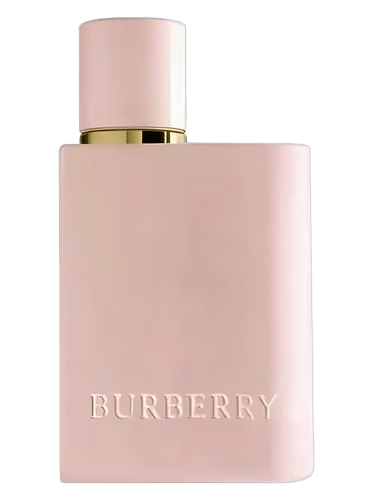
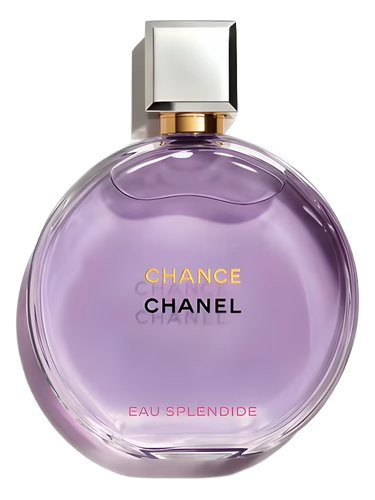
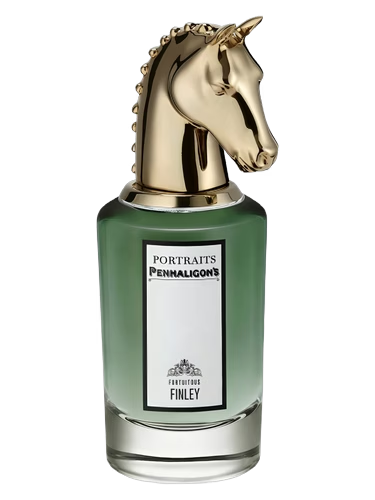
Most Popular Scents Using Forest Fruits
What is the Forest Fruits fragrance note?
Forest Fruits is a complex olfactory accord that recreates the aroma of a wild berry medley, typically blending notes of raspberry, blackberry, and wild strawberry with subtle green and earthy undertones.What does Forest Fruits smell like?
It offers a rich, juicy, and slightly tart aroma with a jammy sweetness, balanced by mossy and damp earth facets that evoke the natural freshness of a forest floor.How is the Forest Fruits note extracted?
Due to their high water content, these fruits cannot be traditionally distilled; instead, their scent is reconstructed using synthetic molecules, headspace technology, or specialized methods like CO2 extraction.What are some top perfumes featuring Forest Fruits?
Popular fragrances include Dior Poison, Juicy Couture Viva la Juicy, Kayali Eden Juicy Apple | 01, and Jo Malone London Blackberry & Bay.When are Forest Fruits in season?
While the note is used year-round in perfumery, the natural harvest of its components typically occurs during the summer and early autumn months in the Northern Hemisphere.