Fragrance Notes Are Layers Of Scent That Are Layered To Form The Final Fragrance. Fragrance Notes Are Categorised Into Three Main Elements Based On How Long They Take To Evaporate, And How Long They Typically Last Following Application: Top Notes, Heart Notes And Base Notes.
Flowering Gourd
Flowering Gourd offers a fresh, aqueous, and subtly green floral note with hints of clean aquatic sweetness. It's often used to provide a delicate, dewy, and transparent texture, blending the scent of mild white flowers with a light, crisp vegetable/melon nuance for a soft, airy, and calming effect.

Origin & Extraction Of Flowering Gourd
The use of "Flowering Gourd" as a specific note in perfumery is a very modern development, primarily emerging in the late 20th and early 21st centuries alongside the increased popularity of aquatic and transparent floral compositions. While gourds like squash or cucumber have ancient histories in cuisine and folk medicine, their subtle, fresh, and aqueous scent profile was difficult to capture and utilize in classical perfumery, which historically relied on heavier, more volatile natural oils like resins, woods, and traditional florals. Therefore, the concept of a "Flowering Gourd" note is closely tied to advances in headspace technology and synthetic aroma compounds that allow perfumers to recreate these delicate, dewy, and fresh vegetal-floral textures.
In contemporary fragrance, the Flowering Gourd note is valued for its ability to lend a clean, airy, and non-cloying sweetness, often bridging the gap between watery green notes (like cucumber or melon) and soft white florals (like lily of the valley or cyclamen). It is typically featured in light, refreshing compositions, such as Eaux de Toilette, sport fragrances, or niche perfumes designed to evoke naturalistic, dewy garden scenes. Its relevance is in providing a modern, subtle freshness that avoids the sharp zest of traditional citruses, resulting in a tranquil and transparent opening.
Extraction Methods of Flowering Gourd
The extraction of aromatic compounds from the flowering gourd is traditionally achieved through steam distillation or hydrodistillation. Historically, these methods involve placing the flowers in a still where boiling water or pressurized steam ruptures the delicate oil glands, releasing volatile molecules. The resulting vapor is then condensed back into a liquid, where the essential oil naturally separates from the fragrant water (hydrosol). Because many gourds and their blossoms have a low oil yield or contain thermally unstable compounds, traditional maceration and enfleurage were also employed, involving the absorption of scents into fixed fats or oils over several days.
Modern extraction techniques have evolved to include solvent extraction and supercritical carbon dioxide (CO2) extraction. Solvent extraction using hexane or ethanol is often preferred for delicate blossoms to produce a highly concentrated absolute, as it avoids the high temperatures of steam that can degrade the scent. The latest advancements include CO2 extraction, which operates at lower temperatures (95-100°F) and utilizes pressurized carbon dioxide as a solvent. This method is prized for capturing a more complete and authentic aromatic profile of the flower without leaving behind chemical residues, as the CO2 simply dissipates when the pressure is released.
The Flowering Gourd note, prized for its delicate, dewy, and transparent texture, is predominantly utilized in modern perfumery to achieve a clean, non-cloying aquatic freshness. Since this note is often created using sophisticated aroma compounds to capture a subtle vegetal-floral scent, it shines in light, airy compositions. Its application is less about a heavy statement and more about lending an impression of damp, natural vitality. As a result, it is frequently featured in contemporary summer flankers or fragrances designed for a tranquil, transparent opening that avoids the sharp zest of traditional citruses.
- One notable fragrance that highlights an accord reminiscent of Flowering Gourd's aqueous sweetness is **Davidoff Cool Water Intense for Her**. While the official note lists may vary, the overall composition often employs notes that contribute a lush, watery greenness paired with light florals, echoing the dewy, melon-like nuance characteristic of this delicate note.
- Another composition where a similar transparent, fresh aquatic-floral effect is sought is **Issey Miyake L'Eau d'Issey**, a pioneer in the aquatic category. The inclusion of notes that evoke pure water, melon, and soft white flowers aligns perfectly with the transparent freshness the Flowering Gourd note is used to achieve, demonstrating its functional role in lending an ethereal quality to minimalist, modern scents.
In the realm of niche and artisanal perfumery, the Flowering Gourd note provides perfumers with an exotic, naturalistic tool to craft unique green narratives. Because of its complexity—blending a fresh vegetal essence with a hint of clean aquatic sweetness—it can successfully bridge green, herbaceous openings with delicate white floral hearts. This sophistication ensures the opening remains bright and airy while providing a sense of depth and realism, evoking the scent of a dewy, newly blossomed garden. This makes it a valuable, albeit often unlisted, component in fragrances focused on natural transparency and calm.
Sustainability Of Flowering Gourd
Sustainability of Flowering Gourd
- Promoting sustainable design by using 3D-printed molds to grow gourds into functional, biodegradable shapes like cups and flasks, bypassing industrial waste cycles
- Utilizing gourds as a renewable and fully compostable alternative to single-use plastics and paper cups with plastic linings
- Reducing environmental impact through a "grown, not manufactured" production model that requires virtually no waste and integrates agriculture with design
- Advancing resource efficiency by exploring controlled "Gourd Labs" to minimize external variables like pests and weather, ensuring consistent, high-volume production
- Supporting circular economy principles by reviving ancient artisanal methods to solve modern waste management challenges
Trivia
Unlike most members of the squash family which produce yellow blossoms, the flowering gourd is known for producing massive, striking white flowers that look nothing like typical squash blooms.
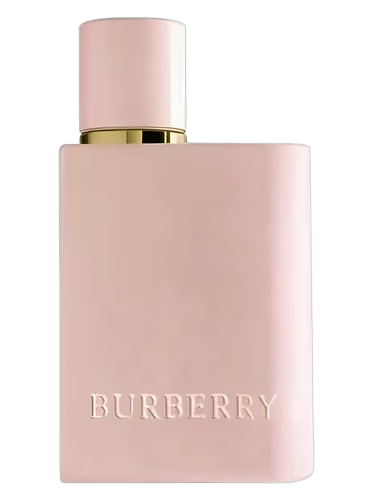
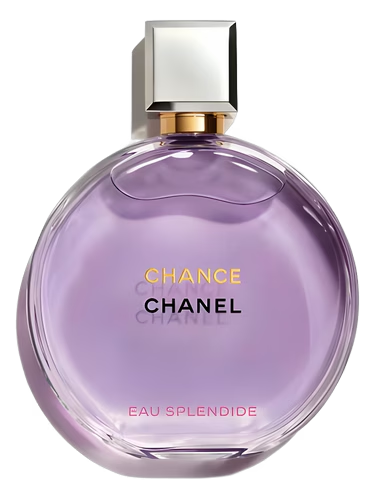
Most Popular Scents Using Flowering Gourd

What is Flowering Gourd?
Flowering Gourd is a modern fragrance note inspired by the blossoms of the squash family, primarily used in contemporary perfumery to add a fresh, transparent, and aquatic floral texture.What does Flowering Gourd smell like?
It possesses a bright, aqueous profile with subtly green floral facets and a light, crisp melon nuance, evoking the scent of a dewy, newly blossomed garden.How is Flowering Gourd essence extracted?
While traditionally obtained through steam distillation, modern methods such as solvent extraction or supercritical CO2 extraction are preferred to preserve its delicate and thermally unstable aromatic compounds.What are some top perfumes featuring Flowering Gourd?
Fragrances that highlight this note include Peach State Amber Whipped Gourd, Demeter Flowering Gourd, and Lilac Air & Weather Flowering Gourd.When is Flowering Gourd in season?
These plants are warm-season annuals that typically bloom during the summer months, with the fruit reaching maturity for harvest between late summer and early autumn.