Fragrance Notes Are Layers Of Scent That Are Layered To Form The Final Fragrance. Fragrance Notes Are Categorised Into Three Main Elements Based On How Long They Take To Evaporate, And How Long They Typically Last Following Application: Top Notes, Heart Notes And Base Notes.
Flamingo Flower (Anthurium)
Flamingo Flower (Anthurium) presents a complex and subjective floral scent profile in perfumery, ranging from sweet, edible notes like marzipan, mango, and blueberry, to sharp, peculiar, and sometimes unpleasant aromas. It is characterized by its wide spectrum and can lend exotic, nuanced, or abstract qualities.

Origin & Extraction Of Flamingo Flower (Anthurium)
The Flamingo Flower, or Anthurium, does not possess a deep, classical history in perfumery like notes such as Rose or Jasmine. Its use is relatively modern, emerging as perfumers began exploring abstract and exotic floral signatures, particularly in the late 20th and early 21st centuries. The flower itself is primarily valued for its unique appearance rather than a traditional fragrant oil extraction. Therefore, the "Flamingo Flower" note is often a synthesized fantasy accord, carefully constructed to evoke the diverse and sometimes unusual scent profile reported from different Anthurium species, which can range from green, aquatic, and sharp to surprisingly fruity and sweet.
Its relevance in contemporary perfumery lies in its ability to lend an avant-garde or abstract exoticism to compositions, fitting well within niche and conceptual fragrance houses. Since the natural flower's scent is subjective and variable (sometimes described as peculiar or marzipan-like), the note allows a perfumer to inject a sense of tropical complexity and abstraction without relying on a literal floral depiction. It functions as a modern tool for creating unique, nuanced, and occasionally unsettling floral heart notes, appealing to those seeking fragrances that move beyond conventional bouquets.
Extraction Methods of Flamingo Flower (Anthurium)
In botanical and horticultural practices, Flamingo Flowers are primarily propagated through vegetative methods rather than traditional aromatic extraction, as they are rarely used for essential oil production. The most common method is division, which involves carefully separating a mature plant at the root ball into smaller sections, ensuring each part has its own roots and at least one leaf. Another standard technique is taking stem or rhizome cuttings and planting them in a well-draining, acidic medium or rooting them in water.
Historically, propagation relied on these simple manual methods of division and soil-based cuttings to expand collections. Modern advancements have introduced more sophisticated techniques, such as the use of heated propagators to maintain a constant temperature of around 21°C (70°F) and high humidity, which stimulates quicker root development from dormant buds. Additionally, hydroponic and hydroculture systems are now popular, utilizing nutrient solutions and specialized growing media like expanded clay to optimize oxygen levels and nutrient uptake for the developing plant.
The Flamingo Flower (Anthurium) note is primarily a modern, abstract accord used in conceptual and niche perfumery to inject exoticism and complexity, moving beyond traditional floral depictions. As its natural scent is highly subjective, it is frequently synthesized to evoke tropical sweetness (marzipan, mango) or sharp green nuances. Although not a classical cornerstone like Rose or Jasmine, its abstract nature is utilized by houses known for avant-garde floral compositions, where the note contributes an unsettling or unique heart.
- * * *
One potential realm where the Anthurium accord might appear is in the work of brands that explore tropical fantasy florals and modern abstraction, such as those from the LVMH group, although specific official listings are rare. The described sweet, marzipan-like undertones could feature in fragrances from houses like **Tom Ford**, particularly within their Private Blend collections, where unusual and rich notes are often explored to create dense, luxurious, and exotic floral-gourmand compositions that defy traditional scent structures.
- * * *
Furthermore, given the note's association with uniqueness and conceptual freshness, it aligns well with the aesthetic of high-end artisanal brands or European houses focused on transparent, modern floral compositions. For instance, a house like **Guerlain** might subtly incorporate this abstract floral-fruity note in a modern Aqua Allegoria flanker to achieve a vibrant, ephemeral opening that references exotic locales without being overly heavy, enhancing the tropical lift alongside more conventional citruses and fruits.
Sustainability Of Flamingo Flower (Anthurium)
Sustainability of Flamingo Flower
- Achieving high sustainability standards through industry certification, with 90% of affiliated growers receiving MPS (More Profitable Sustainability) certification for minimizing environmental impact
- Transitioning to renewable energy sources, including the use of geothermal heat and solar panels, to power production facilities and greenhouses
- Implementing circular resource management systems where water and fertilizers are recycled within a closed loop to prevent runoff into the soil
- Promoting long-term environmental value through the plant's resilient nature and ability to produce new blooms year-round, reducing the need for frequent replacement
- Providing natural air-purifying properties that contribute to healthier indoor living and working environments by filtering pollutants from the air
Trivia
The name Anthurium is derived from the Greek words for "flower" and "tail," but what appears to be a waxy, heart-shaped bloom is actually a modified leaf called a spathe; the true flowers are hundreds of tiny bumps clustered on the tail-like central spike.
Most Popular Scents Using Flamingo Flower (Anthurium)
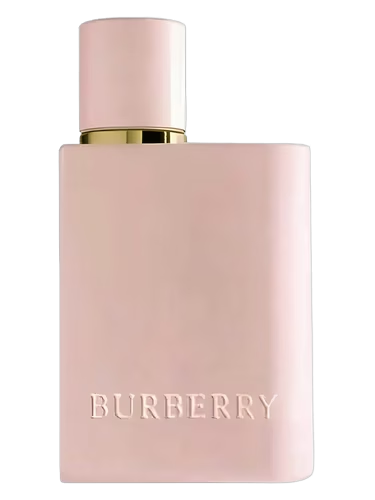
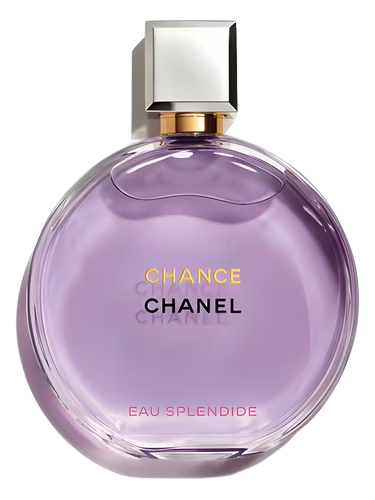
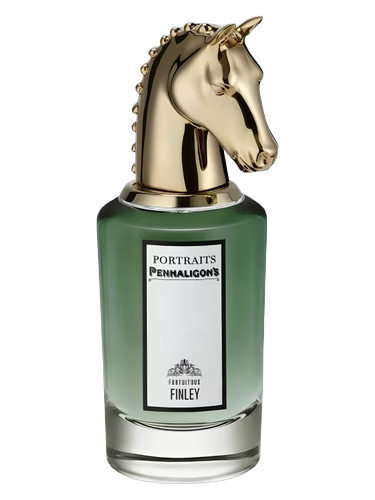
What is Flamingo Flower (Anthurium)?
Flamingo Flower, or Anthurium, is a tropical plant native to Central and South America, primarily used in perfumery as a modern, abstract floral accord to evoke exotic and unique scent profiles.What does Flamingo Flower smell like?
The scent is highly subjective and complex, ranging from sweet, edible notes like marzipan, mango, and blueberry to sharp, green, and occasionally metallic or peculiar aromas.How is Flamingo Flower essence extracted for perfumery?
Because the natural flower is rarely used for essential oil production, the note is typically a synthesized "fantasy accord" created by perfumers to capture its diverse tropical and abstract characteristics.What are some top perfumes featuring Flamingo Flower?
Fragrances featuring this unique note include Phlur Mood Ring, Rituals Ritual of Holi Sugar Love, and Giorgio Armani Armani Prive Bleu Lazuli.When is Flamingo Flower in season?
As a tropical perennial, it can bloom year-round in ideal conditions, though its most active growth and flowering period typically occurs from spring through late summer.