Fragrance Notes Are Layers Of Scent That Are Layered To Form The Final Fragrance. Fragrance Notes Are Categorised Into Three Main Elements Based On How Long They Take To Evaporate, And How Long They Typically Last Following Application: Top Notes, Heart Notes And Base Notes.
Fig Milk
Fig Milk is a fantasy note, offering a creamy, slightly tart, and sweet scent profile. It captures the unique aroma of the broken fig leaf and fruit, blending the green, milky sap with the warm, velvety sweetness of the fruit pulp. It is fresh, green, and effortlessly chic, lending a refined, comforting, and lactonic nuance to compositions.

Origin & Extraction Of Fig Milk
Fig Milk, as a specific note, is a relatively modern development in perfumery. While the fig tree has ancient roots—cultivated since at least 4000 BC and steeped in Mediterranean and biblical symbolism—its use in fine fragrance was historically limited to the green, woody aroma of the leaf (often reproduced using stemonone or other green molecules).
The concept of "Fig Milk" or "Lactonic Fig" gained significant popularity in the late 20th century, particularly after Diptyque's iconic release, Philosykos (1996). This scent moved beyond the traditional woody-green fig profile to capture the creamy, sweet, and lactonic essence of the broken stem's white sap and the velvety pulp of the fruit, thereby defining a new, comforting, and sophisticated category of fresh green and sweet fragrances.
Extraction Methods of Fig Milk
Historically, fig milk—the potent milky sap or latex—was harvested through manual techniques such as making incisions in the green bark or stems of the fig tree and collecting the droplets on wool or in small vessels. This traditional method, referenced since antiquity for its rapid milk-clotting properties in cheesemaking, often involved cutting twigs or leaves in the early morning when enzyme activity is highest. The collected latex could be used fresh or dried on cloths and later powdered for preservation, a practice common in 16th-century Mediterranean artisanal production.
Modern extraction and production methods have evolved to emphasize efficiency and chemical characterization, particularly for the isolation of the enzyme ficin. Current techniques utilize high-speed centrifugation to remove debris from fresh latex and vacuum drying to produce stable, concentrated powders that retain high enzymatic activity. In industrial food science, latest developments include the use of green solvents like deep eutectic solvents (DES) and ultrasonic-assisted extraction to capture specific polyphenols and proteins, alongside advanced filtration and hydrolysis processes to create standardized fig-based beverages and nutraceuticals.
The modern era of the fig in perfumery was arguably defined by the introduction of the Fig Milk or lactonic fig accord. Prior to this, fig notes primarily focused on the green, woody, and slightly bitter character of the leaf. However, the note gained significant popularity by capturing the soft, creamy, and slightly sweet essence of the sap and pulp, leading to a new category of sophisticated, comforting green fragrances.
- The definitive example of the Fig Milk accord is Philosykos (1996) by Diptyque. This landmark fragrance, created by Olivia Giacobetti, sought to evoke the entire fig tree experience on a hot summer day in Greece, blending the green woodiness of the leaf with the velvety, lactonic sweetness of the fruit and the milky sap from the broken stem. It established the standard for creamy fig scents in niche perfumery.
- Another highly regarded fig fragrance utilizing the milky, creamy facet is Premier Figuier by L'Artisan Parfumeur, also created by Olivia Giacobetti. Released shortly before Philosykos, it similarly captures the full scent profile of the fig tree, emphasizing the sweet, almost coconut-like creaminess of the fig milk alongside green foliage and soft wood, cementing the note's status as a modern classic.
The Fig Milk note continues to be featured in contemporary fragrances, often used to soften sharper green notes or add a unique, refined warmth to fresh compositions. Its ability to suggest both plant freshness and a comforting, almost gourmand sweetness makes it highly versatile across different fragrance genres, from light colognes to deeper, woody blends.
While Philosykos remains the reference point, other houses have offered their interpretation. For instance, brands like Jo Malone have incorporated softer fig elements in their collections, often balancing the milky facet with bright florals or citrus, showcasing how the complexity of "Fig Milk" can transition effortlessly from a sophisticated, nature-inspired scent to a light, wearable daily fragrance.
Sustainability Of Fig Milk
Sustainability of Fig Milk
- Utilizing nature-identical synthetic molecules like Stemone to recreate the fig profile, which reduces the agricultural strain and environmental impact of large-scale harvesting
- Adopting green chemistry principles by using sustainable beetroot alcohol and high percentages of naturally derived ingredients in modern formulations
- Implementing circular economy practices through the use of refillable glass bottles and secondary packaging made from renewable, biodegradable wood fibers
- Supporting eco-conscious sourcing of raw materials, such as vegetal-origin alcohol, to minimize the carbon footprint of fragrance production
- Advancing extraction technologies, including CO2 extraction and molecular distillation, to preserve aromatic integrity while maximizing resource efficiency
Trivia
In 1994, the release of L'Artisan Parfumeur's Premier Figuier revolutionized modern perfumery by being the first fragrance to capture the entire essence of the fig tree—including its fruit, leaves, sap, and bark.
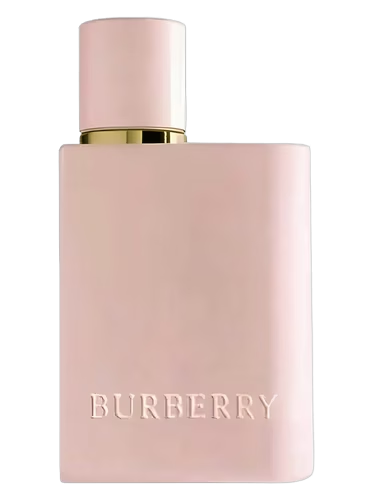
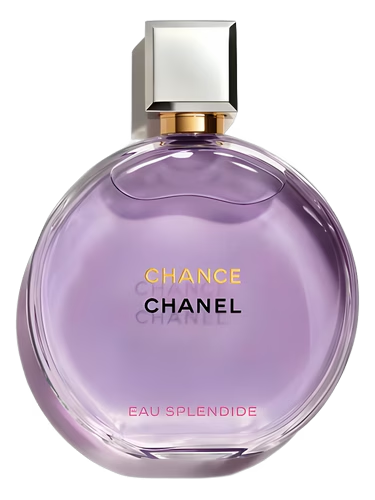
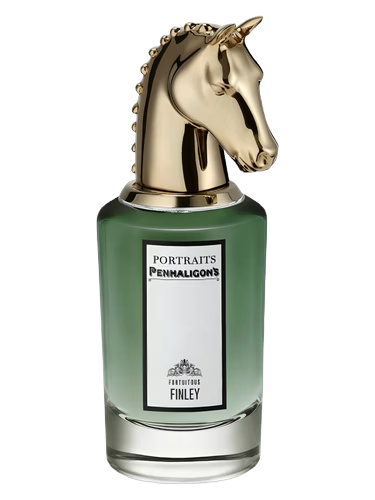
Most Popular Scents Using Fig Milk
What is Fig Milk?
Fig Milk is a fantasy note in perfumery that captures the creamy, sweet, and slightly tart aroma of the fig tree's white sap and fruit pulp.What does Fig Milk smell like?
It offers a fresh, green, and lactonic scent profile, blending the unique aroma of broken fig leaves with a warm, velvety sweetness.How is Fig Milk essence extracted?
While historically harvested from tree sap, modern perfumery primarily recreates this note using nature-identical synthetic molecules like Stemone to ensure consistency and sustainability.What are some top perfumes featuring Fig Milk?
Notable fragrances include Diptyque Philosykos, L'Artisan Parfumeur Premier Figuier, BDK Parfums Gris Charnel, and DS & Durga Debaser.When is Fig Milk in season?
The aromatic profile is at its peak during the fig tree's biannual cropping cycles, typically from late spring through early autumn in the Northern Hemisphere.