Fragrance Notes Are Layers Of Scent That Are Layered To Form The Final Fragrance. Fragrance Notes Are Categorised Into Three Main Elements Based On How Long They Take To Evaporate, And How Long They Typically Last Following Application: Top Notes, Heart Notes And Base Notes.
Fig Leaf
Fig Leaf offers a distinctive green and bitterish profile, capturing the scent of crushed foliage and earthy shadow. It possesses lactonic (milky) and woody characteristics, often accented by subtle coconut or creamy nuances. This note provides a fresh, sophisticated texture and evokes the natural, sun-drenched atmosphere of the Mediterranean fig tree.

Origin & Extraction Of Fig Leaf
The use of the Fig Leaf note in perfumery is a relatively modern development, capitalizing on its unique green, woody, and subtly lactonic (milky) aroma. While the fig tree has been symbolic in many cultures for centuries, the specific use of the leaf's essence to evoke a Mediterranean garden atmosphere was not fully realized until the mid-to-late 20th century. Before this time, perfumery focused more on the fruit or traditional florals and resins. The synthetic molecule Stemone is often credited with helping perfumers capture the intense, fresh-cut greenness characteristic of the fig leaf, allowing for its stable and widespread incorporation into fragrances.
The note was popularized by Olivia Giacobetti's creation for Diptyque, Philosykos (1996), which offered a photorealistic scent of the entire fig tree—from the wood and fruit to the distinct green leaf. This fragrance established the fig note as a sophisticated, standalone category in niche and designer perfumery, moving beyond traditional structures. The fig leaf remains highly valued for its ability to provide a natural, earthy freshness, bridging sharp green openings with creamy, soft, woody heart and base notes, making it a staple in contemporary aromatic and woody-green compositions.
Extraction Methods of Fig Leaf
Historically, fig leaf extracts were obtained through traditional maceration and infusion techniques, such as steeping fresh or dried leaves in hot water or alcohol to create medicinal teas and tinctures. Culinary practices also involved simple methods like blanching in boiling water or steaming leaves alongside other ingredients to release their coumarin-rich, coconut-like aroma. Solvent extraction using ethanol has long been a standard for creating more concentrated extracts and absolutes, favored over steam distillation due to the very low yield of essential oil from the leaves.
Modern commercial and scientific extraction has evolved to include more efficient and sustainable methods like Ultrasound-Assisted Extraction (UAE), Microwave-Assisted Extraction (MAE), and Enzyme-Assisted Extraction (EAE). These advanced techniques use high-frequency sound waves, microwave energy, or specific enzymes like cellulase to break down cell walls, significantly increasing the yield of bioactive compounds such as flavonoids, psoralen, and bergapten while reducing solvent use and processing time. Recent developments also explore Supercritical CO2 extraction as a high-purity, heat-free alternative for capturing the leaf's complex aromatic profile for fine perfumery.
The Fig Leaf note has become a signature ingredient, particularly within niche perfumery, following its groundbreaking popularization by Diptyque. The seminal fragrance, Philosykos (1996), created by Olivia Giacobetti, is often cited as the benchmark for photorealistic fig scents, capturing the entire tree—from the milky sap of the fruit to the green, woody aroma of the crushed leaves. This fragrance established Fig Leaf as a sophisticated, standalone category, moving it beyond a simple supporting green note into a core concept.
In modern high-end and designer perfumery, Fig Leaf is utilized to lend a green, subtly lactonic, and sophisticated texture to compositions. It is frequently employed to evoke a natural, Mediterranean warmth and earthiness, bridging sharp citrus openings with creamy or woody dry-downs. A classic example in the designer realm is Premier Figuier, also by Olivia Giacobetti for L'Artisan Parfumeur, which emphasizes the coconut-creamy facet alongside the green leaf, offering a softer, more enveloping interpretation of the fig tree.
The versatility of the Fig Leaf note allows it to appear across various fragrance families. For instance, in Acqua di Parma Fico di Amalfi, the fig leaf is paired with vibrant citruses like bergamot and grapefruit, contributing an invigorating, crisp greenness that defines a sunny, coastal freshness. Meanwhile, more masculine compositions, such as Héritage de Guerlain (in certain modern formulations), might use the note sparingly to add an unexpected earthy, green depth to traditional woody-spicy structures.
Sustainability Of Fig Leaf
Sustainability of Fig Leaf
- Utilizing nature-identical synthetic molecules like Stemone to replicate the scent of fig, which reduces the environmental strain and agricultural footprint associated with harvesting natural crops
- Adopting green chemistry and biotechnology to create high-quality lab-reproduced essences, ensuring consistency while protecting biodiversity
- Implementing circular economy practices through the use of refillable glass bottles and biodegradable packaging made from renewable wood fibers
- Sourcing sustainable alternatives such as beetroot-derived alcohol and other naturally derived ingredients to minimize chemical impact
- Reducing waste in the supply chain by utilizing made-to-order production models and eliminating non-recyclable plastic components in packaging
Trivia
The International Fragrance Association prohibits the use of natural fig leaf absolute in perfumes because it contains furanocoumarins, which can cause severe phototoxic skin reactions when exposed to sunlight.
Most Popular Scents Using Fig Leaf
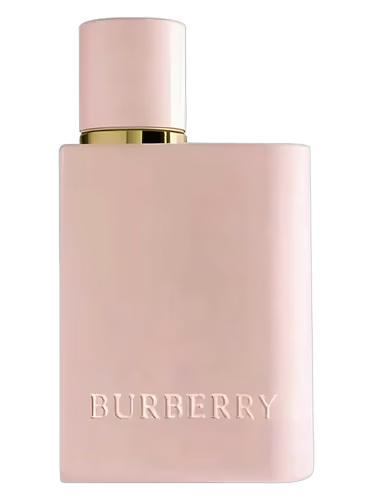
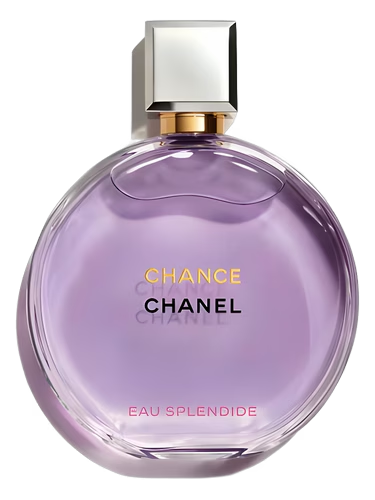
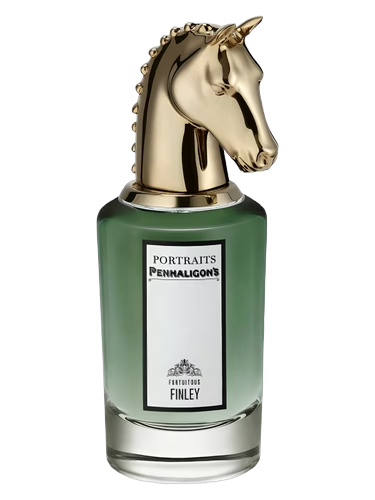
What is Fig Leaf?
Fig Leaf is a perfumery note derived from the foliage of the Ficus carica tree, prized for its green, woody, and subtly milky aroma that evokes a Mediterranean atmosphere.What does Fig Leaf smell like?
It offers a distinctive profile of crushed green foliage and earthy shadow, characterized by a mix of bitter freshness, lactonic (milky) creaminess, and subtle coconut-like nuances.How is Fig Leaf essence extracted?
While historically obtained through maceration, modern production primarily uses solvent extraction or advanced techniques like Supercritical CO2 to capture its complex profile, as natural absolute is restricted.Why is natural Fig Leaf absolute restricted?
The International Fragrance Association (IFRA) prohibits its use because it contains furanocoumarins, which can cause severe phototoxic skin reactions when exposed to sunlight.What are some top perfumes featuring Fig Leaf?
Iconic fragrances highlighting this note include Diptyque Philosykos, L'Artisan Parfumeur Premier Figuier, Acqua di Parma Fico di Amalfi, and BDK Parfums Gris Charnel.