Fragrance Notes Are Layers Of Scent That Are Layered To Form The Final Fragrance. Fragrance Notes Are Categorised Into Three Main Elements Based On How Long They Take To Evaporate, And How Long They Typically Last Following Application: Top Notes, Heart Notes And Base Notes.
Fig Blossom
Fig Blossom is a warm, relaxing, and sophisticated floral-green scent. It captures the sweet, milky aroma of fig pulp alongside the restful, green shade of the leaves. This is balanced by the bittersweet, zesty freshness of grapefruit and a subtle, tranquil base of soft musk, creating a comforting and luminous fragrance.

Origin & Extraction Of Fig Blossom
The history of fig in perfumery is tied to the ancient Mediterranean, where the fruit and tree were highly valued. Fig leaves were referenced in religious texts and used in antiquity to create wreaths and garlands, prized for their natural green scent. While the fig fruit was an essential food source, the fragrant green leaves and fruits of the tree became recognized for their aromatic properties, establishing the fig's historical presence as an evocative scent element long before its modern use in fine fragrance.
Fig became a versatile and beloved note in modern perfumery largely due to a shift in approach during the late 20th century. Key fragrances were among the first to capture the comprehensive essence of the entire fig tree—including the leaves, fruit, sap, and bark—offering a unique green, milky, and slightly woody aroma. This innovative use of the whole fig plant, rather than just the fruit, paved the way for "Fig Blossom" and related notes to become sophisticated components in both niche and mainstream perfumery, moving beyond simple fruit scents.
Extraction Methods of Fig Blossom
Historically, capturing the scent of fig blossoms and leaves was a significant challenge for traditional perfumery because the plant yields very little essential oil through standard steam distillation. Ancient techniques often relied on maceration, where plant material was soaked in carrier oils or fats to create infused oils, or enfleurage, which involved pressing the material into layers of purified fat to absorb the delicate aromatic compounds over several days or weeks.
In modern perfumery, the "fig blossom" note is most commonly achieved through solvent extraction to produce a concrete and subsequently an absolute. This process involves using non-polar solvents like hexane to dissolve the aromatic molecules, followed by alcohol (ethanol) to refine the extract. Recent advancements have also introduced supercritical CO2 extraction, which utilizes pressurized carbon dioxide as a solvent to capture a more true-to-nature, complex scent profile without the thermal degradation associated with heat or the chemical residue of traditional solvents. Additionally, because the yield from natural fig material is extremely low and can contain phototoxic compounds, many modern fig notes are created using high-quality synthetic accords that replicate the characteristic lactonic and green scent of the tree.
The rise of the fig note in modern perfumery is largely credited to fragrances that capture the entire essence of the fig tree. The most famous example is certainly **Diptyque Philosykos Eau de Parfum**, which is celebrated for its photorealistic portrayal of the fig tree—combining the milky sweetness of the fruit, the green shade of the leaves, and the woodiness of the bark. This iconic composition established the fig as a sophisticated, fresh, and slightly creamy scent profile sought after by both niche and mainstream audiences.
Beyond the classic rendition, many modern perfumers utilize the green, milky-sweet complexity of fig (and related notes like Fig Blossom) to create unique aromatic experiences. **D.S. & Durga Debaser Eau de Parfum** is a prime example, often cited for its green, juicy, and slightly coconut-tinged take on fig. It emphasizes the fresh, almost humid greenness of the fig leaf, resulting in a fragrance that is vibrant, uplifting, and ideal for everyday wear while maintaining sophisticated depth.
Fig notes are also expertly blended with warmer, cozier elements to create fragrances with a hazy, comforting quality. **Imaginary Authors Yesterday Haze Eau de Parfum** uses the fig note to bridge fruity freshness with a creamy, woodsy, and slightly gourmand background. This combination of fig, cream, and rich wood demonstrates the note's versatility, allowing it to transition from a sparkling top note into a warm, complex core, appealing to those who prefer richer, more enveloping scents.
Sustainability Of Fig Blossom
Sustainability of Fig Blossom
- Acting as a keystone species that provides a vital year-round food supply and habitat for over 1,200 species of birds and mammals, especially during seasons of scarcity
- Supporting reforestation and biodiversity restoration in ravaged rainforests through rapid growth, massive seed dispersal, and high resilience to flood and drought
- Mitigating climate change by serving as efficient carbon sinks and stabilizing soil to prevent erosion and landslides
- Maintaining essential ecological partnerships, such as the mutualistic relationship with fig wasps, which is critical for pollination and the survival of forest ecosystems
- Promoting sustainable agriculture and agroforestry in the Mediterranean and beyond by selecting resilient genotypes best adapted to environmental stresses
Trivia
Unlike most fruits, fig does not produce a natural essential oil; perfumers must create a "fig accord" from scratch by blending synthetic molecules and natural elements to replicate the scent of the fruit, leaves, and sap.
Most Popular Scents Using Fig Blossom
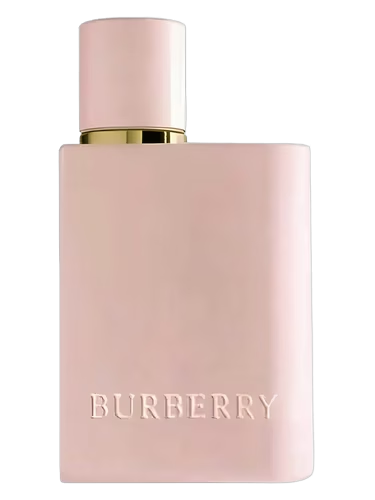
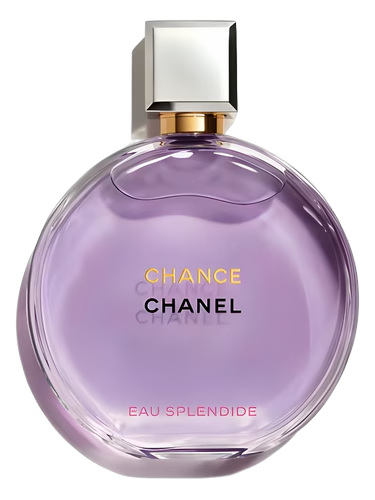
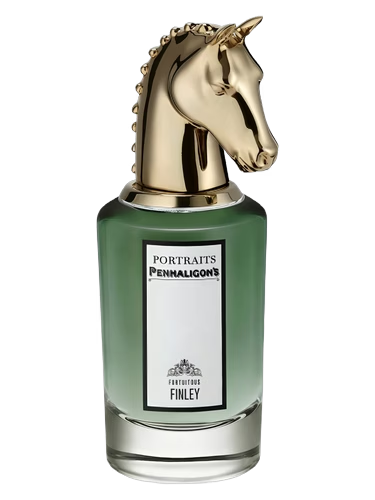
What is Fig Blossom?
Fig Blossom is a warm, floral-green fragrance note that captures the comprehensive essence of the fig tree, including its milky fruit and green leaves.What does Fig Blossom smell like?
It features a relaxing blend of sweet, milky fig pulp and restful green foliage, balanced by the zesty freshness of grapefruit and a soft musk base.How is Fig Blossom essence extracted?
Modern perfumery typically uses solvent extraction or supercritical CO2 extraction, though many notes are created as accords since fig plants yield very little natural essential oil.What are some top perfumes featuring Fig Blossom?
Notable fragrances include Roger & Gallet Fleur de Figuier, Diptyque Philosykos, Jo Malone London Fig & Lotus Flower, and D.S. & Durga Debaser.When is Fig Blossom in season?
The trees follow a dual-season cycle with a minor crop in late spring and a more abundant main harvest peaking between August and October.