Fragrance Notes Are Layers Of Scent That Are Layered To Form The Final Fragrance. Fragrance Notes Are Categorised Into Three Main Elements Based On How Long They Take To Evaporate, And How Long They Typically Last Following Application: Top Notes, Heart Notes And Base Notes.
Fig
Fig in perfumery is a complex, green, sweet, and lactonic note. It often captures the fresh, leafy essence of the fig leaf, combining it with the creamy, milky scent of the sap. The fruit provides a separate profile—rich, honeyed, and gourmand, sometimes with dry, woody, and musky undertones.

Origin & Extraction Of Fig
The fig fruit has a long and symbolic history, dating back to ancient times, where it was considered a sacred fruit by Egyptians and a symbol of prosperity by Greeks and Romans. However, the fig note was not widely utilized in fine perfumery until much more recently. Traditional perfumery focused on other notes, but the complex aroma of the fig—including the sweet, honeyed fruit and the green, leafy, and woody parts of the tree—posed a unique challenge and opportunity for modern perfumers.
The fig note gained major prominence in contemporary perfumery thanks to innovative fragrances that sought to capture the essence of the entire fig tree, including its leaves, fruit, sap, and bark, yielding a distinct green, milky, and slightly woody aroma. This innovative approach, beginning in the late 20th century, established fig as a versatile and beloved note. It now features prominently in both niche and mainstream perfumery, valued for its ability to bridge fresh, green facets with creamy, gourmand, and woody undertones.
Extraction Methods of Fig
Historically, fig essence was difficult to capture because the fruit does not yield an essential oil through traditional steam distillation. Early methods relied on basic maceration, where dried or fresh figs were soaked in water or alcohol for extended periods to create infusions and tinctures. Another traditional approach involved drying and grinding the fruit into a powder, which was then leached with organic solvents like dichloromethane and petroleum ether under constant stirring to produce a thick, fragrant concrete or absolute.
Modern extraction has evolved to include more precise and sustainable techniques. Maceration remains a standard cold process for high-quality botanical extracts, but it is now often supplemented by ultrasonic-assisted extraction (UAE) or microwave-assisted extraction (MAE) to increase yield and preserve heat-sensitive phytochemicals. For fine perfumery, many "fig" notes are actually "reconstitutions"—olfactory illusions created by master perfumers using synthetic molecules like Stemone or Octalactone Gamma to mimic the scent of the fruit, leaf, and sap. Advanced labs also utilize supercritical CO2 extraction and deep eutectic solvents (DES) to capture the most authentic and environmentally friendly aromatic profile of the natural fruit.
The modern fig fragrance movement was largely pioneered by **Diptyque Philosykos**. Launched in 1996, it is considered the definitive interpretation, focusing on the entire fig tree experience rather than just the fruit. This fragrance is celebrated for its photorealistic capture of the fig leaf's green, slightly bitter aroma, combined with the creamy, milky sap and a subtle, woody base.
- **Philosykos** set the standard for how the complex, multi-faceted fig note could be utilized as the central theme of a high-end fragrance, moving it beyond a simple fruity accent.
Another seminal fig scent is **L'Artisan Parfumeur Premier Figuier**, also launched in the mid-1990s. While similar to its contemporary, **Premier Figuier** often leans slightly more towards the sweet, sun-warmed fruit aspect, offering a balance between the green, leafy freshness and the rich, lactonic sweetness of the inner fruit. This successful duality established fig as a versatile note capable of bridging green, fresh accords with creamy, gourmand elements.
- The versatility of fig allows it to be used in various compositions, from light, refreshing summer colognes to deeper, woodier eaux de parfums.
In more contemporary perfumery, fig continues to be a prominent and sophisticated note. Fragrances like **Acqua di Parma Fico di Amalfi** focus on the brighter, zesty Mediterranean side of the note, blending the fig with citrus to create an uplifting, sparkling scent. Conversely, scents like **Guerlain Aqua Allegoria Figue Iris** or offerings from niche houses often utilize the fig leaf and wood to anchor the composition, lending a dry, elegant structure that supports floral or woody heart notes.
- The lactonic (milky/creamy) facet of the fig note is crucial for adding a smooth, comforting texture to modern compositions.
Sustainability Of Fig
Sustainability of Fig
- Reducing agricultural strain by utilizing nature-identical molecules and ingenious synthetics like Stemone to replicate the scent without harvesting large quantities of natural fruit
- Adoption of biotechnology and fermentation processes to manufacture scent molecules from fermented microbes, providing a consistent and eco-friendly alternative to traditional sourcing
- Implementation of circular economy principles through the use of upcycled, bio-based, and renewable carbon-based materials in fragrance production
- Transitioning to sustainable packaging solutions, including the use of renewable, biodegradable wood fibers and refillable bottle designs to minimize material waste
- Prioritizing the use of natural-origin ingredients and sustainable carriers, such as alcohol derived from organic beetroot or other vegetal sources
- Aligning research and development with United Nations Sustainable Development Goals to ensure responsible consumption, climate action, and the protection of biodiversity
Trivia
According to the Bible, fig leaves were used to preserve the modesty of Adam and Eve in the Garden of Eden, and they are widely considered to be one of the first plants ever domesticated by humans, dating back nearly 12,000 years.
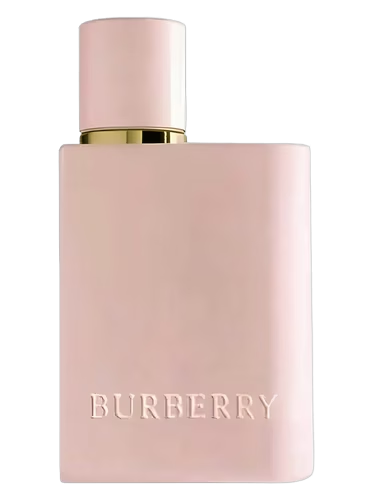
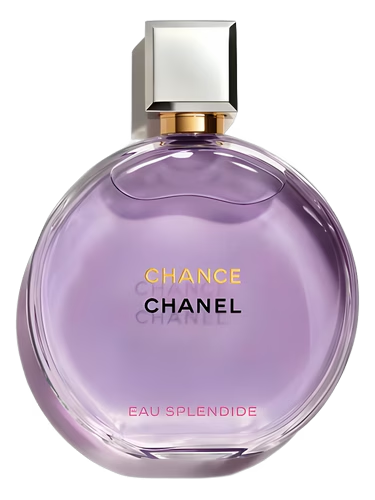
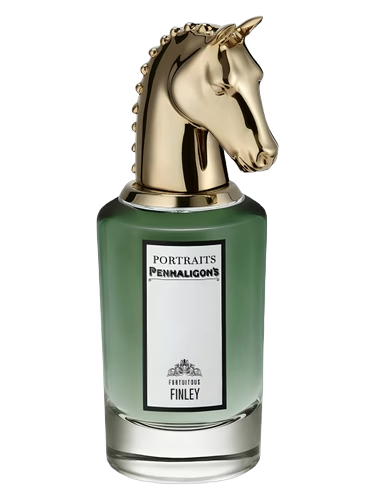
Most Popular Scents Using Fig
What is Fig?
Fig in perfumery is a versatile and complex note that captures the aroma of the entire fig tree, including the green leaves, milky sap, and honeyed fruit.What does Fig smell like?
It is a multi-faceted scent described as green, sweet, and lactonic, blending the fresh, leafy essence of the foliage with a creamy, milky texture and a rich, gourmand fruitiness.How is Fig essence extracted for perfumes?
Because figs do not yield essential oil via distillation, the note is typically created through maceration of the fruit or, more commonly in fine perfumery, via olfactory reconstitutions using synthetic molecules like Stemone.What are some top perfumes featuring Fig?
Notable fig-centric fragrances include Diptyque Philosykos, Le Labo The Noir 29, BDK Parfums Gris Charnel, and Acqua di Parma Blu Mediterraneo Fico di Amalfi.When is Fig in season?
Figs typically have two cropping seasons, with peak availability in the Northern Hemisphere occurring from mid-May through November.