Fragrance Notes Are Layers Of Scent That Are Layered To Form The Final Fragrance. Fragrance Notes Are Categorised Into Three Main Elements Based On How Long They Take To Evaporate, And How Long They Typically Last Following Application: Top Notes, Heart Notes And Base Notes.
Field Scabious
Field Scabious offers a soft, powdery, warm floral profile, characterized by delicate salty notes blended with sweet orange blossom and refined vanilla. It provides a very floral and feminine element, often used for a sophisticated, gentle, and comforting scent.

Origin & Extraction Of Field Scabious
Field Scabious (Knautia arvensis) is a wild flower that, unlike classic notes such as rose or jasmine, does not possess a long-documented history as a primary perfumery ingredient. Its use in fragrance is largely a product of modern, naturalistic perfumery movements and a search for unique, photorealistic floral accents. Historically, its medicinal and traditional significance in European folklore preceded its olfactive application, meaning perfumers typically referenced its abstract characteristics—powdery warmth and subtle sweetness—rather than using a traditional essential oil extract.
The contemporary relevance of Field Scabious in perfumery is often as an evocative, supporting floral accord. It is valued for introducing a nuanced, gentle sophistication to compositions, particularly when bridging powdery iris notes with sweeter floral or light amber bases. The note is used by niche and artisanal houses seeking to capture the scent of a wild meadow, offering a gentle, comforting, and distinctly feminine nuance without the intensity of a heavy white floral.
Extraction Methods of Field Scabious
Historically, field scabious (Knautia arvensis) has been processed using traditional folk methods such as infusion and maceration. The aerial parts—including the flowers, leaves, and stems—were steeped in solvents like water or alcohol for extended periods to draw out bioactive compounds like tannins and saponins for medicinal use. Traditional preparations often involved air-drying the herb at room temperature before extraction to preserve thermolabile substances.
Modern commercial extraction for cosmetic and pharmaceutical use typically employs advanced solvent extraction techniques. The plant material is often ground to a specific particle size and subjected to extraction with 70% ethanol or water to isolate a high concentration of phenolic substances, flavonoids, and phenolcarboxylic acids. The resulting extract is then filtered and concentrated. Additionally, recent developments utilize UHPLC-MS/MS and TLC chromatography for the standardization of bioactive markers, ensuring the purity and efficacy of the extract in skin-conditioning and anti-inflammatory formulations.
Field Scabious, with its soft, powdery, and subtly salty floral profile, is not typically found as a dominant note in mainstream designer fragrances. Instead, it is embraced by niche and artisanal perfume houses aiming to capture the gentle, comforting essence of a European wildflower meadow. When used, the note contributes a sophisticated, gentle femininity and helps to bridge the gap between powdery orris (iris) elements and sweeter, lighter amber or vanilla bases. This use of evocative, less common florals provides a naturalistic texture and depth to modern compositions.
- One fragrance often associated with this type of delicate, wildflower profile is **L'Air du Temps** by Nina Ricci, which, though classic, employs a blend of complex florals to achieve a gentle, warm, and comforting presence akin to the soft, powdery character of Field Scabious.
- Another modern example where a sophisticated wildflower or herbal accord is central is **Jo Malone's Wild Bluebell**, which utilizes a light, green-tinged floral sweetness that shares the naturalistic, gentle lift sought when featuring Field Scabious.
In contemporary perfumery, Field Scabious's role is to enhance a fragrance's gentle complexity and longevity without becoming overwhelming. Its unique blending of sweet orange blossom nuances and delicate salty undertones makes it a valuable supporting element in compositions intended to be subtle, refined, and distinctly comforting. Perfumers often reference its abstract character to create an authentic 'wild garden' feel, ensuring the final scent is sophisticated and far removed from typical heavy white florals.
Sustainability Of Field Scabious
Sustainability of Field Scabious
- Promoting biodiversity by providing a long-lasting nectar source for various pollinators, including butterflies, bumblebees, honeybees, and flower flies
- Supporting local wildlife by offering a reliable nutrition source for seed-eating birds like bullfinches during the late summer and autumn months
- Reducing the need for chemical fertilizers and intensive irrigation due to its natural hardiness, drought tolerance, and ability to thrive in poor or nutrient-deficient soils
- Encouraging responsible land management through regional containment strategies and the promotion of non-invasive native alternatives to protect local ecosystems
- Advocating for natural soil health by utilizing the plant in wildflower meadows to prevent erosion and stabilize disturbed ground with its deep taproot system
Trivia
The name scabious is derived from the Latin word scabere, meaning to scratch, as the plant was historically used as an ointment to treat skin conditions like scabies and even the sores associated with the bubonic plague.
Most Popular Scents Using Field Scabious
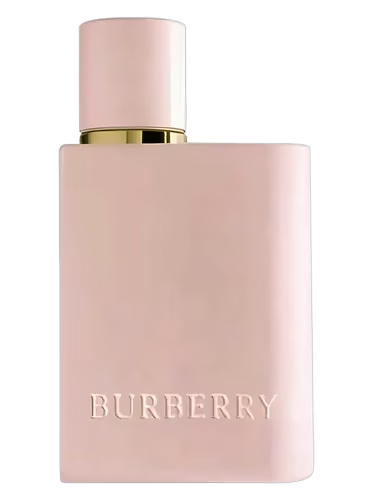
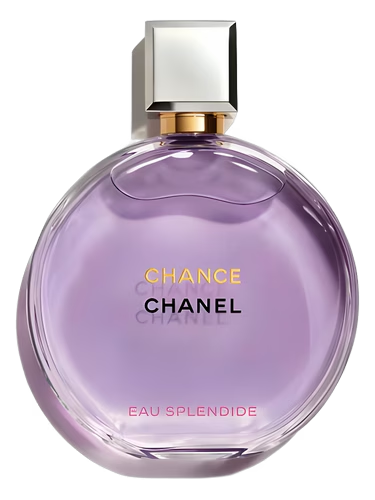
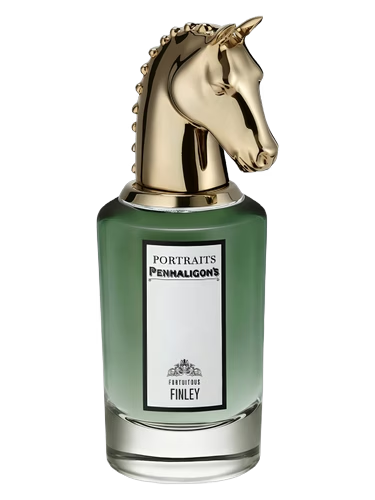
What is Field Scabious?
Field Scabious is a European wildflower known for its lilac-blue pincushion flower heads and its modern use in niche perfumery as a soft, naturalistic floral note.What does Field Scabious smell like?
It features a soft, powdery, and warm floral profile with unique salty undertones, sweet orange blossom nuances, and a refined vanilla finish.How is Field Scabious essence extracted?
In modern perfumery, it is typically obtained through solvent extraction of the plant's aerial parts, though perfumers often recreate its scent through abstract accords.What are some top perfumes featuring Field Scabious?
While rare as a dominant note, its profile is evoked in fragrances like Nina Ricci L'Air du Temps and Jo Malone Wild Bluebell, which capture its wildflower meadow essence.When is Field Scabious in season?
The plant typically blooms from June through September or October, providing a consistent nectar source for pollinators throughout the summer and early autumn.