Fragrance Notes Are Layers Of Scent That Are Layered To Form The Final Fragrance. Fragrance Notes Are Categorised Into Three Main Elements Based On How Long They Take To Evaporate, And How Long They Typically Last Following Application: Top Notes, Heart Notes And Base Notes.
Feijoa Fruit
Feijoa offers a complex, aromatic, and distinctly tropical profile. It blends the sweet juiciness of guava and pineapple with the bright tartness of strawberry, underpinned by a green, slightly earthy, and sometimes subtle resinous nuance. It is uniquely sweet, fresh, and slightly metallic/phenolic, lending an exotic, sparkling lift to compositions.

Origin & Extraction Of Feijoa Fruit
The feijoa fruit, scientifically known as *Acca sellowiana* and native to South America (Brazil, Argentina, Paraguay, and Uruguay), is a relatively modern and niche note in the world of fine perfumery. Historically, the fruit was cultivated in temperate regions for culinary purposes and was valued for its distinctive taste and aromatic profile, often described as a blend of guava, pineapple, and strawberry with green undertones. Unlike classical perfume ingredients such as rose or jasmine, feijoa does not have centuries of use in traditional scent-making.
Feijoa has gained relevance in contemporary perfumery due to the demand for exotic, complex, and naturalistic fruit accords. Its unique sweet, slightly tart, and green/metallic scent is often recreated synthetically, or captured via headspace technology, to deliver a vibrant and sparkling lift in modern compositions. It is primarily utilized by niche and avant-garde designer houses seeking to evoke tropical or Australasian themes, adding an exotic and uplifting freshness that stands out from more conventional fruit notes.
Historically, the extraction of essential oils from natural aromatic plants like feijoa has relied on traditional distillation techniques dating back to the 13th century. Steam distillation and hydro-distillation are the most established methods, though their efficiency varies by plant material. In the case of feijoa peel, traditional steam distillation can be less efficient due to significant agglutination and the formation of clumps during the process, which hinders the release of volatile compounds from the oil glands.
Modern commercial extraction has identified hydro-distillation as the optimized method for feijoa essential oil, specifically using a material-to-water ratio of 1:4 and an extraction time of approximately 90 minutes to achieve peak yield. Recent advancements have introduced green extraction technologies (GETs) to further improve purity and sustainability. These include supercritical fluid extraction (SFE) using carbon dioxide at high pressures, ultrasound-assisted extraction (UAE), and subcritical water extraction (SWE). Furthermore, innovative techniques like vacuum freeze-drying (lyophilization) are now employed to dehydrate the fruit without heat, preserving thermally unstable aromatic compounds and high polyphenol content for use in high-end perfumery and pharmaceuticals.
The Feijoa Fruit note, known for its exotic blend of sweet guava, tart strawberry, and green, slightly metallic nuances, is primarily utilized in modern niche and high-end perfumery to create sparkling, tropical accords. Due to its recent emergence and complex nature, it often appears in fragrances designed to evoke themes of Australasian nature or sophisticated, non-conventional fruitiness. Rather than being a foundation in classic scent families, Feijoa serves as a vibrant, eye-catching top note that adds an immediate, unusual lift, challenging the dominance of traditional citruses like Bergamot and Lemon.
- While specific mass-market "famous" perfumes dedicated entirely to Feijoa are rare, the note often features subtly in tropical, light, or green compositions. Fragrances seeking a juicy, green freshness that goes beyond conventional lime or sweet fruits may incorporate this note. For example, scents aiming for a naturalistic, botanical garden feel might use Feijoa to support a green/floral heart, adding a layer of sweet, slightly fermented complexity.
A notable example often cited in enthusiast communities for capturing the feijoa essence is the limited edition scent Feijoa by various independent or smaller artisanal houses, which often center the unique fruit profile in their compositions. When major designers employ this note, they typically blend it seamlessly into a larger tropical or aquatic accord, as seen in certain fresh releases by brands like Jo Malone London or Acqua di Parma, though it may not be explicitly listed as a primary feature, lending complexity to the overall fruit basket effect.
Sustainability Of Feijoa Fruit
Sustainability of Feijoa Fruit
- Promoting low-input agriculture through the plant's natural resistance to pests and diseases, which significantly reduces the need for chemical pesticides and synthetic fertilizers
- Supporting climate resilience by utilizing drought-tolerant cultivars that thrive in variable rainfall patterns and marginal soils
- Enhancing on-farm biodiversity and pollinator health as the vibrant flowers provide essential habitats and food sources for bees and birds
- Implementing soil conservation practices through robust root systems that stabilize land and prevent erosion in agroforestry and permaculture designs
- Advancing sustainable farming via genetic mapping to improve disease resistance and the adoption of precision AI monitoring to optimize water and nutrient usage
- Contributing to a circular economy by encouraging productive "fedges" (fruiting hedges) that provide windbreaks, privacy, and food security simultaneously
Trivia
The feijoa's potent, perfume-like aroma is primarily caused by the organic compound methyl benzoate, which is so distinctive that the fruit is often used as a natural ingredient in high-end cosmetics and skin-toning products.
Most Popular Scents Using Feijoa Fruit
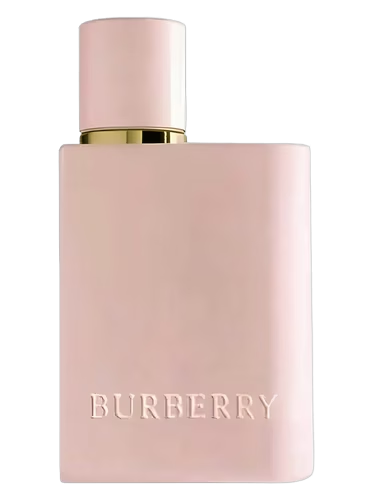
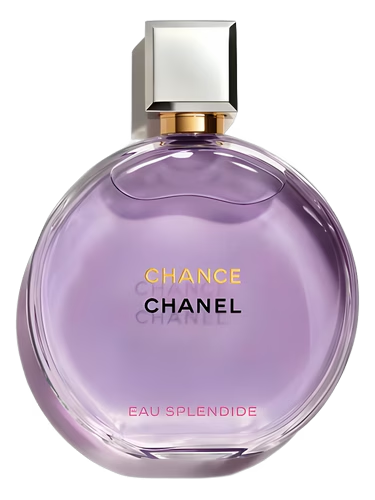
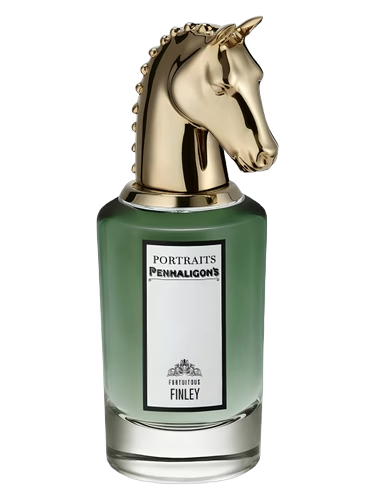
What is Feijoa Fruit?
Feijoa fruit, or Acca sellowiana, is a tropical fruit native to South America that is used in modern niche perfumery to provide exotic, complex fruit accords.What does Feijoa Fruit smell like?
It offers a vibrant, tropical profile blending the sweetness of guava and pineapple with tart strawberry and a unique green, slightly metallic or earthy nuance.How is Feijoa Fruit essence extracted?
The essence is primarily obtained through hydro-distillation of the peel, though modern techniques like supercritical fluid extraction and headspace technology are also used to capture its delicate aroma.What are some top perfumes featuring Feijoa Fruit?
Notable fragrances include State of Mind Butterfly Mind, Overose Marshmallow Maracujá, Estee Lauder Beautiful Belle Love, and Byredo Pulp.When is Feijoa Fruit in season?
The fruit typically reaches maturity in autumn and early winter, with peak harvest times occurring between March and June in the Southern Hemisphere.