Fragrance Notes Are Layers Of Scent That Are Layered To Form The Final Fragrance. Fragrance Notes Are Categorised Into Three Main Elements Based On How Long They Take To Evaporate, And How Long They Typically Last Following Application: Top Notes, Heart Notes And Base Notes.
Evergreen
A vibrant, green-noted aroma that is clean and earthy, capturing the essence of the natural world. It features a fresh blend of green, watery, and pepper top notes, a heart of ivy, coriander, and iris, and a base of vetiver, incense, and musk, offering a refreshing and natural outdoor scent.

Origin & Extraction Of Evergreen
The concept of "Evergreen" in perfumery—representing the crisp, resinous, and green aroma of coniferous trees and plants like pine, fir, and juniper—has been present since the earliest days of fragrance, often linked to medicinal and ritualistic uses. Ancient civilizations burned evergreen boughs (like cedar and pine) as incense for purification and religious ceremonies. However, its use in modern fine perfumery, specifically to capture a naturalistic, earthy, and clean outdoor scent, gained major prominence in the 19th and 20th centuries, particularly with the rise of Fougère and Chypre fragrance families. These structures often employed notes like pine needle, moss, and woody accords to evoke vast, deep forests, providing a bracing contrast to sweeter floral and oriental scents.
Today, the Evergreen note is highly valued for its ability to lend an energetic, clean, and masculine character to compositions. Contemporary perfumery relies on highly refined extractions and synthetic molecules to capture the photorealistic scent of dense, cold forests, moving beyond simple pine soap associations. It remains a cornerstone in aromatic and woody fragrances, where it provides structural freshness and longevity. Modern interpretations often blend it with aquatic, mineral, or spicy notes to create sophisticated, year-round scents that emphasize the vibrant, natural world.
Extraction Methods of Evergreen
Historically, the extraction of aromatic and medicinal compounds from evergreens, such as pine, fir, and spruce, relied on simple infusion and maceration techniques. Traditional methods involved steeping needles and boughs in carrier oils or fats for several weeks, sometimes utilizing gentle heat from a stovetop or woodstove to accelerate the release of volatile oils. For more concentrated essences, steam distillation has long been the standard, where pressurized steam is passed through the plant material to evaporate and then condense the volatile aromatic compounds.
Modern advancements have introduced more efficient and sustainable techniques. Supercritical CO2 extraction is now widely used to isolate specific cannabinoids and terpenes from evergreen plants without the use of harmful solvents. Additionally, breakthrough industrial methods have been developed to extract high-grade compounds, like saponins, directly from the leaves rather than the wood or bark, promoting a more sustainable supply chain. In remote sensing, innovative methods like the NDVI-CV (Normalized Difference Vegetation Index Coefficient of Variation) are now employed to accurately map and extract data regarding evergreen coverage in complex urban environments.
The Evergreen note—encompassing the crisp, resinous scent of pine, fir, and juniper—is a cornerstone in classic masculine perfumery, providing structural freshness and an energetic, clean character. It often appears in Fougère and Woody fragrances designed to evoke the sensation of cold, deep forests. One notable category where this note excels is in high-quality artisanal and niche compositions, seeking photorealistic nature scents rather than simple pine associations.
Modern perfumery utilizes Evergreen to create sophisticated, year-round scents that blend the bracing woods with other elements. While not always listed explicitly as "Evergreen," its core components (pine needle, cedar, cypress) are foundational. For instance, brands like Comme des Garçons are known for compositions that heavily feature resinous, woody, and incense accords, lending a pronounced, complex evergreen quality that is both modern and strikingly atmospheric.
The Evergreen theme also appears in more experimental and transparent compositions. Although the search results mention general themes, high-end fragrances like those from Amouage or selections tagged in specialized fragrance houses, such as **L'Orange Fumée** by Amberfig, often showcase the note's complexity by blending it with spices, amber, or aquatic notes. This ensures the clean, invigorating blast of the evergreen essence remains throughout the wear, elevating the composition beyond a simple top note and lending greater longevity.
Sustainability Of Evergreen
Sustainability of Evergreen
- Promoting a circular economy by implementing community compost programs for residential and commercial organic waste diversion
- Fostering ecological resilience through habitat restoration projects, such as bulkhead removal to improve critical salmon habitats
- Transitioning to renewable energy by installing large-scale solar arrays to reduce carbon footprints
- Adopting zero-waste initiatives including the establishment of refill stations to reduce single-use plastic consumption
- Enhancing community biodiversity and food security through the management of local community gardens and seed swap events
- Providing technical assistance to local businesses via green business networks to optimize energy, water, and resource efficiency
Trivia
Oud, an ingredient often used in evergreen-based fragrances, is actually a fragrant resin produced as a defense mechanism when an evergreen tree becomes infected with a specific type of fungus; without this infection, the wood is essentially scentless.
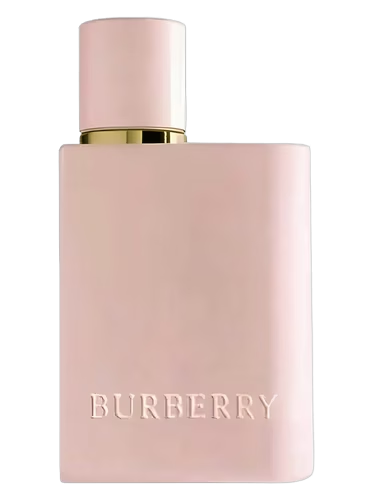
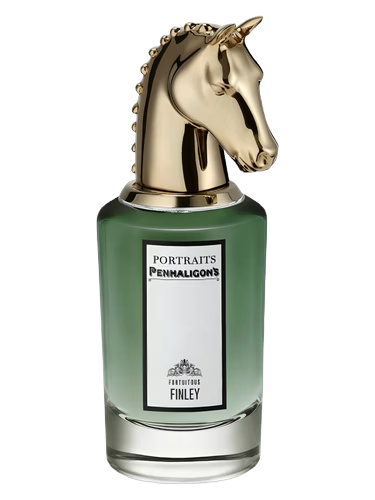
Most Popular Scents Using Evergreen

What is Evergreen?
Evergreen is a fragrance note representing the crisp, resinous, and green aroma of coniferous trees like pine, fir, and juniper, used to evoke a natural forest atmosphere.What does Evergreen smell like?
It offers a vibrant, clean, and earthy scent characterized by fresh green, watery, and peppery top notes with a resinous, woody, and balsamic undertone.How is the Evergreen note extracted?
The essence is typically obtained through steam distillation of needles and boughs, though modern methods like supercritical CO2 extraction are also used to preserve delicate terpenes.What are some top perfumes featuring Evergreen?
Notable fragrances include Jil Sander Evergreen, Scents of Wood Evergreen in Snow, Gallagher Fragrances Evergreen Dream, and Comme des Garçons Blue Santal.What is the seasonality of Evergreen?
While evergreens are year-round plants, the note is particularly celebrated in winter for its structural freshness and in spring when new growth and cones emerge.