Fragrance Notes Are Layers Of Scent That Are Layered To Form The Final Fragrance. Fragrance Notes Are Categorised Into Three Main Elements Based On How Long They Take To Evaporate, And How Long They Typically Last Following Application: Top Notes, Heart Notes And Base Notes.
Euphorbia
Euphorbia offers a naturally aromatic, earthy-green, and subtly woody profile. It provides a grounding, exotic fragrance often used as a potent top or middle note. The scent is often described as bold, refreshing, and sophisticated, sometimes featuring a clean aquatic nuance and a warm, sensual drydown.

Origin & Extraction Of Euphorbia
The use of Euphorbia in perfumery is a very modern and niche concept, reflecting a contemporary trend toward utilizing exotic, non-traditional plant notes for their unique aromatic profiles. The Euphorbia genus is vast, often associated with milky sap (latex) and ornamental/medicinal uses, rather than traditional oil extraction for fine fragrance. Early perfumery centered on readily available and historically proven natural materials like classic florals and citruses; therefore, Euphorbia does not share the centuries-long legacy of ingredients foundational to Eau de Cologne or classic French perfume houses. Its emergence signals a desire by contemporary perfumers to capture abstract, earthy-green, or subtly woody accords with an exotic, grounding quality.
In modern fine fragrance, the Euphorbia note is typically a reconstructed accord, designed to evoke the plant’s sophisticated, slightly earthy-green, and occasionally spicy-woody aroma, often including a clean aquatic nuance as mentioned in its profile. Its relevance lies in its ability to add depth and an unexpected, potent natural complexity to compositions, often appearing in niche and avant-garde fragrances seeking a bold, refreshing, and sophisticated structure that moves far beyond conventional floral or green categories. This note helps bridge traditional aromatic elements with a more abstract, naturalistic impression.
Extraction Methods of Euphorbia
Historically, Euphorbia has been processed through simple manual methods and traditional hydro-distillation using boiling water and Clevenger-type apparatuses to isolate its aromatic and medicinal compounds. Ancient applications often utilized the raw latex directly or used basic infusions and macerations of aerial parts, such as leaves and stems, in water or oil to treat ailments like asthma or to serve as a natural stimulant. In regions like India, traditional Ayurvedic medicine has long employed these extracts for their purgative and therapeutic properties.
Modern extraction techniques have evolved to include more sophisticated laboratory and industrial processes. Steam distillation remains a standard method for obtaining essential oils, while solvent extraction using hexane, ethanol, or ethyl acetate via Soxhlet apparatuses is frequently employed to isolate specific bioactive secondary metabolites. Recent advancements include supercritical CO2 extraction and advanced chromatography techniques, such as silica gel column chromatography and HPLC, to purify individual compounds like diterpenes or flavonol glycosides for pharmaceutical and insecticidal research.
The Euphorbia note, being modern and non-traditional, is often featured in avant-garde and niche perfumery to introduce a unique, earthy-green, and subtly woody complexity. While it lacks the historical prominence of classic floral notes, its distinctive profile is utilized by contemporary houses to achieve sophisticated compositions that move beyond conventional boundaries. It serves as a potent aromatic element, providing an exotic and grounding quality.
- *
In certain contexts, the Euphorbia note is associated with fragrance profiles that are unexpected or abstract, like the scent of milky sap or a clean aquatic nuance mentioned in its odor profile. Examples of fragrances mentioned alongside this note include niche and designer creations such as **Le Lion Eau de Parfum** and **Spicebomb Extreme**, suggesting that the note can be incorporated into rich, sensual, or bold structures, offering an unusual twist on traditional accords.
- *
The note also appears in less conventional scent concepts, indicating its versatility. Other perfumes associated with Euphorbia include **Anais Anais L'Original Eau de Toilette** and **Kitten Fur**, illustrating how a reconstructed Euphorbia accord can be used to add subtle depth or an earthy, vegetal dimension to a diverse range of fragrance families, from classic florals to whimsical, abstract scents.
Sustainability Of Euphorbia
Sustainability of Euphorbia
- Promoting biodiversity by cultivating hardy, drought-tolerant species like Euphorbia balsamifera that thrive in arid environments with minimal water requirements
- Implementing responsible wild-harvesting practices for resins and saps to prevent the overexploitation of native desert scrublands and rocky slope ecosystems
- Advancing green chemistry principles in the extraction of aromatic compounds to replace traditional petrochemical processes with more eco-friendly alternatives
- Supporting local socio-economic resilience in native regions across Africa and the Middle East by establishing fair-trade sourcing for traditional medicinal and fragrance materials
- Utilizing biotechnological innovations and upcycling methods to replicate complex balsamic notes without damaging wild plant populations or depleting natural resources
Trivia
The Euphorbia genus includes the Poinsettia, a popular holiday plant, and the giant cactus-like Euphorbia ingens, but it is also biologically linked to the world's largest flower, the Rafflesia, which can grow up to three feet wide and smells like rotting flesh.
Most Popular Scents Using Euphorbia
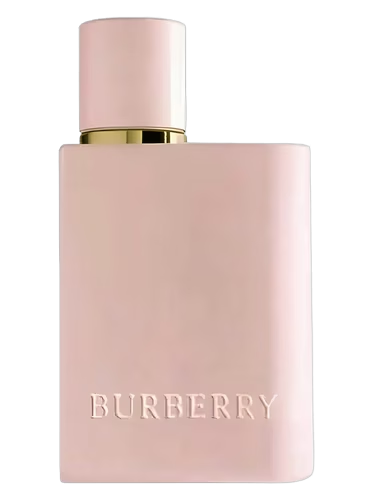
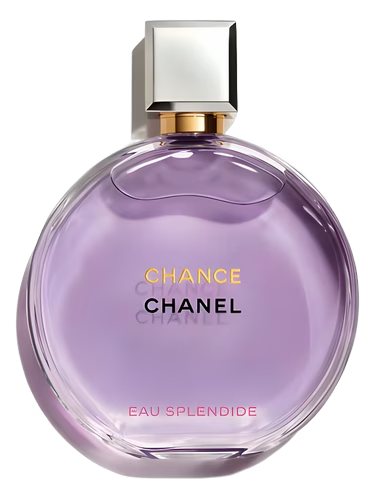
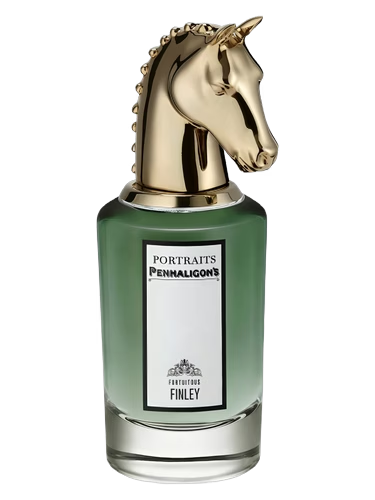
What is Euphorbia?
Euphorbia is a vast genus of plants ranging from herbs to succulents, including the Poinsettia, whose unique aromatic profile is utilized in modern and niche perfumery as a reconstructed accord.What does Euphorbia smell like?
It offers a naturally aromatic, earthy-green, and subtly woody profile with hints of milky sap, clean aquatic nuances, and a warm, sensual drydown.How is the Euphorbia note used in perfumes?
It is often used as a potent top or middle note to provide a grounding, exotic quality and abstract natural complexity to avant-garde and niche compositions.What are some top perfumes featuring Euphorbia?
The note is notably associated with the Calvin Klein Euphoria collection, including the original Euphoria, Euphoria Intense, and Euphoria Essence.When is Euphorbia in season?
Seasonality varies across its 2,000 species, but many bloom from late spring through early summer, while varieties like the Poinsettia peak during the winter months.