Fragrance Notes Are Layers Of Scent That Are Layered To Form The Final Fragrance. Fragrance Notes Are Categorised Into Three Main Elements Based On How Long They Take To Evaporate, And How Long They Typically Last Following Application: Top Notes, Heart Notes And Base Notes.
Erigeron (Fleabane)
Erigeron offers a complex, tenacious, and unique aroma, resembling Moroccan Chamomile with a Verbena-like freshness. It features a sweet, spicy, and fresh profile with distinct herbal and licorice undertones. It adds enigmatic nuances, blending well with cardamom and citrus oils.

Origin & Extraction Of Erigeron (Fleabane)
Erigeron, commonly known as Fleabane, does not possess a long, traditional history as a foundational ingredient in classical perfumery like notes derived from foundational citruses or common florals. Historically, its primary use was medicinal and folk remedy, reflected in its common name, which suggests an ability to repel insects due to its strong aromatic profile. In ancient times and the Middle Ages, aromatic plants like Fleabane were often used for their odor but rarely isolated for fine fragrance compositions, meaning its inclusion in perfumery is a relatively modern phenomenon.
The use of Erigeron essential oil in modern perfumery is largely confined to contemporary and niche fragrance composition, where its complex odor—described as a mix of sweet, spicy, herbal, and licorice-like notes with a freshness similar to Verbena—is valued for adding unique, enigmatic nuances. Perfumers utilize it to introduce an unexpected, tenacious aromatic complexity, often blending it with citrus oils and spices like cardamom to bridge sparkling top notes with deeper, more complex heart and base structures.
Extraction Methods of Erigeron Fleabane
The primary modern method for extracting Erigeron Fleabane essential oil is steam distillation or hydrodistillation of the fresh flowering herb, including the leaves and flowers. This process involves passing steam through the plant material to vaporize the volatile aromatic compounds, which are then condensed and separated as a pure essential oil. In contemporary research, innovative techniques such as supercritical fluid extraction (SFE) using CO2 have been employed as an efficient alternative to improve product quality and capture a higher percentage of terpene components without the risk of thermal degradation associated with heat-based distillation.
Historically, Erigeron was utilized through simpler traditional methods to harness its medicinal properties. In the 19th and early 20th centuries, the fresh herb was gathered during its flowering period and subjected to basic distillation to produce what was then sold as "oil of fleabane." Beyond distillation, traditional medicine frequently employed aqueous and alcoholic extractions, such as boiling the plant to create medicinal steam for sweat lodges, preparing hot or cold infusions (teas), and developing tinctures or infused oils to stabilize and extract its active phytochemical compounds.
Erigeron, or Fleabane, is an unusual and sophisticated note, largely absent from mainstream designer perfumery, making it a distinctive signature in niche and artisanal fragrances. Its complex profile—a blend of sweet, spicy, herbal, and licorice undertones with a hint of verbena-like freshness—is utilized by perfumers to add an enigmatic, tenacious aromatic complexity that distinguishes a scent from more common floral or green compositions.
- A notable use of the Erigeron (Fleabane) note is found in fragrances by niche houses known for their botanical accuracy and complexity. For instance, in the realm of high-end perfumery, the note's herbal-spicy facets are often employed to create a sophisticated, slightly wild, and earthy aroma.
Due to its modern inclusion, perfumes featuring Erigeron often aim to bridge traditional fragrance structures with unexpected aromatic elements. This is evident in compositions where the note acts as a transitional element, enhancing the freshness of citrus top notes (as its profile blends well with them) while providing a long-lasting, slightly camphorous or herbaceous complexity that anchors the heart. This subtle yet enduring presence ensures the fragrance maintains an air of natural mystery.
- Specific perfumes that showcase this note include **Aqua di Parma Colonia Pura** (where a fleeting herbal citrus accord hints at its green and spicy facets) and niche creations like **Etro Etrog**, which may use similar floral-herbaceous elements to achieve a sophisticated, clean bitterness.
Ultimately, Erigeron's value in perfumery lies in its tenacity and complexity. It moves beyond a simple fleeting top note, helping to provide depth and an unexpected twist to fresh or light floral compositions. When successfully integrated, as in select fragrances such as **L'Artisan Parfumeur L'Eau d'Ambre Extrême**, where herbal notes support the amber base, it lends a refined, slightly wild aromatic quality that is both enduring and distinctive.
Sustainability Of Erigeron (Fleabane)
Sustainability of Erigeron (Fleabane)
- Utilizing native fleabane species for restoration projects due to their rapid growth and ability to establish in disturbed early seral conditions
- Employing rhizomatous and taprooted varieties to aid in soil stabilization and prevent erosion in various moisture regimes
- Supporting local biodiversity by maintaining populations that serve as essential food sources for specialized pollinators, including diverse butterflies and moths
- Implementing non-chemical management strategies such as sowing native seed mixtures to recover plant communities and control invasive fleabane varieties
- Promoting the cultivation of drought-resistant and deer-resistant perennials to reduce the need for supplemental irrigation and chemical deterrents in landscapes
Trivia
Despite its name and historical use as a folk repellent, there is no scientific evidence that fleabane actually wards off fleas, though its crushed leaves do emit a pleasant balsam-like or herbal fragrance.
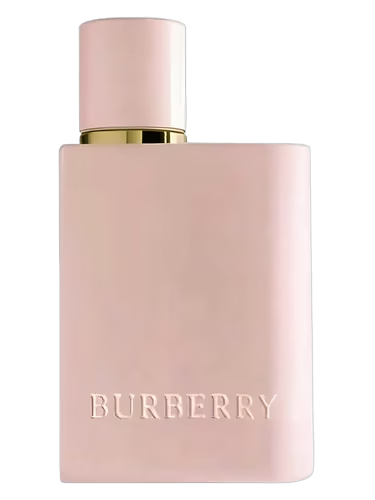
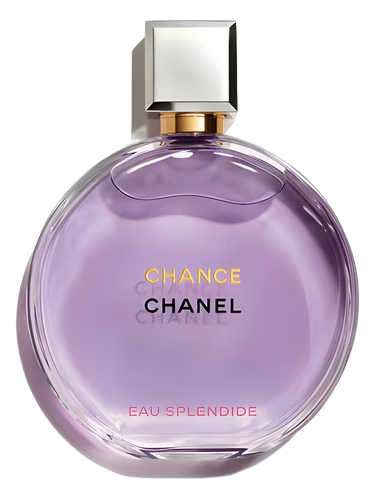
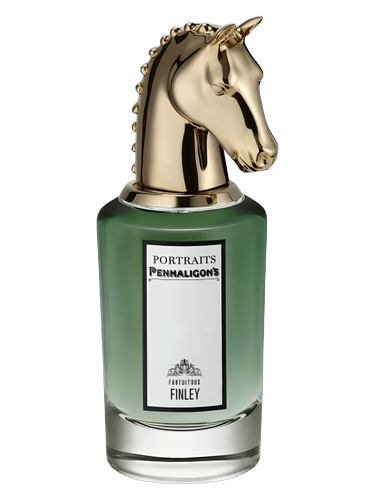
Most Popular Scents Using Erigeron (Fleabane)
What is Erigeron (Fleabane)?
Erigeron, commonly known as Fleabane, is a flowering plant in the aster family whose essential oil is used in niche perfumery to provide a complex, tenacious, and herbal-spicy character.What does Erigeron smell like?
It offers a unique aroma featuring sweet, spicy, and fresh facets with distinct herbal and licorice undertones, often compared to Moroccan Chamomile with a Verbena-like lemony lift.How is Erigeron essence extracted?
The essential oil is primarily obtained through steam distillation of the fresh flowering herb, including the leaves and flowers.What are some top perfumes featuring Erigeron?
Notable fragrances that utilize this note include Parfum d'Empire Mal-Aimé, Ladanika Matryoshka, Oscar London Granada, and Forage White Oak.Does Erigeron actually repel fleas?
Despite its common name and historical use in folk medicine as a repellent, there is no scientific evidence that the plant effectively wards off insects, though its crushed leaves emit a pleasant balsam-like scent.When is Erigeron in season?
Erigeron typically blooms from late spring through late autumn, with its primary flowering phase beginning in May or June and often persisting until the first frosts.