Fragrance Notes Are Layers Of Scent That Are Layered To Form The Final Fragrance. Fragrance Notes Are Categorised Into Three Main Elements Based On How Long They Take To Evaporate, And How Long They Typically Last Following Application: Top Notes, Heart Notes And Base Notes.
Elderflower
Elderflower offers a delicate, sweet, and unique floral-herbal aroma, capturing the essence of the Sambucus plant. It features bright, green nuances with a slightly intoxicating, honeyed sweetness, sometimes carrying an intense berry or subtly creamy undertone, providing a light, airy, and sophisticated nuance to compositions.

Origin & Extraction Of Elderflower
Elderflower, derived from the elderberry tree native to Europe, has a history rooted in traditional uses beyond perfumery, including medicine and culinary applications dating back thousands of years to the Roman era. Culturally, the sweet fragrance was often associated with repelling evil spirits and bringing good luck.
Its relevance in perfumery, however, gained significant traction in later periods, notably the Victorian era. During this time, the elderflower became a symbol of love and eternal love, and perfumes and scented products featuring the Elderflower fragrance became premium items among the upper class. This established the delicate, sweet, and unique floral-herbal aroma as a sophisticated nuance in fragrance compositions, a trend that continues in modern perfumery today.
Extraction Methods of Elderflower
Historically, the aromatic essence of elderflowers was captured through traditional maceration and simple hydrodistillation. These methods involved steeping the flowers in water or oil to create infusions and floral waters, which were used for both their medicinal properties and delicate scent. Another traditional, albeit labor-intensive, method is enfleurage, where flowers are placed on layers of fat to absorb their fragrance, a technique particularly suited for delicate blossoms that cannot withstand high heat.
Modern commercial extraction primarily utilizes solvent extraction to produce elderflower absolute, often using hexane or other organic solvents to yield a rich, concentrated aromatic. However, the latest advancement in elderflower processing is supercritical CO2 extraction. This method uses carbon dioxide at low temperatures and high pressure to extract the full spectrum of the flower's volatile compounds without chemical residues or heat degradation. Additionally, steam distillation continues to be used to produce high-quality essential oils and hydrosols, preserving the fresh, grassy, and floral character of the plant for use in fine perfumery and aromatherapy.
Elderflower, with its delicate, sweet, and unique floral-herbal aroma, is often used in contemporary perfumery to introduce a light, airy sweetness that is less cloying than traditional florals. One of the most celebrated and highly accessible uses of this note can be found in the Jo Malone London fragrance, Elderflower & Gooseberry. This scent perfectly captures the ephemeral, honeyed sweetness of the bloom and showcases how Elderflower can be paired with fruity, tart notes (the gooseberry) to create a sophisticated, refreshing, and very English composition.
The note has also been embraced by major luxury houses, which utilize it to impart a subtle, creamy undertone and green nuance. A notable example is in fragrances that aim for a gentle, sun-drenched floral profile, such as **Gucci Flora Gorgeous Gardenia**. Although not always listed as a central note, Elderflower (or a similar accord) contributes to the overall bright, airy, and delicately sweet opening, providing lift and sophistication to the dominant white floral and fruity elements.
In niche and artisanal perfumery, Elderflower is occasionally employed to convey a photorealistic springtime freshness or a subtly intoxicating honeyed quality. Its distinctive profile makes it an excellent choice for creators seeking a unique herbal-floral signature, distinguishing their compositions from mainstream white florals. While many examples exist, the use of Elderflower accords in lighter compositions ensures a sparkling, complex opening that offers immediate cheerfulness and a refined, natural feel.
Sustainability Of Elderflower
Sustainability of Elderflower
- Adopting responsible foraging and wild-harvesting practices by taking only what is needed, leaving enough for pollinators, and harvesting no more than 25% of a single plant to ensure future berry development
- Enhancing biodiversity and carbon sequestration through the integration of elder trees into farm hedgerows, which provide essential habitats for over 50 species of birds and insects
- Implementing organic farming standards and achieving certifications like B Corp and FairWild to verify ethical labor conditions, environmental performance, and supply chain transparency
- Reducing environmental impact by prioritizing locally foraged or grown flowers to minimize food miles and carbon emissions associated with long-distance transport
- Promoting a circular economy by utilizing all parts of the elder plant, including flowers for cordials and tinctures and berries for syrups and medicinal preparations, to ensure zero waste
Trivia
In folklore, the elder tree was traditionally believed to be a magical "fairy tree," and planting it near a home was thought to ward off the devil and protect the household from evil spirits.
Most Popular Scents Using Elderflower
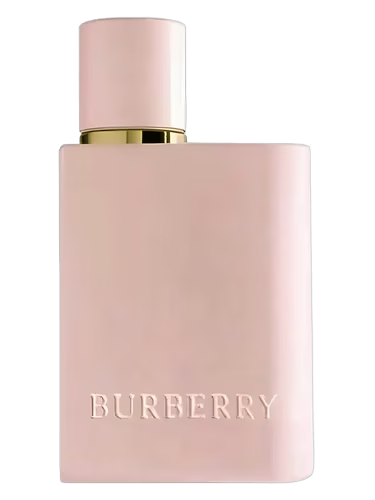
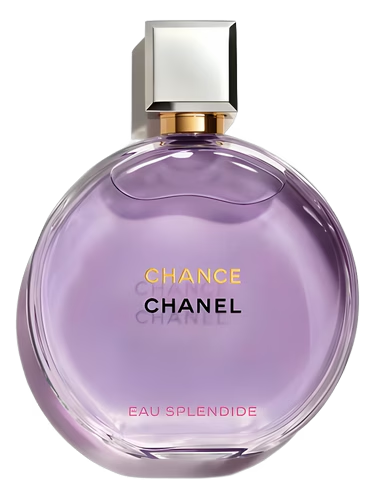
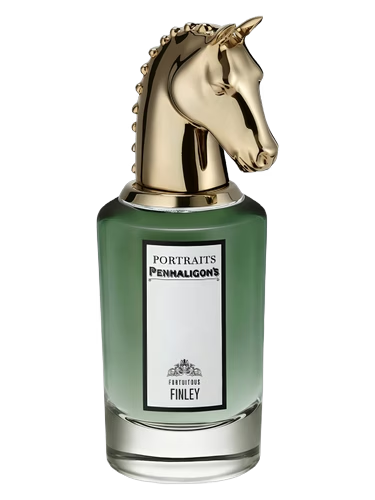
What is Elderflower?
Elderflower refers to the small, star-shaped white blossoms of the elder tree (Sambucus nigra), a plant native to Europe, Northern Africa, and parts of Asia that has been used for centuries in medicine, folklore, and perfumery.What does Elderflower smell like?
It possesses a delicate, honeyed-sweet aroma with pear and lychee fruitiness, balanced by light green-herbaceous undertones and a subtle, intoxicating floral quality.How is Elderflower essence extracted for perfume?
Modern perfumery primarily uses solvent extraction to create elderflower absolute, though supercritical CO2 extraction is also used to capture its full aromatic spectrum without heat degradation.What are some top perfumes featuring Elderflower?
Notable fragrances include Jo Malone London Elderflower & Gooseberry, Hermes 24 Faubourg, Dior Miss Dior Essence, and Zarkoperfume Pink Molecule 090.09.When is Elderflower in season?
The blooming period is brief, typically occurring from late May through early July, with a peak harvest window of only two to three weeks during the transition from late spring to early summer.