Fragrance Notes Are Layers Of Scent That Are Layered To Form The Final Fragrance. Fragrance Notes Are Categorised Into Three Main Elements Based On How Long They Take To Evaporate, And How Long They Typically Last Following Application: Top Notes, Heart Notes And Base Notes.
Elderberry
Elderberry offers a sweet, complex fruity-floral profile in perfumery, blending bright, jammy red berry notes (like blackcurrant or raspberry) with delicate floral and subtle herbal or green nuances. It often possesses a hint of sweetness reminiscent of date or fig, providing a sophisticated, mildly tart, and uplifting aroma with a clean finish.

Origin & Extraction Of Elderberry
Elderberry (Sambucus nigra) has been valued across Europe and North America for centuries, particularly in traditional medicine, folklore, and culinary uses (for wine, jams, and cordials). While the plant itself has a long history, its use as a distinct, formal note in fine perfumery is much more modern. The unique scent profile—a blend of juicy red berry fruit, subtle floral notes from the blossom, and a hint of green herbaceousness—was often challenging to capture and utilize effectively until advances in synthetic chemistry and natural extraction techniques made its incorporation feasible.
Elderberry is primarily featured in contemporary perfumery, particularly in niche and modern designer fragrances, where perfumers seek complex, sophisticated fruity-floral accords that move beyond traditional berry notes. It is often used to add a slightly tart, jammy sweetness and an uplifting, clean finish, bridging the gap between bright top notes and floral or green heart notes. Its novelty and specific aroma provide a unique signature in compositions aimed at conveying natural, clean, or sophisticated sweetness.
Extraction Methods of Elderberry
Historically, elderberry extraction was a labor-intensive manual process rooted in domestic and medicinal traditions. Berries were typically removed from their stalks by hand or with simple tools like forks, then simmered or boiled in water to release their juices and neutralize toxic cyanogenic glycosides found in the raw fruit. Traditional methods also included maceration, where berries were soaked in honey, sugar syrups, or spirits (tinctures) for several weeks, and the use of steam juicers—three-chambered pots that use rising steam to burst the fruit and collect pure, concentrated juice.
Modern commercial extraction has evolved to prioritize the preservation of heat-sensitive bioactive compounds like anthocyanins and polyphenols. While traditional maceration and Soxhlet extraction remain in use, advanced "green" technologies such as ultrasound-assisted extraction (UAE) and microwave-assisted extraction (MAE) are now employed to reduce solvent use and processing time. Recent developments also include supercritical CO2 extraction and lyophilization (freeze-drying), which uses sublimation to isolate sensitive natural substances without heat. Additionally, enzyme-assisted extraction (EAE) using pectinases and cellulases is utilized to breach cell walls more efficiently, maximizing the yield and antioxidant stability of the resulting extracts.
Elderberry is a unique and relatively uncommon fruit note in fine perfumery, prized for its complex profile that balances sweetness, tartness, and a subtle herbaceous or wine-like depth. When featured prominently, it serves as a sophisticated, juicy centerpiece, moving beyond a fleeting top note. A notable example is Elderberry by Scents of Man, a fragrance that showcases the berry across multiple layers, blending its dark, fruity core with bright citrus notes like lime and grapefruit in the opening, and grounding it with a woody base of oak and sandalwood for endurance and complexity.
- This note's versatility allows it to be interpreted in numerous creative ways across the niche fragrance world, from dark and earthy to light and vibrant.
The niche and artisanal segment often uses Elderberry to achieve a dark, complex, or gourmand fruit profile. For instance, Kiste 2022 by Slumberhouse is known for its rich, evocative compositions, where Elderberry contributes to a deep, honeyed, and boozy fruit accord. Additionally, indie houses embrace its natural, whole-plant qualities; the Elderberry Alchemy™ Perfume Oil highlights a more rustic aroma by combining the sweet berries with 'twigs and leaves,' which adds a dry, green, and woody texture.
- Although less frequent in classic designer scents, Elderberry has appeared in accessible product lines, demonstrating its mass-market appeal when paired with recognizable themes.
In the broader fragrance market, especially in body care, home fragrance, and seasonal releases, Elderberry is often blended to create evocative ambient scents. The note is frequently paired with other elements, such as in the Elderberry & Evergreen fragrance, where it lends its wintery, tart fruitiness to complement pine and fir notes, resulting in a festive, woody-green aroma. Similarly, a more gourmand approach is seen in offerings like the Elderberry Nectar fragrance oil, which marries the tart berry with creamy sandalwood, oakwood, and bright green tea for an uplifting, complex scent profile.
Sustainability Of Elderberry
Sustainability of Elderberry
- Integrating elderberries into regenerative agroforestry and hedgerows to enhance biodiversity, sequester carbon, and provide habitat for pollinators and wildlife
- Utilizing low-input cultivation methods that require minimal fertilizers and pesticides, leveraging the plant's natural resilience and climate-appropriateness
- Implementing soil stabilization and erosion control by planting elderberries along slopes, waterways, and drainage swales to filter runoff and protect land ecosystems
- Promoting a circular economy and zero-waste practices through the collection and replanting of cuttings (propagation) and repurposing organic matter from annual pruning (coppicing) back into the soil
- Establishing sustainable and ethical sourcing networks by supporting regional grower cooperatives, smallholder farmers, and organizations dedicated to climate-smart agriculture
- Adopting responsible harvesting practices, such as rotating foraging sites and leaving sufficient fruit for local wildlife populations
Trivia
Elderberry has remained essentially unchanged since the Stone Age, and while it is now a popular gourmand note, the unripe fruit, leaves, and stems naturally produce cyanide when metabolized unless they are neutralized by cooking.
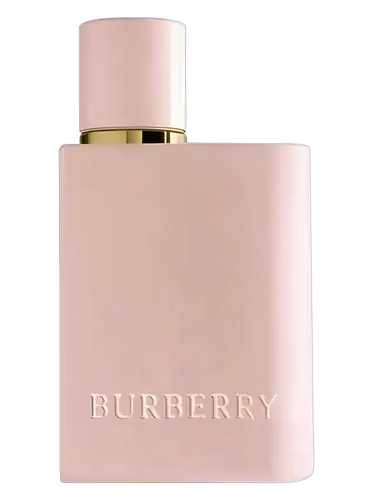
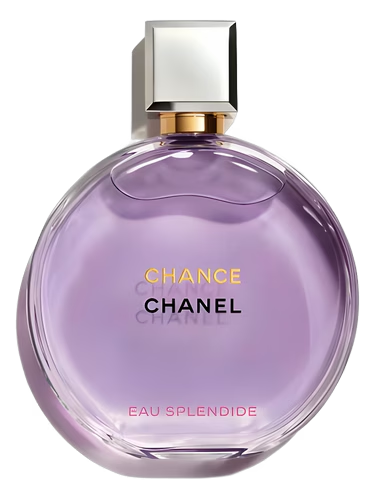
Most Popular Scents Using Elderberry

What is Elderberry?
Elderberry is a fruit note derived from the Sambucus nigra plant, traditionally used in medicine and culinary arts, and valued in modern perfumery for its unique fruity-floral character.What does Elderberry smell like?
It offers a sweet, complex profile blending jammy red berry notes like blackcurrant with delicate floral, herbal, and green nuances, often finishing with a mild tartness.How is Elderberry essence extracted?
Modern methods include cold pressing, supercritical CO2 extraction, and ultrasound-assisted extraction to preserve heat-sensitive compounds, while traditional methods involved maceration and steam juicing.What are some top perfumes featuring Elderberry?
Notable fragrances include Sucreabeille Elderberry, Slumberhouse Kiste 2022, Scents of Man Elderberry, and Mark Buxton Spiritual Healing.When is Elderberry in season?
The plant follows an annual cycle with flowering in late spring and fruit ripening over summer, leading to a primary harvest season from late August through September.