Fragrance Notes Are Layers Of Scent That Are Layered To Form The Final Fragrance. Fragrance Notes Are Categorised Into Three Main Elements Based On How Long They Take To Evaporate, And How Long They Typically Last Following Application: Top Notes, Heart Notes And Base Notes.
Durian
Durian presents a highly complex, notorious aroma, blending sulfurous, savory notes (like onion and gym sock) with a rich, creamy, and intensely sweet tropical fruitiness. This unique profile offers a contrast of decadent, almost caramel-like sweetness and pervasive, pungent decay, adding a distinctive, polarizing, and deeply gourmand/exotic texture to compositions.

Origin & Extraction Of Durian
Durian, often called the "King of Fruits" in Southeast Asia, has a long cultural history but a relatively short one in Western perfumery. The fruit is notorious for its highly divisive aroma, which stems from a complex mix of volatile sulfur compounds that simultaneously suggest rich, creamy sweetness and pungent, savory decay. Historically, due to its intense and unstable odor profile, durian was avoided in fine fragrance compositions, which typically prioritize conventional pleasantness and long-lasting stability.
The use of Durian in perfumery is primarily a modern, niche phenomenon, driven by perfumers seeking to create avant-garde or deeply exotic gourmand compositions. When used, the note is often constructed synthetically (as an "accord") to manage its potent sulfurous facets while retaining the fruit’s creamy, rich tropical sweetness. It is employed strategically to add a unique, polarizing texture, appealing to consumers interested in challenging or hyper-realistic food scents rather than traditional fragrance structures.
Extraction Methods of Durian
Historically, the extraction of durian essence was primarily focused on culinary and medicinal applications, involving manual processes such as boiling the fruit pulp or simmering the rind to create infusions and decoctions. These traditional methods sought to capture the fruit's complex nutritional profile and unique aromatic compounds for use in traditional medicine to treat inflammation and fever. In the perfume industry, the challenge of its potent sulfurous odor meant that durian remained a rare or experimental note, often captured through simple maceration in alcohol to isolate its creamy, fruity facets from its more pungent characteristics.
Modern extraction techniques have evolved to more precisely isolate specific volatile compounds, such as esters for fruity aromas and sulfur-containing molecules for the signature "king of fruits" scent. Advanced methods now include Ultrasound-Assisted Extraction (UAE) and Accelerated Solvent Extraction (ASE), which utilize high-frequency sound waves or pressurized solvents like n-hexane and ethanol to efficiently recover antioxidants and squalene from durian leaves and waste. Additionally, green chemistry approaches such as Subcritical Water Extraction (SWE) and cellular extraction are employed to obtain high-purity pectin and delicate aromatic molecules from the rind and pulp without the degradation caused by traditional high-heat distillation.
The Durian note (often referred to as the "King of Fruits") is generally considered a highly challenging and niche ingredient due to its notorious aroma, making its appearance in mainstream fine fragrance rare. However, the note is being explored by modern, avant-garde houses seeking to create hyper-realistic or polarizing gourmand experiences. These perfumes intentionally embrace the fruit's complex profile, blending its rich, creamy sweetness with its savory, sulfurous facets to achieve a deeply exotic texture.
- * * *
One of the most direct examples of this trend is **ĐỤRIAN** by d.grayi (2025). This fragrance is a centerpiece for the note, showcasing durian in the heart, balanced by brighter top notes like Kaffir Lime and Tea, and a comforting base of Condensed Milk and Amber. Other notable contemporary examples include **Gold Juice** by BORNTOSTANDOUT® (2025) and **Oudian** by Pernoire (2025), which further demonstrate the note's use in high-concept, unisex compositions that prioritize uniqueness over conventional pleasantness.
- * * *
While the note is new to the Western fine fragrance scene, its inclusion signifies a growing movement, particularly in niche perfumery, where notes like Durian, **Golden Hour** by Voyager (2024), and **Gurza** by House of Atropa (2025) are utilized to push creative boundaries and offer a distinct, challenging tropical gourmand experience, contrasting with more traditional citrus-floral structures.
Sustainability Of Durian
- Developing circular economy models by repurposing durian husks and seeds into biofuels, organic fertilizers, and value-added food ingredients to minimize agricultural waste
- Implementing sustainable farming practices, including integrated pest management and natural soil enrichment, to protect local biodiversity and reduce chemical dependency
- Establishing fair-trade partnerships with smallholder farmers in Southeast Asia to ensure equitable income and long-term economic resilience for growing communities
- Advancing clean extraction technologies that utilize less energy and fewer solvents to preserve the integrity of the fragrance while reducing the environmental footprint
- Supporting reforestation and polyculture initiatives that integrate durian trees with other native species to maintain healthy ecosystems and carbon sequestration
Trivia
Known as the King of Fruit, the durian is so notoriously pungent that it is legally banned from public transportation, hotels, and airports across several Southeast Asian countries.
Most Popular Scents Using Durian
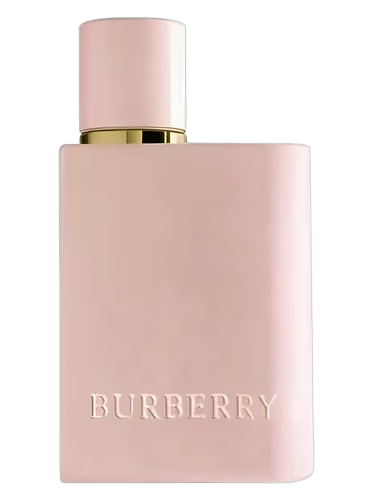
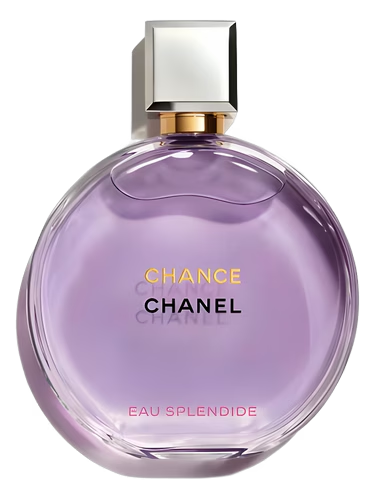
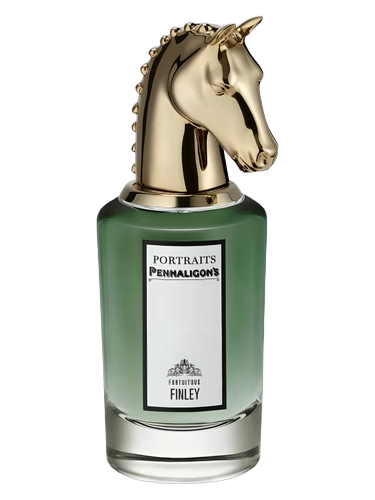
What is Durian?
Durian, often called the King of Fruits, is a tropical fruit native to Southeast Asia known for its notorious aroma and rich, creamy texture.What does Durian smell like?
It features a complex and polarizing profile that blends sulfurous, savory notes with a decadent, intensely sweet tropical fruitiness.How is Durian essence extracted?
The fragrance note is often captured using solvent extraction, Ultrasound-Assisted Extraction (UAE), or created synthetically as an accord to balance its pungent facets.What are some top perfumes featuring Durian?
Notable fragrances include d.grayi ĐỤRIAN, Pernoire Oudian, BORNTOSTANDOUT Gold Juice, and Voyager Golden Hour.When is Durian in season?
The primary peak season generally occurs between May and August across Southeast Asia, with specific timing varying by region.