Fragrance Notes Are Layers Of Scent That Are Layered To Form The Final Fragrance. Fragrance Notes Are Categorised Into Three Main Elements Based On How Long They Take To Evaporate, And How Long They Typically Last Following Application: Top Notes, Heart Notes And Base Notes.
Dried Rose
Dried Rose offers a deep, muted floral aroma, distinct from fresh rose, conveying melancholy and sophistication. It combines sweet, honeyed facets with spicy, slightly woody undertones, often featuring dry, dark red fruit nuances. This refined scent is less vibrant, focusing on depth and mystery.

Origin & Extraction Of Dried Rose
The history of the rose in perfumery is ancient and foundational, predating the modern concept of a "Dried Rose" note. Across ancient civilizations, the rose was celebrated for its fragrance and symbolism. In Ancient Egypt, Queen Cleopatra famously used rose petals in her beauty rituals, and in Ancient Rome, roses were essential in perfumes, cosmetics, and feasts, with rosewater being a common ingredient. While the rose was initially valued for medicinal properties in places like China over 3,000 years ago, its aromatic use quickly spread due to its cultural significance, representing love and divine beauty in Greek and Roman mythology. This widespread traditional use of fresh rose and its volatile components laid the groundwork for all subsequent rose variations in fragrance.
The production of rose oil, essential for fine perfumery, was significantly advanced by the distillation technique, believed to have been refined in Persia around the 10th century. This allowed for the widespread extraction of rose essence, particularly from the Damask rose (Turkish rose) and Centifolia rose (May rose), which are the two primary aromatic varieties. The development of the specific "Dried Rose" note—which conveys a deeper, muted, and woody aroma distinct from the fresh, vibrant extract—is a more contemporary approach. It is often used in modern compositions to add melancholy, sophistication, and depth, acting as a natural fixative to enhance a fragrance’s longevity and complex bouquet.
Extraction Methods of Dried Rose
Historically, dried rose petals have been processed through traditional distillation and infusion techniques. Hydrodistillation and steam distillation are the most long-standing methods, where petals are heated in water or exposed to rising steam to capture volatile aromatic compounds like citronellol and geraniol. Another ancient practice is maceration, which involves steeping dried petals in carrier oils, alcohol (tinctures), or vegetable glycerin (glycerites) for several days or weeks to slowly leech out the fragrance and color. The labor-intensive process of enfleurage, though rare today, historically involved pressing petals onto layers of fat to absorb their floral essence.
Modern advancements have introduced more efficient and precise extraction technologies. Solvent extraction using hexane is commonly used to produce rose concrete and absolute, offering a more complete aromatic profile. Cutting-edge methods include supercritical CO2 extraction, which uses pressurized carbon dioxide to gently extract oils without leaving chemical residues, and microwave-assisted or ultrasound-assisted extraction (UAE), which significantly reduce extraction time while increasing yield and purity. Recent innovations also explore lyophilization (freeze-drying) to remove moisture while preserving delicate phenolic compounds and color, as well as fractional distillation to isolate specific fragrance-bearing molecules.
The Dried Rose note is employed in sophisticated perfumery to introduce a sense of vintage elegance, depth, and melancholy, moving beyond the simple freshness of a living rose. Because it is less volatile and more complex, it serves exceptionally well in mature, oriental, or chypre compositions where the dark, spicy, and slightly woody facets of the flower are emphasized. This interpretation of rose appeals to those seeking a classic, enduring floral structure with significant character.
- A notable fragrance that utilizes this deeper, complex rose is often seen in vintage perfumes that highlight the dark red fruit and powdery aspects of dried petals. Examples include classic gems like **Caron Or et Noir**, which is renowned for its peppery powdery rose, and the sophisticated scent of **Gucci L'Art di Gucci**, frequently described as dark and seductive.
In contemporary niche perfumery, the Dried Rose note is valued for its ability to bridge sweet and gourmand facets with a dry, floral heart. This helps ground the composition and add unique longevity. The muted, honeyed undertones described in the odor profile allow the note to integrate seamlessly with heavier resins and spices, creating compositions that feel rich, velvety, and mysterious rather than light and effervescent.
Sustainability Of Dried Rose
Sustainability of Dried Rose
- Reducing floral waste by upcycling unsold or slightly imperfect fresh roses that would otherwise be destroyed after auction
- Lowering carbon emissions and energy consumption by eliminating the need for continuous refrigerated transport and storage required for fresh blooms
- Promoting a circular economy by repurposing dried petals into zero-waste skincare, biodegradable confetti, and artisanal home crafts
- Minimizing chemical impact through air-drying methods that do not require the synthetic preservatives, dyes, or hardening agents often found in commercial floral treatments
- Conserving water resources as dried roses require no hydration throughout their multi-year lifespan compared to the significant water needs of fresh cut flowers
- Encouraging local and seasonal sourcing to reduce the environmental footprint associated with long-distance air freight of imported roses
Trivia
While it takes about 60,000 rose blooms to produce just one ounce of pure rose oil, the scent of a drying rose takes on a unique, dark, and syrupy sweetness often described by perfumers as honey-like or even indolic as the flower’s chemical composition shifts.
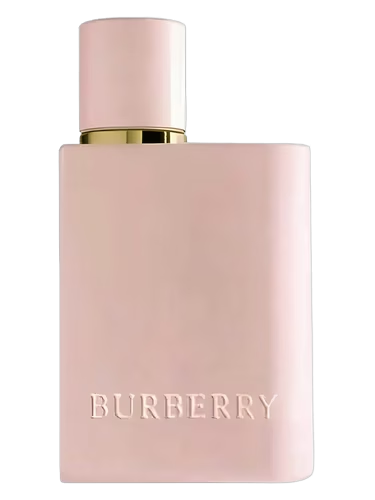
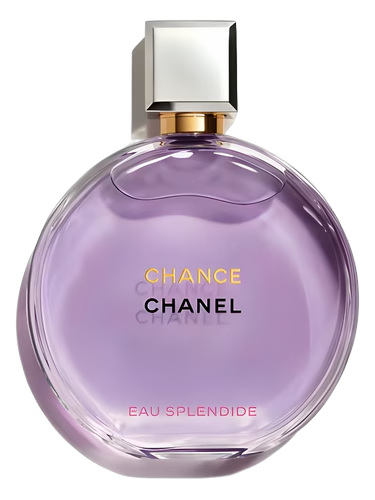
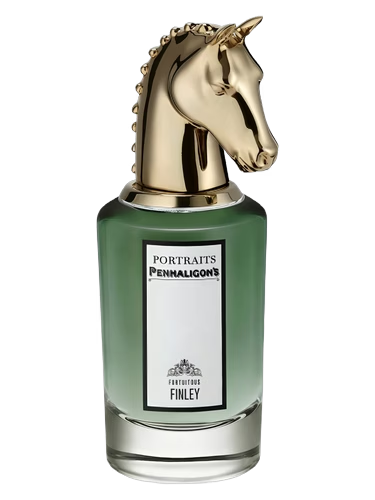
Most Popular Scents Using Dried Rose
What is Dried Rose?
Dried Rose is a fragrance note derived from dehydrated rose petals, offering a deep, muted floral aroma that conveys more melancholy and sophistication than fresh rose.What does Dried Rose smell like?
It features a powdery, honeyed floral scent with spicy, woody undertones and nuances of dark red fruit, lacking the bright vibrancy of a living bloom.How is Dried Rose essence extracted?
The aromatic compounds are typically obtained through distillation methods like hydrodistillation or modern solvent extraction and CO2 extraction.What are some top perfumes featuring Dried Rose?
Notable fragrances include Byredo Rose of No Man's Land, Tom Ford Noir de Noir, Initio Parfums Prives Atomic Rose, and Caron Or et Noir.When is Dried Rose in season?
While fresh roses peak in late spring and summer (April to June), dried rose notes are considered a "winter botanical" available year-round for autumn and winter compositions.