Fragrance Notes Are Layers Of Scent That Are Layered To Form The Final Fragrance. Fragrance Notes Are Categorised Into Three Main Elements Based On How Long They Take To Evaporate, And How Long They Typically Last Following Application: Top Notes, Heart Notes And Base Notes.
Dried Apricot
Dried Apricot offers a rich, sweet, and intensely concentrated fruity aroma, capturing the jammy, honeyed depth of the dried fruit. It has lactonic nuances and a delicate, slightly sticky sweetness distinct from fresh apricot, often providing a warm, comforting, and chewy texture to gourmand and oriental compositions.

Origin & Extraction Of Dried Apricot
The apricot fruit itself boasts ancient origins, believed to be native to Central Asia, with cultivation evidence dating back over 4,000 years. However, the specific scent of "Dried Apricot," which captures a jammy, concentrated, and honeyed sweetness, is a more modern development in perfumery. Unlike volatile citrus notes which have been foundational for centuries, notes specifically centered around the warm, lactonic, and chewy texture of dried fruit emerged primarily with the late 20th and early 21st-century rise of the gourmand and oriental fragrance categories.
Dried Apricot is often used as a richer, more enduring component than fresh fruit notes, providing a warm bridge between sparkling top notes and heavier base notes like amber or resins. Its relevance to modern perfumery lies in its ability to contribute a comforting, slightly sticky sweetness and complex fruity depth, highly valued in contemporary compositions that aim for richness and "chewy" texture, differentiating them from traditional fresh or floral scents.
Extraction Methods of Dried Apricot
The primary method for extracting the essence and characteristic aroma of dried apricots involves various dehydration processes designed to concentrate the fruit's natural sugars and volatile compounds. Historically, the most traditional and straightforward technique is sun drying, where ripe apricots are harvested, washed, and pitted before being arranged on clean cloths or flat rocks in direct sunlight for six to nine days. In regions like Malatya, Turkey, this process often includes a traditional sulfurization stage—burning powdered sulfur in a sealed room for several hours—to preserve the fruit's golden color, prevent fermentation, and extend shelf life. Without sulfur, the fruit naturally oxidizes to a dark brown color and develops a sweeter, more mellow flavor profile.
Modern commercial production has evolved to include more controlled and efficient dehydration technologies. Advanced methods utilize high-capacity processing factories equipped with automated grading, pitting, and washing systems followed by drying in temperature-controlled dehydration tunnels or convection tray dryers. These modern systems allow for precise regulation of moisture levels (typically around 15%) and temperature (often between 60°C and 70°C), ensuring consistent quality and nutritional retention. Furthermore, the fragrance and flavor industry utilizes specialized techniques like vacuum drying and molecular distillation to capture the specific gourmand, syrupy, and velvety aromatic notes of the dried fruit for use in perfumery and food science.
The Dried Apricot note, prized for its concentrated, sweet, and jammy aroma, is frequently utilized in modern niche and gourmand fragrances to provide rich, warm, and comforting depth. It offers a unique lactonic sweetness that bridges sparkling top notes with heavier bases.
- Among contemporary releases, the note can be found prominently in fragrances like Dulce Diablo by Narcotica (2022) and Poka by Pernoire (2024), where its intense fruity character contributes to a complex, almost "chewy" gourmand texture.
In addition to independent and niche houses, the Dried Apricot note has also been embraced by sophisticated designer perfumery, offering a sweeter, more enduring fruit presence than traditional volatile citrus oils. This note helps to define compositions that require both brightness and lasting warmth.
- Examples of fragrances incorporating this sophisticated fruit essence include Heliotrope Milkbath by Universal Flowering (2016) and Sweet Sin by Vivamor Parfums (2023). Its use is valued for adding complexity to oriental structures without being overly heavy.
While often used in specialized compositions, the dried fruit accord, including dried apricot, links to broader fragrance families championed by major houses. For instance, the use of a dried fruit accord is famously present in classic scents such as Serge Lutens' Arabie and Tom Ford's Tobacco Vanille Eau de Parfum, setting a precedent for using rich, dense fruit notes to achieve a highly opulent and oriental feel.
Sustainability Of Dried Apricot
Sustainability of Dried Apricot
- Adopting organic farming practices and minimal processing to reduce chemical usage and meet the rising demand for clean-label, pesticide-free products
- Implementing water-efficient irrigation systems and developing climate-resilient apricot varieties to mitigate the impacts of drought and extreme weather
- Promoting a circular economy by repurposing fruit pits into animal feed or converting kernels into cooking oil to achieve zero-waste production
- Transitioning to eco-friendly packaging solutions, such as recyclable cardboard and biodegradable films, to reduce plastic waste and environmental footprint
- Investing in energy-efficient drying technologies, including solar and multi-purpose chamber dryers, to lower the carbon footprint of processing operations
- Enhancing supply chain transparency and ethical sourcing to ensure fair trade and support the livelihoods of smallholder farmers in key growing regions
Trivia
In ancient Egypt, dried apricots were so highly valued that they were offered to the gods as sacred gifts, while their name "apricot" stems from a Latin word meaning "early" because the trees bloom well before other fruit varieties.
Most Popular Scents Using Dried Apricot
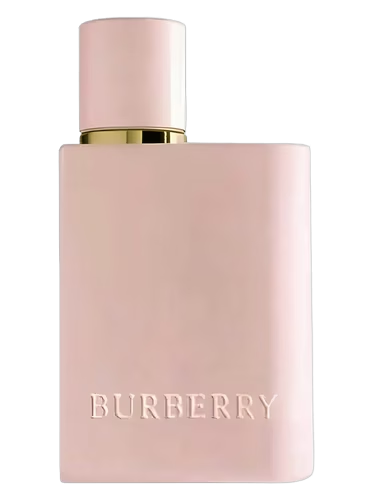
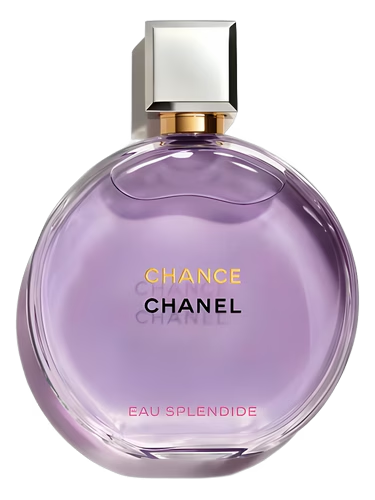
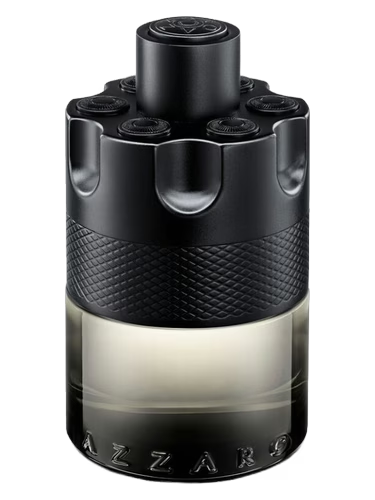
What is Dried Apricot?
Dried Apricot is a fragrance note that captures the concentrated, jammy, and honeyed sweetness of apricots after they have been dehydrated, providing a warm and enduring fruity depth.What does Dried Apricot smell like?
It offers a rich, sweet, and intensely fruity aroma with lactonic nuances and a delicate, slightly sticky sweetness that provides a warm, chewy texture to perfumes.How is the essence of Dried Apricot extracted?
The aroma is captured through dehydration processes such as sun drying or modern convection drying, while the fragrance industry uses molecular distillation to isolate its syrupy and velvety aromatic notes.What are some top perfumes featuring Dried Apricot?
Notable fragrances including this note are Narcotica Dulce Diablo, Pernoire Poka, Universal Flowering Heliotrope Milkbath, and Vivamor Parfums Sweet Sin.When is Dried Apricot in season?
While fresh apricots are a peak summer fruit harvested between May and July, the drying process ensures that dried apricot notes are available as a consistent, year-round staple in perfumery.