Fragrance Notes Are Layers Of Scent That Are Layered To Form The Final Fragrance. Fragrance Notes Are Categorised Into Three Main Elements Based On How Long They Take To Evaporate, And How Long They Typically Last Following Application: Top Notes, Heart Notes And Base Notes.
Dogwood Blossom
A spicy floral blend inspired by a forest walk. It combines warm, resinous notes of Amber and Tonka Bean with the sweet richness of Honey and Cacao. A crisp touch of Ginger and Tobacco Leaf adds complexity, settling into a deep, woody base of Teakwood and Cedar.

Origin & Extraction Of Dogwood Blossom
The Dogwood Blossom note in perfumery is often an abstract or conceptual accord rather than a direct essential oil extraction, as the natural scent of dogwood flowers (Cornus species) is typically delicate and variable. Its relevance to perfumery is often symbolic, drawing on the flower's cultural significance, particularly in the United States, where it is associated with spring, renewal, and often, a gentle, sophisticated floral character. The perfumer's interpretation, as evidenced by some modern fragrance profiles, tends to be a complex, spicy-floral blend—combining subtle sweetness with green or woody foundations to evoke a forest setting.
Historically, the dogwood flower does not possess the long-standing use of classic floral notes like Rose or Jasmine. Its inclusion is largely a contemporary trend, frequently appearing in niche or artisanal fragrances that aim to capture photorealistic or narrative scents, such as a "forest walk." These modern accords utilize sophisticated blending techniques to bridge the gap between a light, ethereal floral scent and warm, earthy base notes like amber, tonka bean, and cedar, creating a complex structure that offers greater longevity and depth than many traditional single florals.
Extraction Methods of Dogwood Blossom
Historically, the aromatic and medicinal compounds of dogwood were captured through traditional herbal techniques such as maceration and decoction. Indigenous peoples and early settlers obtained extracts by boiling the inner bark, roots, or dried berries at low heat to create medicinal tonics. For more concentrated essences, classic conventional methods like alcohol-based tinctures and glycerin-based infusions (glycerites) were employed, often requiring the bark to be dried for several months to reduce acridity and enhance the botanical's stability.
Modern extraction techniques have evolved to include advanced hydrothermal and solvent-based processes. Latest methods utilize hydrothermal extraction at optimized temperatures, often around 98°C, followed by spray-drying to produce high-purity antioxidant powders. Innovative approaches also involve supercritical CO2 extraction and acidified aqueous solvents to isolate delicate pigments like anthocyanins from the flowers and fruit. Additionally, the "no-pick" method is used in specialized essence making, where the plant's aromatic profile is captured through solar infusion without harvesting the living material.
Because Dogwood Blossom is primarily a conceptual or abstract note in perfumery, intended to evoke a gentle, spicy-floral atmosphere and a forest setting, it often appears in niche and artisanal fragrances that specialize in complex, evocative natural scents. These houses use the accord—which combines subtle white floral characteristics with warm, earthy bases like amber and wood—to create sophisticated, story-driven compositions. While not a historical staple like Rose or Jasmine, its usage signals a desire for unique freshness and depth, appealing to consumers looking for something beyond simple floral bouquets. Modern fragrances featuring this complex profile include blends that emphasize its association with renewal and gentle spring air, often paired with green notes and musk.
- A prominent example of a fragrance utilizing an abstract Dogwood note structure is **Dogwood Blossom & Cedar** by a specialized niche house, which interprets the delicate floral aspect through a combination of light white petals and a deep, grounding foundation of Teakwood and Cedar. This contrast elevates the subtle floral scent, ensuring it maintains longevity and complexity.
- Another significant interpretation is found in **Forest Walk**, where the perfumer blends the soft sweetness associated with the blossom with warm elements like Honey and Cacao to align with the Dogwood Blossom's described profile of a "spicy floral blend inspired by a forest walk."
The Dogwood Blossom note, particularly in the modern fragrance landscape, is valued for its versatility in bridging volatile floral top notes with tenacious, resinous bases. This is particularly evident in scents that lean into the "spicy floral blend" described in the Odor Profile, incorporating notes like Ginger and Tobacco Leaf for a crisp, complex edge. This allows the fragrance to maintain a luminous, floral presence while developing a deep, warm drydown, setting it apart from traditional soliflores. For instance, a fragrance like **Spring Renewal**, which often uses this note, expertly weaves the light blossom with Amber and Tonka Bean, resulting in a comforting yet invigorating scent profile.
- Blooming typically occurs between March and June, depending on the variety and region, with flowers often appearing before or with the new leaves
- The peak floral display lasts for two to four weeks, providing a long-lasting spring spectacle of white, pink, or red bracts
- During the summer months, the tree is characterized by lush green foliage that fills out the canopy
- Fruit ripening occurs in late summer and early autumn, typically from August to October, producing bright red or raspberry-like berries that attract wildlife
- Fall foliage brings a vibrant transition to deep burgundy, red, or purple hues before the leaves drop
- The plant remains of interest throughout the winter due to its elegant branching structure and distinctive bark patterns
Sustainability Of Dogwood Blossom
Sustainability of Dogwood Blossom
- Enhancing local biodiversity by providing crucial habitat and a year-round food source for over 20 species of birds, pollinators, and small mammals
- Supporting soil health and stability through deep root networks that prevent erosion and contribute organic matter to the soil during leaf decomposition
- Promoting climate resilience and carbon sequestration by integrating dogwoods into reforestation and sustainable land management projects
- Advancing disease-resistant cultivation through research and hybridization to preserve dogwood populations without heavy reliance on chemical pesticides
- Fostering community-led conservation and reforestation through initiatives like the Friendship Blossoms-Dogwood Tree Initiative and Grow Billion Trees
Trivia
In the Victorian era, a bachelor would offer a dogwood branch to a woman he admired; if she kept it, it signaled mutual interest, but if she returned it, the suitor was politely rejected.
Most Popular Scents Using Dogwood Blossom
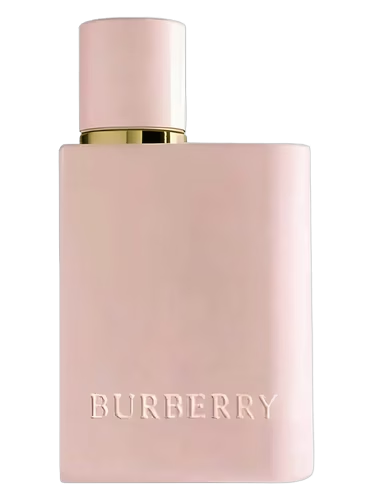

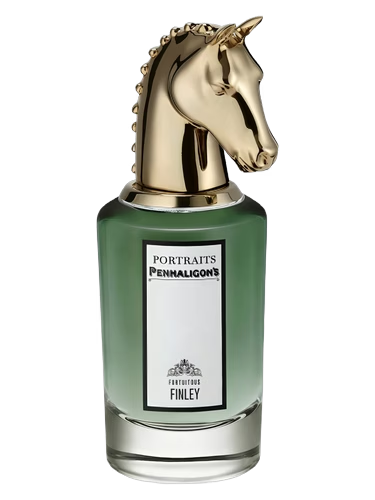
What is Dogwood Blossom?
Dogwood Blossom is a conceptual or abstract fragrance note that evokes a gentle, spicy-floral character associated with spring and renewal, as the natural flowers yield minimal essential oil.What does Dogwood Blossom smell like?
It is a complex, spicy-floral blend that combines a delicate white petal scent with warm, resinous notes of amber and tonka bean, often featuring crisp accents of ginger and tobacco leaf.How is the Dogwood Blossom note extracted?
Since there is no commercial essential oil, the note is created as a fantasy accord; however, botanical compounds from the plant are historically captured through maceration, decoction, or modern hydrothermal extraction.What are some top perfumes featuring Dogwood Blossom?
Notable fragrances include Wicked Good Flowering Dogwood, Royal Apothic Dogwood Blossom, and Salt and Light Dogwood Flowers.When is Dogwood Blossom in season?
The tree typically blooms between March and June, with the peak floral display lasting two to four weeks, followed by fruit ripening in late summer and early autumn.