Fragrance Notes Are Layers Of Scent That Are Layered To Form The Final Fragrance. Fragrance Notes Are Categorised Into Three Main Elements Based On How Long They Take To Evaporate, And How Long They Typically Last Following Application: Top Notes, Heart Notes And Base Notes.
Dianthus
Dianthus delivers a rich, creamy, and elegantly spicy floral scent, dominated by a warm clove note. This classic "carnation" aroma is balanced by balsamic vanilla and heliotrope, giving it a sweet, sometimes edible, depth and richness that persists throughout the fragrance.

Origin & Extraction Of Dianthus
Dianthus, commonly known as carnation, holds a distinguished place in classical perfumery, particularly emerging as a prominent note in the late 19th and early 20th centuries. Due to the complexity of extracting a natural oil that captures the flower's full scent profile—which is dominated by eugenol, giving it a warm, clove-like spice—perfumers often relied on synthetic bases. This spicy, complex floral note was central to many Victorian and Edwardian era fragrances, offering a warm counterpoint to lighter florals and setting the stage for the creation of classic spicy oriental and floral compositions.
The carnation note reached its peak popularity in the mid-20th century, notably in the "spicy floral" fragrance category. Iconic fragrances such as Nina Ricci's L'Air du Temps and Caron's Bellodgia famously utilized the Dianthus note to impart an elegant, creamy richness and balsamic depth. While its prevalence waned with the rise of modern gourmands and fresh scents in the late 20th century, contemporary niche perfumery continues to value Dianthus for its ability to lend vintage sophistication, unique warmth, and complex spicy texture to modern floral arrangements.
Extraction Methods of Dianthus
Historically, the aromatic compounds of Dianthus, particularly the highly fragrant carnation (Dianthus caryophyllus), were captured through traditional methods such as enfleurage or maceration. Because the delicate floral molecules are often too sensitive for the high heat of steam distillation, flowers were historically soaked in purified fats or non-polar solvents to create a concrete. This concrete was then further refined using ethanol to produce a highly prized absolute, preserving the spicy, clove-like floral profile that characterizes the species.
Modern extraction techniques have advanced to include ultrasonic-assisted extraction, which uses cavitation to destroy plant cell membranes and increase the yield of active compounds like flavonoids and phenolics. Recent developments also utilize supercritical CO2 extraction and advanced chromatography to isolate specific fragrant and medicinal molecules without the use of harsh solvents. For high-purity research and product development, laboratories now employ methanol-based solvent extractions followed by UPLC-MS/MS and vacuum distillation to ensure a more concentrated and stable aromatic profile for use in fine perfumery and pharmaceuticals.
The Dianthus note, commonly known as carnation, holds a distinguished place in classical perfumery, celebrated for its unique blend of creamy floral elegance and warm, clove-like spice (eugenol). This complex aroma was foundational to the "spicy floral" and oriental categories, where it provided a necessary richness and persistence. Historically, its use marked a movement toward fragrances that were both opulent and comforting, setting it apart from lighter floral compositions of the era.
- Iconic fragrances that immortalized the Dianthus note include Nina Ricci's L'Air du Temps, where it provides a timeless, spicy warmth blended with gardenia and rose, symbolizing peace and elegance.
- Caron's classic Bellodgia is perhaps the most famous ode to the note, elevating the carnation's spicy-balsamic character to an intoxicating, creamy richness, making it the definitive reference for the note's execution.
While the note saw a dip in popularity with the rise of fresh and aquatic scents, Dianthus continues to be utilized in contemporary niche and artisanal perfumery to evoke vintage sophistication and complex warmth. Modern interpretations seek to highlight the note's subtle nuances, often pairing its distinct clove facet with resins, amber, or woods to create a modernized oriental structure. This ensures the note remains relevant, offering depth and an elegant texture that anchors modern floral arrangements.
Sustainability Of Dianthus
Sustainability of Dianthus
- Adopting organic cultivation standards and integrated pest management to reduce reliance on synthetic pesticides and protect local soil health
- Implementing water-efficient irrigation systems and precise soil management to conserve resources during the flower's growth cycle
- Utilizing synthetic reconstructions like eugenol and isoeugenol to reduce the environmental impact of large-scale natural flower harvesting
- Promoting biodiversity through the cultivation of diverse Dianthus species that support local pollinators and resilient ecosystems
- Ensuring ethical sourcing and supply chain transparency by tracing raw materials to their origins and meeting global safety regulations
Trivia
The color pink is believed to be named after the Dianthus flower; the term dates back to the 14th century as a verb meaning to decorate with a perforated pattern, referencing the flower's signature frilled or notched edges.
Most Popular Scents Using Dianthus
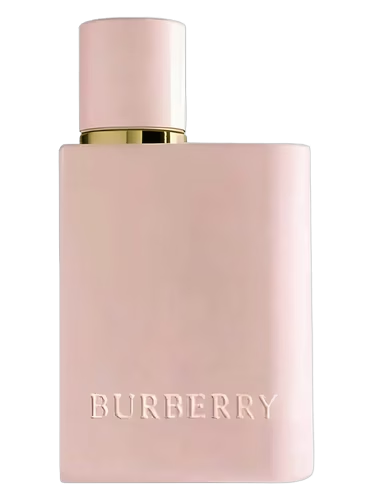
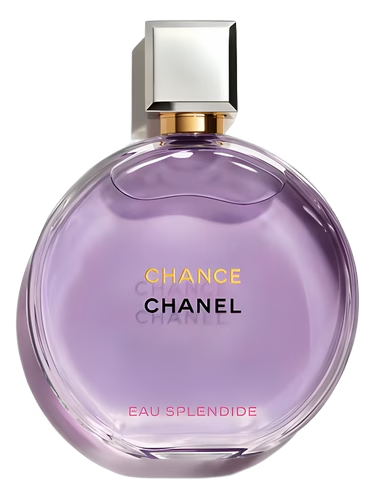
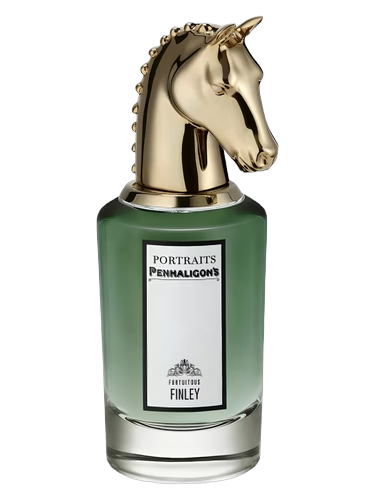
What is Dianthus?
Dianthus, commonly known as carnation, is a classic floral note in perfumery prized for its rich, creamy, and spicy aromatic profile.What does Dianthus smell like?
It delivers a complex floral scent dominated by a warm, clove-like spice, often balanced with balsamic facets of vanilla and heliotrope.How is Dianthus essence extracted?
The aromatic compounds are typically solvent-extracted to produce a concrete and then an absolute, preserving the delicate, spicy molecules.What are some top perfumes featuring Dianthus?
Notable fragrances include Caron Bellodgia, Nina Ricci L'Air Du Temps, Guerlain L'Heure Bleue, and Yves Saint Laurent Opium.When is Dianthus in season?
Dianthus primarily blooms from spring to early summer, with some varieties reblooming through autumn depending on the climate and care.