Fragrance Notes Are Layers Of Scent That Are Layered To Form The Final Fragrance. Fragrance Notes Are Categorised Into Three Main Elements Based On How Long They Take To Evaporate, And How Long They Typically Last Following Application: Top Notes, Heart Notes And Base Notes.
Dewberry
Dewberry offers a long-lasting, sweet, and rich fruity profile, reminiscent of blackberry and elderberry, with a slight green, leafy nuance. The aroma is complex, sometimes described as having a faint dairy character. It provides a nice, sparkling top note in fragrances, lending a vibrant, naturalistic berry sweetness.

Origin & Extraction Of Dewberry
The use of Dewberry (a species of blackberry) as a distinct note in perfumery is relatively modern, coinciding with the industry's increasing ability to recreate complex, naturalistic berry accords synthetically in the late 20th century. Historically, most fruit notes, especially berries, were difficult to extract or were too volatile to be stable in fragrance. The rise of sophisticated fruity-floral and gourmand categories made the inclusion of sweet, rich, and slightly tart berry scents, like dewberry, highly desirable.
In modern perfumery, Dewberry is valued for its long-lasting, sweet, and complex aroma, often acting as a bridge between sparkling top notes and richer floral or amber heart notes. It offers a profile similar to blackberry and elderberry, but with a unique, vibrant, and naturalistic sweetness that helps to lend warmth and vitality to contemporary compositions, particularly in mainstream and designer releases that target a youthful or light-hearted demographic.
Extraction Methods of Dewberry
Historically, dewberry essence and juices were obtained through simple manual processes such as washing, mashing, and simmering the fruit to release its juices. These traditional methods often involved boiling the berries with water and straining the mixture through a jelly bag or layers of cheesecloth to isolate the flavorful liquid from the seeds and pulp. For medicinal uses, herbalists traditionally harvested the leaves and roots, using simple water-based infusions or decoctions to extract their therapeutic compounds.
Modern extraction techniques have advanced to include more precise laboratory methods to isolate specific bioactive compounds. Recent studies utilize aqueous and ethanolic solvent extraction to concentrate phenolic acids, flavonoids, and anthocyanins from the leaves and stems. These modern extracts are often prepared using specialized equipment to determine minimum inhibitory concentrations (MIC) for antibacterial applications, marking a shift from culinary use to advanced pharmaceutical and nutraceutical research.
Dewberry, prized for its sweet, rich, and naturalistic berry sweetness, is a key component in contemporary fruity and gourmand fragrances, offering a vibrant, long-lasting top note. This note successfully bridges the initial sparkling freshness of a fragrance with deeper floral and amber heart notes. Its versatility allows it to be featured in a range of compositions, from light-hearted designer releases to sophisticated niche creations.
- A notable modern use is in Gucci's Flora Gorgeous Magnolia (2023), where Dewberry contributes a lush, fruity dimension to the floral heart, emphasizing the fragrance's sweet and magnetic femininity.
- The note also appears in several fragrances by Penhaligon's, such as Empressa (2014) and Empressa Eau de Parfum (2018), where it is utilized to lend a rich, sweet opulence and a slightly tart complexity to the exotic, spice-infused composition.
- Another example is Britney Spears' Festive Fantasy (2020), demonstrating the note's appeal in mainstream designer perfumes where it enhances the sweet, youthful, and celebratory berry accord.
The success of Dewberry in these perfumes confirms its role as an ingredient capable of adding unique depth to the berry family. Unlike volatile traditional citrus notes, Dewberry's aroma—often recreated synthetically to ensure stability and longevity—provides an enduring sweetness that appeals to consumers seeking warmth and vitality in their scents. It continues to be employed across various sectors of the fragrance market, from high-end niche houses to more widely available designer brands.
Sustainability Of Dewberry
Sustainability of Dewberry
- Achieved NSF/ANSI 391.1 certification, establishing rigorous environmental, social, and economic governance standards for professional services
- Implements internal resource conservation by reducing the environmental impact of owned facilities and vehicle fleets
- Focuses on carbon reduction through net-zero design solutions and the development of renewable energy projects like solar arrays
- Promotes water resilience and ecosystem health by restoring wetlands, streams, and aquifers to mitigate sea level rise and saltwater intrusion
- Adheres to the AIA 2030 Commitment, aiming for carbon-neutrality in the built environment through energy-efficient architecture and infrastructure
- Supports social sustainability through community philanthropy, disaster recovery programs, and extensive employee volunteer initiatives
Trivia
There is no such thing as a natural dewberry essential oil or absolute used in commercial perfumery; the scent is a "fantasy note" meticulously recreated by perfumers using a blend of synthetic accords and other fruity-floral essences.
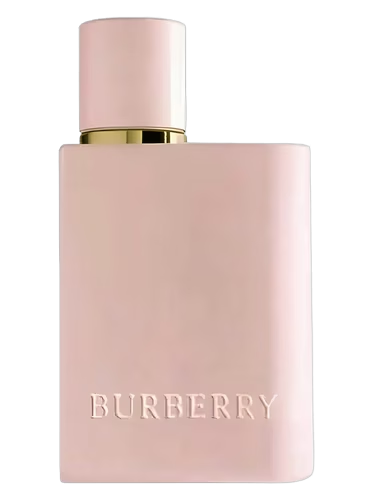
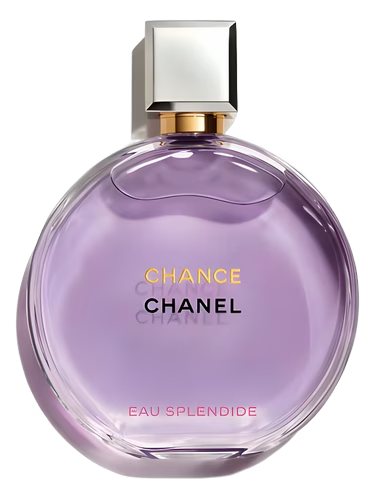
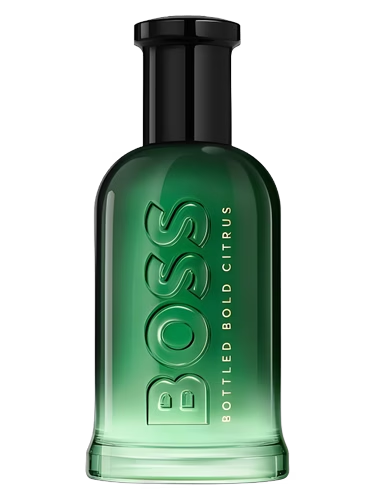
Most Popular Scents Using Dewberry
What is Dewberry?
Dewberry is a species of fruit closely related to the blackberry, used in perfumery as a synthetic fragrance note to provide a long-lasting, sweet, and rich berry profile.What does Dewberry smell like?
It offers a vibrant, naturalistic berry sweetness reminiscent of blackberry and elderberry, often accompanied by complex green, leafy nuances and a faint dairy character.How is Dewberry essence extracted?
In commercial perfumery, there is no natural extraction; the scent is a "fantasy note" meticulously recreated by perfumers using synthetic accords and other fruity-floral essences.What are some top perfumes featuring Dewberry?
Notable fragrances include The Body Shop Dewberry Perfume Oil, Gucci Flora Gorgeous Magnolia, Penhaligon's Empressa, and Britney Spears Festive Fantasy.When is Dewberry in season?
Dewberries typically bloom in late winter and ripen early in the spring, with peak harvest in the Northern Hemisphere occurring from late April through mid-May.