Fragrance Notes Are Layers Of Scent That Are Layered To Form The Final Fragrance. Fragrance Notes Are Categorised Into Three Main Elements Based On How Long They Take To Evaporate, And How Long They Typically Last Following Application: Top Notes, Heart Notes And Base Notes.
Desert Rose
Desert Rose offers a sophisticated, dark, and dry floral profile. It presents a smoky, seductive rose note blended with rich oud wood, amber salt, and a refined bitterness. This complex aroma evokes a dry, desert-like sensation, adding mystery and depth while maintaining a sophisticated floral character.

Origin & Extraction Of Desert Rose
The "Desert Rose" note in perfumery is primarily a conceptual or composite accord rather than an oil distilled from a single plant. The term often refers to the actual Desert Rose crystal (a formation of gypsum or barite found in desert climates) or the Adenium plant. Historically, the traditional rose (Damascena or Centifolia) has been foundational in perfumery for centuries. However, the 'Desert Rose' concept is a modern invention, rising in popularity with the emergence of niche and Oriental fragrance categories in the late 20th and early 21st centuries. Perfumers utilize this accord to evoke a specific, dry, and mineralic sensation, moving away from the dewy, classical European rose toward a more complex, arid, and stylized interpretation.
This note gained particular relevance as the market embraced complex woody-floral and oud-based compositions. The Desert Rose accord bridges the gap between traditional floral heart notes and dry, tenacious base notes like amber, salt, dry woods, and leather. Its history is tied to the desire for an exotic and sophisticated floral profile, one that suggests vast landscapes, mineral richness, and enduring beauty. Its modern use signals luxury and depth, appealing to consumers seeking a rose that is less romantic and more mysterious, often being a key component in fragrances that explore the contrasts between harsh natural environments and tender, enduring flora.
Extraction Methods of Desert Rose
Historically, extraction from the Desert Rose (Adenium obesum) has been conducted using traditional maceration and solvent-based techniques. For medicinal and research purposes, leaves and branches are often dried, crushed into a fine powder, and subjected to Soxhlet extraction using a mixture of ethanol and water. This allows for the capture of bioactive compounds like polyphenols and cardiac glycosides, which are then concentrated through evaporation and freeze-drying to maintain their chemical integrity.
Modern advancements in the extraction of desert rose essences, particularly for high-quality essential oils, involve the use of supercritical CO2 extraction and molecular distillation. Supercritical CO2 is favored for its ability to dissolve essential oil components at lower temperatures by adjusting pressure, preserving delicate aromatic molecules that might be damaged by heat. Recent developments also include enzymatic pretreatment of the plant material with cellulase or pectinase to break down cell walls, as well as salt-solution immersion to create osmotic pressure that ruptures cells and significantly increases the final oil yield.
The Desert Rose note, valued for its sophisticated, dry, and mineralic interpretation of the traditional rose, is often used in modern niche and designer compositions to convey mystery and aridity. It moves beyond the classic dewy, romantic rose by incorporating facets of dry woods, oud, or smoky spices. Fragrances that utilize this concept often aim for depth and complexity, appealing to those seeking an unconventional floral profile.
- A prominent example of a scent utilizing a sophisticated Desert Rose accord is **Alien Goddess Supra Florale** by Mugler (2023), where the rose note is stylized to fit the fragrance's cosmic and bold theme.
In contemporary perfumery, this note is instrumental in bridging traditional floral hearts with rich, tenacious oriental bases. By blending a seductive rose with elements like amber, coffee, frankincense, or dry wood, perfumers ensure the floral characteristic endures the drydown while gaining a complex, almost mineral quality reminiscent of desert landscapes. This use provides longevity and a unique texture to the overall composition.
- The note also appears in fragrances like Boucheron's **Serpent Bohème** (2020), where it contributes to a sensual and sophisticated floral woody arrangement. Another fragrance that emphasizes the rose's complex, dry facets is **Desert Rose** by Veronique Gabai, which pairs rose with frankincense and coffee to evoke an arid, sensual elegance.
While the "Desert Rose" is often a conceptual accord, its modern relevance signals a shift towards specialized, exotic floral notes. It is a key ingredient in fragrances that explore the dichotomy between a tender flower and a harsh environment, lending itself well to unisex or deep feminine scents that prioritize strength and refinement over simple sweetness. This note guarantees a memorable, dry, and highly sophisticated floral signature.
Sustainability Of Desert Rose
Sustainability of Desert Rose
- Promoting water conservation by utilizing drought-tolerant species that thrive in local climates with minimal irrigation requirements
- Reducing the environmental footprint through the use of natural, organic fertilizers and avoiding synthetic pesticides to protect soil and ecosystem health
- Supporting biodiversity by creating habitats that encourage pollinators and provide a sanctuary for local wildlife
- Advancing eco-friendly landscaping practices, such as replacing high-maintenance lawns with native plants and using drip irrigation to deliver water directly to root zones
- Integrating circular economy principles by repurposing organic materials for mulching and composting to improve soil water retention and nutrient levels
Trivia
Desert Rose is not actually a rose; it is the Adenium or Impala Lily, a succulent so resilient it is known for its ability to thrive and bloom in extreme drought conditions, symbolizing survival in the harshest desert landscapes.
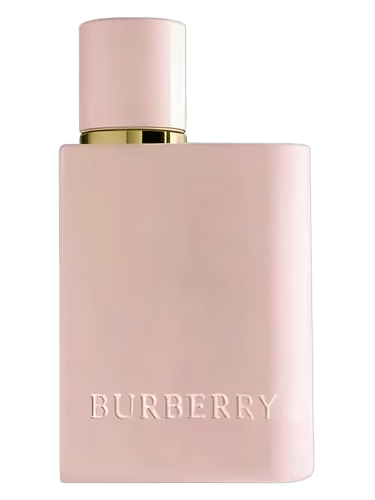
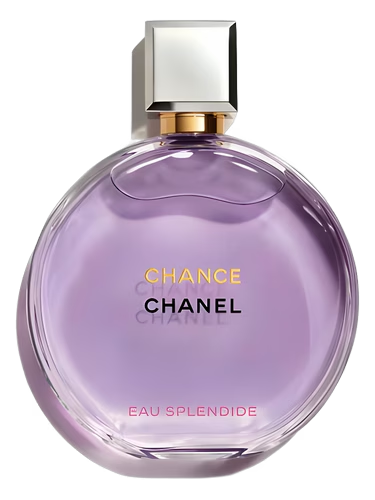
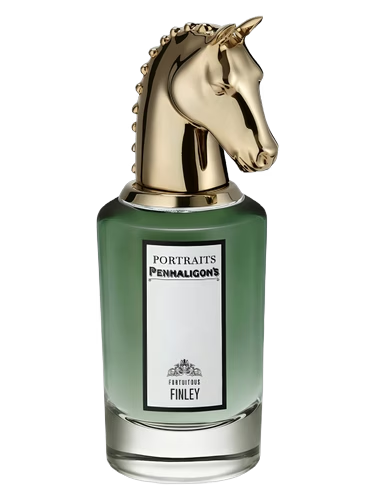
Most Popular Scents Using Desert Rose
What is Desert Rose in perfumery?
The Desert Rose note is a conceptual or composite accord typically representing either the Adenium plant or the Desert Rose mineral crystal, as there is no commercial essential oil distilled directly from the plant.What does Desert Rose smell like?
It offers a sophisticated, dark, and dry floral profile with facets of smoky rose, rich oud, and mineralic accents, often described as a waxy, green-floral scent with a tropical-succulent quality.Is Desert Rose a real rose?
No, the Desert Rose (Adenium obesum) is actually a succulent in the dogbane family, unrelated to traditional roses, and its name comes from the rose-like color of its flowers.What are some top perfumes featuring the Desert Rose note?
Notable fragrances including this accord are Mugler Alien Goddess Supra Florale, Veronique Gabai Desert Rose, Boucheron Serpent Bohème, and Dame Perfumery Desert Rose.Is the Desert Rose plant toxic?
Yes, all parts of the Adenium obesum plant produce a toxic sap containing cardiac glycosides, which is why the fragrance note is always reconstructed using safe synthetic materials.