Fragrance Notes Are Layers Of Scent That Are Layered To Form The Final Fragrance. Fragrance Notes Are Categorised Into Three Main Elements Based On How Long They Take To Evaporate, And How Long They Typically Last Following Application: Top Notes, Heart Notes And Base Notes.
Delonix
Delonix, derived from the Flamboyant tree (Poinciana), offers a complex, flamboyant floral note with a vibrant, flame-red, passionate character. It acts as a lush heart, blending intense floral richness (Ylang Ylang, Hyacinth) with fruity zest (Green Mango) and a warm, slightly spicy, woody depth (Cinnamon, Cedarwood, Tolu Balsam).

Origin & Extraction Of Delonix
Delonix, derived from the Flamboyant or Royal Poinciana tree, does not possess the long classical history in perfumery associated with notes like rose or jasmine. Its intense, often flame-red flowers have made the tree a popular ornamental species in tropical regions worldwide, where it has traditional uses. However, as an aromatic note, Delonix is largely a modern construct in fine fragrance. Perfumers have sought to capture its dramatic, vibrant, and lush floral character, blending facets of intense richness—such as ylang-ylang and hyacinth—with fruity and warm, woody undertones to create a flamboyant and complex heart note.
The use of the Delonix note reflects contemporary perfumery's movement toward complex, photorealistic, and sometimes stylized floral accords that evoke exotic locales and intense color. While not derived from a single, traditional essential oil, the Delonix accord offers a unique way to introduce a passionate floral depth into compositions. It is typically found in modern, niche, or tropical-themed fragrances where the perfumer aims to convey a sense of bright vitality and dramatic complexity that bridges rich florals with warmer, slightly spicy base notes.
Extraction Methods of Delonix
Historically, the aromatic and bioactive compounds of Delonix species, such as Delonix regia (Flame Tree) and Delonix elata, were obtained through traditional maceration and simple aqueous extraction. These manual methods involved soaking dried, powdered plant parts—primarily flowers, leaves, or bark—in water or spirits to capture polyphenols, anthocyanins, and essential oils. In rural settings, water-based flower extracts have long been used as home-made bioproducts, often prepared by boiling or overnight soaking to yield the characteristic reddish-colored liquids used for medicinal or decorative purposes.
In modern practice, the extraction of Delonix has evolved to include more precise and diverse techniques. Steam distillation and hydrodistillation are standard methods for obtaining high-quality volatile oils, with steam distillation often providing a higher yield and richer chemical profile. For broader phytochemical recovery, solvent extraction using ethanol, methanol, or n-hexane is common, frequently aided by mechanical grinding and vacuum concentration to maximize the yield of flavonoids and antioxidants. Recent advancements also utilize pilot-plant scale membrane technology and microfiltration to isolate specific compounds like anthocyanins, while specialized machines are employed for large-scale blending and centrifugal separation of fresh flower extracts.
Delonix, known as the Flamboyant or Royal Poinciana flower, is a note celebrated in modern perfumery for its lush, tropical, and complex floral character, often blending facets of ylang-ylang, hyacinth, and fruity zest. Because it is a highly stylized and modern accord, it tends to be featured in niche and tropical-themed compositions that aim to evoke vibrant color and exotic vitality. Its use elevates a fragrance by providing a dramatic, passionate heart note that is richer and more complex than traditional single florals.
- A notable fragrance that features the spirit of the Delonix note is **Estée Lauder's Beyond Paradise**. Although the precise list of notes often varies, the composition aims for a complex, hyper-real, and lush tropical floral intensity, perfectly capturing the flamboyant, vibrant character associated with the Poinciana flower.
The Delonix note's incorporation of warm, slightly spicy, and woody undertones (like cinnamon and cedarwood mentioned in its profile) makes it highly versatile for anchoring rich, long-lasting floral hearts. This complexity prevents the floral bouquet from becoming too airy or fleeting, ensuring the dramatic character of the flower endures on the skin. It is particularly effective in compositions that transition from bright, fruity openings to deep, resinous bases.
- In the realm of artisanal and niche perfumery, notes evocative of Delonix can sometimes be found in tropical collections that focus on capturing exotic island flora, such as those by houses like **Maison Francis Kurkdjian's Aqua Vitae Forte** or **Comptoir Sud Pacifique**, where flamboyant florals are blended with sunny citruses and creamy woods to create an intense, sun-drenched experience.
While the Delonix note itself is not associated with an ancient or classical perfume, its identity is built upon modern techniques that seek to capture the full, complex aroma of the tropical Flamboyant tree. Perfumers leverage its vibrant red color association and its multifaceted scent—combining intense floral richness with a fruity and warm drydown—to create contemporary masterpieces that are both exhilarating and deeply sophisticated, standing out in the crowded floral category.
Sustainability Of Delonix
Sustainability of Delonix
- Promoting a circular economy by valorizing discarded seed biomass into safe, plant-based protein sources for sustainable food systems
- Enhancing soil fertility and reducing reliance on synthetic fertilizers through natural nitrogen fixation and nutrient-rich leaf litter
- Aiding climate mitigation and urban cooling through significant carbon sequestration and the reduction of urban heat island effects
- Improving land management and restoration by controlling soil erosion and reclaiming degraded mining sites with its hardy root system
- Supporting local biodiversity by providing essential habitats and food sources for pollinators, birds, and small mammals
- Implementing sustainable urban planning by using the tree as a natural tool for energy consumption reduction through strategic shading
Trivia
In some Caribbean countries, the tree is nicknamed Womans Tongue because its long, woody seed pods rattle loudly in the wind.
Most Popular Scents Using Delonix
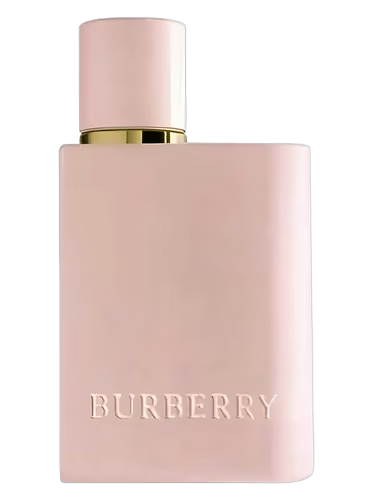
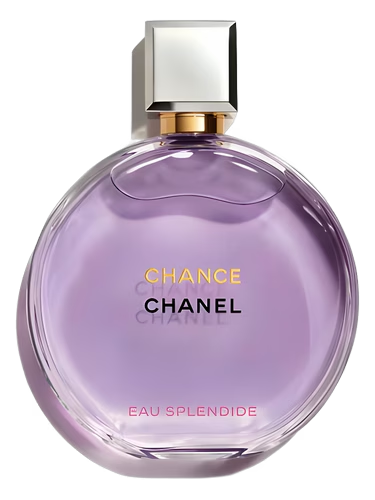
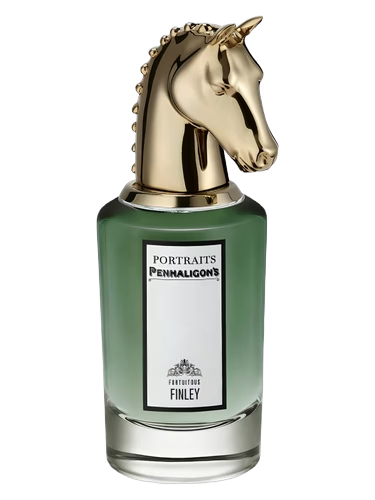
What is Delonix?
Delonix, derived from the Flamboyant or Royal Poinciana tree native to Madagascar, is a modern floral note used in perfumery to evoke a lush, tropical, and vibrant atmosphere.What does Delonix smell like?
It offers a complex, flamboyant aroma that blends intense floral richness with facets of fruity zest, such as green mango, and warm, woody, or slightly spicy undertones.Is Delonix a natural or synthetic note?
In fine fragrance, Delonix is primarily a fantasy accord or modern construct, as the blossoms typically do not produce sufficient volatile compounds for commercial essential oil extraction.How is the Delonix note used in perfumes?
It serves as a passionate heart note in niche and tropical-themed compositions, providing dramatic depth and helping to anchor lighter floral bouquets with its resinous and woody facets.What are some top perfumes featuring Delonix?
While it is a rare note, it is notably associated with the tropical intensity found in Estée Lauder Beyond Paradise and is the central theme of MetaScent Delonix.