Fragrance Notes Are Layers Of Scent That Are Layered To Form The Final Fragrance. Fragrance Notes Are Categorised Into Three Main Elements Based On How Long They Take To Evaporate, And How Long They Typically Last Following Application: Top Notes, Heart Notes And Base Notes.
Deadnettle
Deadnettle (Lamium purpureum) oil has a complex, earthy, and green profile due to its high Germacrene D content. It offers a unique blend of woody, piney, and hay-like nuances, creating a sophisticated and naturalistic green scent that adds depth to compositions.

Origin & Extraction Of Deadnettle
Deadnettle, specifically species like Lamium purpureum, does not have a long, documented history as a staple extract in classical perfumery like notes derived from foundational flowers or woods. Traditionally, the plant was often considered a weed, though various species have been used in folk medicine and foraging for their mild, edible qualities. Its complex aromatic profile—which is green, earthy, woody, and slightly hay-like due to components like Germacrene D—was not widely isolated or utilized by European perfumers until relatively recently.
The relevance of Deadnettle in perfumery is primarily a modern phenomenon, tied to the contemporary trend of creating naturalistic, sophisticated green and forest accords. Niche and artisanal perfumers started exploring unique, non-traditional botanical extracts to add depth, realism, and a distinctive earthy bitterness to compositions. The deadnettle note is valued today for providing a complex, naturalistic green structure that helps bridge volatile fresh notes with deeper, more persistent woody or soil-like base notes.
Extraction Methods of Deadnettle
The primary method for extracting the aromatic and medicinal properties of purple deadnettle is through oil infusion, which transfers the plant's beneficial compounds into a carrier oil such as olive or sunflower oil. Historically, this has been achieved through a slow, solar-maceration technique where dried plant material is submerged in oil and left to steep in a warm, dark place for four to six weeks. Traditional folk methods also include the preparation of tinctures using alcohol or simple water-based infusions for herbal teas.
In modern practice, more efficient extraction techniques are commonly employed, such as the heat-infusion or "quick" method. This involves using a double boiler to gently heat the oil and dried herbs for two to three hours, significantly accelerating the process while preserving the plant's anti-inflammatory and antibacterial properties. Recent developments in small-scale herbalism also utilize dehydrators to precisely control the drying phase, ensuring the material is perfectly brittle and free of moisture to prevent spoilage during the extraction process.
The Deadnettle note (Lamium purpureum) is highly specialized and is primarily utilized in niche and artisanal perfumery to create authentic, naturalistic green and forest floors accords. Due to its earthy, woody, and slightly hay-like profile, it provides a sophisticated bitterness and depth that differentiates it from simpler green notes like grass or mint. This unique complexity makes it perfect for compositions aiming to capture the scent of damp earth or wild foliage.
- While Deadnettle is not commonly featured in mainstream designer releases, it is highly valued by perfumers who focus on evocative botanical realism. Its role is often to stabilize the volatile green elements and give a sense of rootedness to the composition, ensuring the fresh, leafy opening persists with an authentic, earthy tone.
A fragrance that creatively employs a deep, realistic green accord where deadnettle facets might be implied or specifically used is often found within houses known for their natural approach, such as certain artisanal blends. One example where similar dense, botanical green notes are prominent is **Zoologist Bat**, which seeks to capture a cave-like atmosphere, utilizing earthy, green, and mineral notes for a dark, complex realism.
Another brand that might incorporate non-traditional herbaceous notes for its sophisticated green compositions is **Diptyque**, which is known for its photorealistic nature scents. While the official list may not always cite "Deadnettle," its characteristic piney, woody-green elements often contribute to the robust green structures found in fragrances like **Eau de Lierre**, adding a necessary layer of damp, leafy depth beyond the simple scent of ivy.
Sustainability Of Deadnettle
Sustainability of Deadnettle
- Promoting biodiversity by serving as a crucial early-season nectar source for bees, butterflies, and other pollinators when few other flowers are in bloom
- Improving soil health and preventing erosion by providing natural ground cover that stabilizes soil and prevents compaction in disturbed areas
- Reducing the need for synthetic chemical fertilizers and pesticides by acting as a nitrogen pointer and supporting organic farming and permaculture practices
- Encouraging a circular economy through the upcycling of foraged wild plants into nutrient-rich compost, natural fertilizers, and biostimulants
- Supporting sustainable eating and self-sufficiency by utilizing abundant, naturally occurring wild edibles that require no extra agricultural resources or irrigation
Trivia
Despite being called deadnettle, the plant is actually a member of the mint family and earned its name because its leaves look like stinging nettles but lack the "stings," effectively making them "deaf" or "dead."
Most Popular Scents Using Deadnettle
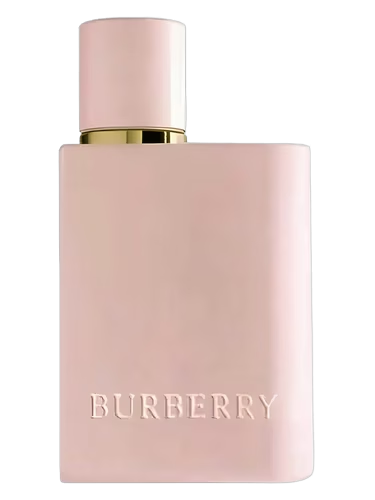
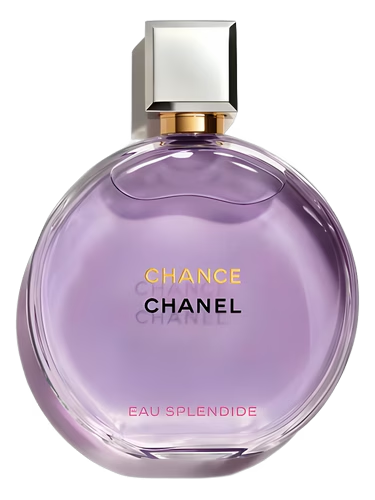
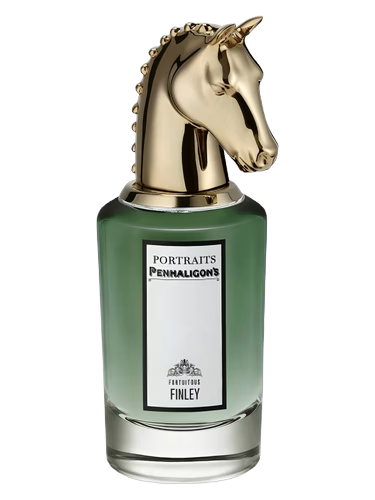
What is Deadnettle?
Deadnettle, specifically Lamium purpureum, is a member of the mint family native to Eurasia and is used in niche perfumery for its unique earthy and green aromatic profile.What does Deadnettle smell like?
It features a complex, naturalistic scent characterized by earthy, woody, and piney notes with subtle hay-like nuances and a sophisticated bitterness.How is Deadnettle essence extracted?
The aromatic properties are typically captured through oil infusion methods, such as slow solar-maceration or heat-infusion, to preserve the plant's delicate compounds.What are some top perfumes featuring Deadnettle?
A notable fragrance that utilizes this specialized note is Fray Ardens Anima, which highlights its realistic botanical qualities.When is Deadnettle in season?
Purple deadnettle typically emerges in the fall and reaches its peak bloom from early spring through midsummer, specifically between April and June.