Fragrance Notes Are Layers Of Scent That Are Layered To Form The Final Fragrance. Fragrance Notes Are Categorised Into Three Main Elements Based On How Long They Take To Evaporate, And How Long They Typically Last Following Application: Top Notes, Heart Notes And Base Notes.
Dark Plum Wu Mei
Dark Plum Wu Mei offers a deep, rich, and slightly smoky fruit aroma, characterized by a complex interplay of syrupy sweetness and tart, dried plum. It features dark, dense, and wine-like facets with hints of sourness and a woody, balsamic undertone, lending a sophisticated, long-lasting gourmand depth to fragrances.

Origin & Extraction Of Dark Plum Wu Mei
Dark Plum, or Wu Mei, originates from the unripe fruit of the Japanese apricot (Prunus mume), traditionally dried, smoked, and used extensively in Traditional Chinese Medicine and East Asian cuisine. Its historical significance is rooted in its therapeutic and culinary applications, where the dried fruit is valued for its complex flavor—a blend of sour, sweet, and smoky elements. In perfumery, this note is not part of the classical Western tradition (like citruses or florals) but has emerged as a specialized, sophisticated note in contemporary fragrance, driven by the search for deep, long-lasting, and exotic gourmand/oriental accords.
The relevance of Dark Plum Wu Mei in modern perfumery reflects a growing trend in niche and high-end fragrance to incorporate complex, culturally specific ingredients that bridge fruity notes with darker, more resinous bases. Perfumers utilize Wu Mei's rich, smoky, and balsamic profile to provide depth and a wine-like sophistication to compositions. This note serves to extend the longevity of the top notes and introduces a unique, tart sweetness that contrasts beautifully with rich materials like oud, amber, and spice, appealing to consumers seeking unusual and highly textured oriental or smoky gourmand scents.
Extraction Methods of Dark Plum (Wu Mei)
Historically, the production of Wu Mei involves the processing of immature green fruit from the Prunus mume tree. The traditional method typically consists of harvesting the fruit before it ripens and baking it at low temperatures or smoking it until the skin turns black. This labor-intensive process often includes steps like steaming or boiling followed by sun-drying to preserve the fruit's high concentration of organic acids and medicinal efficacy. In some traditional preparations, the fruit is mashed or charred and ground into a fine powder for easier incorporation into herbal decoctions.
Modern commercial extraction has evolved to produce highly concentrated 5:1 extracts through advanced industrial processes. These contemporary methods utilize sealed recurrent extraction and water decoction, where the raw materials are cleaned, selected, and infused. The active components are concentrated at low pressures and temperatures—often using vacuum-drying or spray-drying—to form sterilized granules or powders. These techniques ensure that volatile aromatic ingredients and essential bioactive compounds are retained while providing a consistent, easy-to-dissolve product for medicinal and functional beverage applications.
The Dark Plum Wu Mei note, cherished for its deep, rich, and slightly smoky aroma, is a sophisticated ingredient typically found in niche and contemporary oriental or gourmand compositions. This note moves beyond traditional fruity scents by incorporating a complex interplay of syrupy sweetness and tart, dried plum, lending a wine-like sophistication to modern fragrances. Its inclusion caters to consumers seeking an exotic depth that bridges bright fruit openings with long-lasting, dark, resinous bases.
- Avon’s **Rare Onyx** (2022) utilizes Dark Plum Wu Mei to establish a rich, dark fruit core in its feminine composition, contrasting the syrupy sweetness with a deeper, enveloping texture typical of its oriental grouping.
- **Shennong** by Auphorie (2022) showcases the note’s exotic and sophisticated characteristics. As a unisex fragrance, the Wu Mei note provides a unique, slightly medicinal, smoky fruit profile that aligns with the brand's focus on high-texture, culturally specific accords.
- Wild Drops Parfums' **Sirius Black** (2022) is another modern example featuring Dark Plum Wu Mei, likely leveraging its deep, dense, and tart facets to contribute to a mysterious, long-lasting scent profile.
The rise of Dark Plum Wu Mei in perfumery reflects a broader trend among high-end houses to incorporate culturally specific and less conventional notes. Perfumers value its ability to deliver a complex, gourmand depth that anchors a fragrance without becoming overly heavy. This unique profile, stemming from the traditional use of smoked Japanese apricot, ensures the note adds a memorable and highly textured layer to the overall composition.
Sustainability Of Dark Plum Wu Mei
Sustainability of Dark Plum Wu Mei
- Prioritizing authentic DaoDi-grown herbs cultivated in clean, unspoiled environments to preserve purity and ecological balance
- Sourcing from carefully selected regions known for sustainable farming practices that emphasize natural growing methods
- Cultivation processes that avoid the use of harmful pesticides or chemicals to protect local ecosystems
- Establishing long-term partnerships and ethical agriculture practices to support the planet and local farming communities
- Implementing advanced processing methods that preserve natural qualities while minimizing waste and environmental impact
Trivia
In Japan, the extract of the smoked black plum is traditionally used as a mordant for a specific natural red dye derived from safflower.
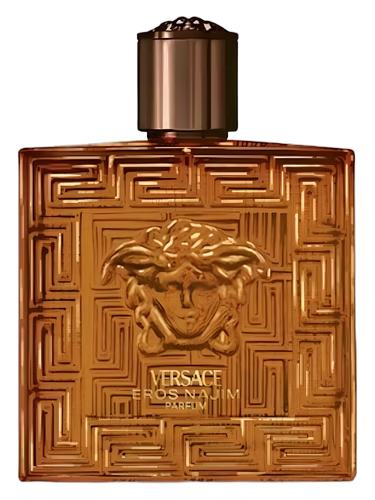
Most Popular Scents Using Dark Plum Wu Mei


What is Dark Plum Wu Mei?
Dark Plum Wu Mei is a fragrance note derived from the Japanese apricot (Prunus mume). The fruit is harvested unripe and then smoked and dried, a traditional process that transforms it into a dark, wrinkled ingredient historically used in East Asian medicine and cuisine.What does Dark Plum Wu Mei smell like?
It offers a deep, complex aroma characterized by syrupy sweetness, tart dried plum facets, and a distinct smoky, balsamic undertone. It provides a wine-like richness and a sophisticated gourmand depth compared to standard fruit notes.How is Dark Plum Wu Mei essence produced?
The immature green fruits are traditionally baked at low temperatures or smoked until they turn black and wrinkled. Modern extraction methods use water decoction and vacuum-drying to create highly concentrated extracts that preserve the fruit's volatile aromatic compounds.What are some top perfumes featuring Dark Plum Wu Mei?
Notable fragrances include Tom Ford Plum Japonais, Auphorie Shennong, Keiko Mecheri Ume, Serge Lutens Feminite du Bois, and Marc Jacobs Decadence.When is the Dark Plum Wu Mei season?
The Prunus mume tree blooms with fragrant blossoms in late winter (January to February), while the fruit matures and is harvested in early summer (June and July) during the East Asian "plum rains" before undergoing the smoking process.