Fragrance Notes Are Layers Of Scent That Are Layered To Form The Final Fragrance. Fragrance Notes Are Categorised Into Three Main Elements Based On How Long They Take To Evaporate, And How Long They Typically Last Following Application: Top Notes, Heart Notes And Base Notes.
Dahlia
Dahlia is a fantasy floral note, typically interpreted as a warm, opulent, and slightly sweet floral. It often features juicy, fruity nuances (like apple or pear) and is balanced by comforting, sophisticated base notes such as amber, sandalwood, and musk. It provides a rich, feminine, and slightly dark aroma, often used to bridge light top notes and deeper bases.

Origin & Extraction Of Dahlia
The Dahlia note in perfumery is classified as a "fantasy note" because the flower itself does not yield an essential oil through traditional extraction methods like distillation or enfleurage. Originating in Mexico and Central America, the Dahlia became popular globally as an ornamental garden flower, but its subtle or sometimes non-existent scent meant it was historically irrelevant to traditional fragrance making. Its introduction into perfumery is entirely modern, driven by synthetic chemistry and the desire to create rich, complex floral accords that evoke the flower's visual beauty and color rather than a natural essence.
Perfumery houses began interpreting the Dahlia note primarily in the late 20th and early 21st centuries. Since it is a conceptual note, its interpretation varies widely, often being constructed from materials that mimic warm, opulent, slightly sweet, and fruity floral characteristics. Common components used to build this accord include elements of amber, sandalwood, and juicy notes like apple or pear. This synthetic approach allows the note to bridge light top notes with deeper, more sophisticated oriental or woody bases, lending a rich, feminine, and slightly dark aromatic quality to modern compositions.
Extraction Methods of Dahlia
Historically, dahlia extracts were obtained through simple maceration or infusion, where petals were steeped in solvents like water or ethanol to capture medicinal compounds and pigments. In traditional gardening and floral contexts, the boiling water method has also been used, involving dipping freshly cut stems into boiling water for 30 seconds to expand vascular tubes and improve hydration for increased vase life.
Modern commercial and scientific extraction of Dahlia pinnata, particularly for its antioxidant and pigment properties, utilizes advanced techniques such as homogenization-assisted maceration, sonication (ultrasound-assisted extraction), and pressurized liquid extraction. Current processes often involve preparing fresh or dehydrated petals and using acidified solvents like citric acid or ethanol to stabilize and maximize the yield of bioactive compounds like anthocyanins and butein. Recent developments also explore supercritical CO2 fluid extraction and microwave-assisted methods to capture delicate resins and high-value plant constituents without denaturing them.
As a modern "fantasy note," the Dahlia accord is widely interpreted to capture a warm, opulent, and slightly sweet floral profile, often bridging fruity top notes with rich, sophisticated bases. Fragrances such as **Trussardi Eau de Parfum** showcase this note's versatile, contemporary appeal, using it to impart a rich, feminine depth that complements the composition's overall elegance. Because Dahlia does not yield a natural oil, perfumers craft this scent synthetically to evoke the flower's visual richness and complex color palette.
The Dahlia note has recently gained significant traction in contemporary and niche perfumery, frequently appearing in collections that emphasize modern sweetness and vitality. For example, **Blood Orange: Vibrant, Juicy Citrus Note in Modern Perfumes** by Escada utilizes the Dahlia note to anchor its bright, fruity composition, lending a subtle floral richness that prevents the scent from being overly ephemeral. Similarly, brands like Bath & Body Works have centered entire product lines around the note, exemplified by fragrances like **Dahlia**, highlighting its widespread popularity for delivering a comforting yet sophisticated aroma.
The interpretations of Dahlia can range from dark and mysterious to bright and sun-drenched, depending on the supporting notes. In compositions like Korres' **Midnight Dahlia**, the note leans toward a slightly darker, more aromatic profile, complementing richer, less conventional elements. Meanwhile, releases like Paris Hilton's **Ruby Rush** likely employ the Dahlia note to reinforce the rich, sensual, and slightly fruity sweetness, demonstrating the note's adaptability in crafting modern, high-impact floral-oriental scents.
Sustainability Of Dahlia
Sustainability of Dahlia
- Utilizing olfactory interpretation and creative blending of various notes to evoke the dahlia's character, as the flower itself often lacks a strong, consistent scent for traditional extraction
- Pioneering eco-conscious packaging solutions, such as the use of 100% recyclable bottles, caps, and cartons by leading brands featuring this note
- Formulating hypoallergenic and clean fragrances that are free from over 1,300 questionable ingredients and common allergens to ensure consumer safety and skin health
- Committing to vegan and cruelty-free production standards, ensuring that fragrance development does not involve animal testing or animal-derived components
- Supporting environmental conservation and social responsibility initiatives through partnerships with non-profit organizations and the distribution of sales proceeds to grassroots communities
Trivia
Despite being a popular fragrance note, most dahlia flowers are essentially scentless to humans, making dahlia a fantasy note in perfumery that is entirely constructed from a perfumer's imagination.
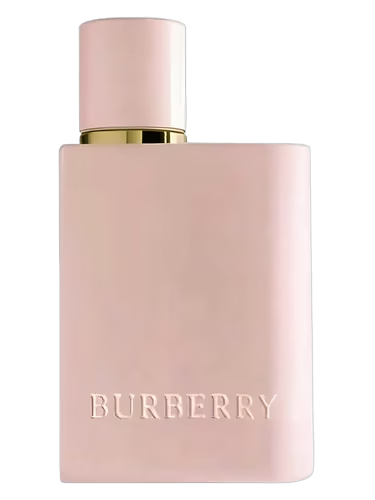
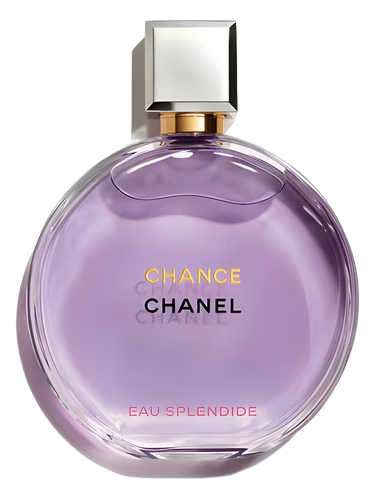
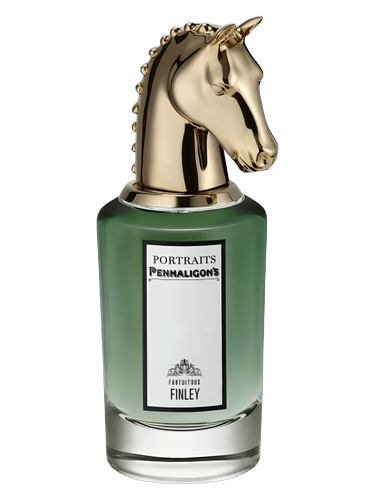
Most Popular Scents Using Dahlia
What is a Dahlia fragrance note?
Dahlia is a fantasy floral note in perfumery, meaning the scent is a synthetic creation designed to evoke the flower's visual beauty, as the plant itself naturally lacks a strong scent for extraction.What does Dahlia smell like?
It is typically interpreted as a warm, opulent, and slightly sweet floral scent often featuring juicy fruity nuances of apple or pear balanced by base notes of amber, sandalwood, and musk.Is Dahlia scent naturally extracted for perfume?
No, most dahlia flowers are essentially scentless to humans and do not yield essential oils; the note is entirely constructed from a perfumer's imagination using synthetic chemistry.What are some top perfumes featuring Dahlia?
Popular fragrances containing this note include Givenchy Dahlia Divin, Givenchy Dahlia Noir, Trussardi Eau de Parfum, and Bath & Body Works Dahlia.When is Dahlia in season?
Dahlias follow a warm-weather cycle, with the primary blooming season beginning in mid-to-late July and reaching its peak during August and September.