Fragrance Notes Are Layers Of Scent That Are Layered To Form The Final Fragrance. Fragrance Notes Are Categorised Into Three Main Elements Based On How Long They Take To Evaporate, And How Long They Typically Last Following Application: Top Notes, Heart Notes And Base Notes.
Cyperus Scariosus
Cyperus Scariosus (Cypriol/Nagarmotha) oil offers a warm, deeply woody, and earthy aroma with dry, spicy facets. It is known for its distinctive profile which includes leathery, slightly smoky, and subtle ambery/animalic notes, making it excellent for oriental, woody masculine, or unisex blends.

Origin & Extraction Of Cyperus Scariosus
Cyperus Scariosus, commonly known as Cypriol or Nagarmotha, is a fragrant root (rhizome) that has deep historical roots in South Asia, particularly India. For centuries, it has been a staple in traditional practices, including Ayurveda, where its essential oil was valued for medicinal and aromatic properties. It was also widely used in India and the Middle East as a fragrant material for incense, perfumes, and to scent clothing, suggesting a long, pre-modern history of aromatic application.
Its modern relevance in fine perfumery grew from its unique olfactory profile—a dry, earthy, deeply woody aroma with leathery, smoky, and subtle animalic facets. Cypriol is often utilized as a less expensive, more sustainable alternative to natural Oud or patchouli, providing a complex base note that bridges dark woods with oriental spices. Its grounding, lasting quality makes it particularly popular in contemporary niche and luxurious masculine or unisex compositions, where it lends an exotic depth and distinctive texture.
Extraction Methods of Cyperus Scariosus
The essential oil of Cyperus scariosus, commonly known as Cypriol or Nagarmotha, is primarily extracted from its underground rhizomes and roots through steam distillation. Historically, simple hydrodistillation was the standard method, involving the boiling of dried, crushed rhizomes in water to release the volatile aromatic compounds. These traditional techniques often required sun-drying the roots for several days followed by manual grinding to increase the surface area for extraction.
Modern commercial production has transitioned to advanced steam distillation and fractionation technologies to achieve higher purity and specific olfactory profiles. High-pressure steam is passed through the prepared plant material to break down cell structures more efficiently, followed by sophisticated cooling and centrifugal separation. Recent developments also include solvent extraction using hexane to produce concretes and the use of molecular fractionation to create "Cypriol Heart" extracts, which offer a cleaner, more refined woody-spicy aroma by removing heavier, less desirable fractions.
Cypriol, also known as Nagarmotha, is a valuable base note in perfumery, celebrated for its deep, earthy, and woody character with a subtle smoky or peppery nuance. Due to its exceptional tenacity and fixative qualities, it is fundamental in anchoring complex compositions, particularly within the Oriental, dry-amber, and deep woody fragrance families.
It is frequently utilized in modern compositions to support or enhance the Agarwood (Oud) note, providing an exotic and grounding depth that is cleaner and less medicinal than raw Oud. A prominent example is its use in the iconic woody-oriental structure of fragrances like **Tom Ford Oud Wood**, where it reinforces the blend of sandalwood, vetiver, and spices.
In contemporary and niche perfumery, Cypriol’s distinctive dry, almost papyrus-like scent contributes to unique woody profiles. Though often unlisted, it is suited to create the sophisticated, rooty-earthy, and peppery signature found in scents like **Le Labo Santal 33**, offering the rich, long-lasting structure that defines these modern classics.
- Blooming typically occurs during the month of July, with the plant displaying its characteristic flowers on slender stems
- Fruit formation and ripening follow the flowering period, generally taking place in December
- Traditional harvesting of the aromatic rhizomes is often conducted post-monsoon between September and November, though some regions harvest from April to June to optimize oil yield
- The plant thrives year-round in moist, marshy environments and can produce fruits and seeds consistently, especially during the monsoon season
- Optimal collection is carefully timed to ensure the highest concentration of essential oils within the mature, sun-dried rhizomes
Sustainability Of Cyperus Scariosus
Sustainability of Cyperus Scariosus
- Promoting a circular economy by repurposing aerial parts of the plant, traditionally treated as agro-waste, into nutrient-rich pharmaceutical and food materials
- Adopting steam distillation as a gentle extraction method that avoids harsh chemical solvents and ensures the purity of the natural resource
- Supporting smallholder cooperatives and indigenous tribes through ethical harvesting practices that provide fair income and socio-economic resilience
- Utilizing solar drying technologies and elevated bamboo racks to reduce energy consumption and maintain harvest quality without chemical preservatives
- Encouraging organic farming practices and wildcrafting in natural habitats to minimize the use of synthetic fertilizers and protect local biodiversity
- Implementing soil conservation strategies in marshy and wetland areas where the plant's rhizome system helps stabilize the environment
Trivia
In ancient India, the dried rhizomes of Cyperus scariosus were burned as ritual incense in temples because priests believed the smoke was auspicious and possessed natural antimicrobial properties to cleanse the air.
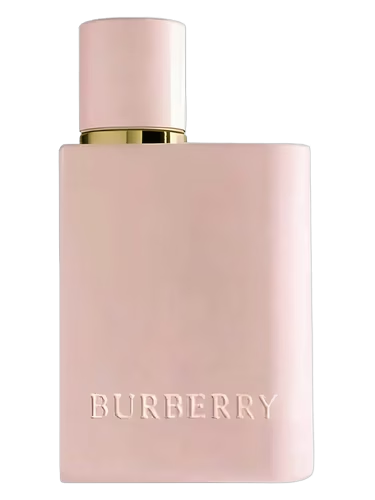
Most Popular Scents Using Cyperus Scariosus


What is Cyperus Scariosus (Cypriol)?
Cyperus Scariosus, also known as Cypriol or Nagarmotha, is a fragrant root native to South Asia whose essential oil is prized for its deep, woody, and earthy aroma.What does Cyperus Scariosus smell like?
It offers a warm, woody, and earthy profile with distinctive facets of leather, smoke, and spice, often used as a cleaner alternative to Oud.How is Cyperus Scariosus essence extracted?
The oil is primarily extracted from the plant's underground rhizomes and roots through steam distillation.What are some top perfumes featuring Cyperus Scariosus?
Notable fragrances include Diptyque Eau Duelle, Tom Ford Oud Wood, Le Labo Santal 33, and Frederic Malle Promise.When is Cyperus Scariosus in season?
The plant typically blooms in July, and its aromatic rhizomes are traditionally harvested post-monsoon between September and November.