Fragrance Notes Are Layers Of Scent That Are Layered To Form The Final Fragrance. Fragrance Notes Are Categorised Into Three Main Elements Based On How Long They Take To Evaporate, And How Long They Typically Last Following Application: Top Notes, Heart Notes And Base Notes.
Cyclamen
Cyclamen offers a fresh, delicate floral scent with prominent green nuances. It is characterized by a bright, slightly sweet aroma reminiscent of lilies or roses, often carrying a subtle, crisp spicy or peppery undertone. This versatile note is used as a light top or middle note to add a sophisticated, clean, and uplifting element to compositions.

Origin & Extraction Of Cyclamen
The scent of Cyclamen, a delicate flower that is notoriously difficult to extract a natural essential oil from, has long been a challenge for perfumers. True Cyclamen fragrance is volatile and fragile, meaning the note’s prominence in perfumery is almost entirely reliant on synthetic interpretation. The use of Cyclamen-like accords, achieved through molecules like Cyclamen Aldehyde, became widespread in the mid-20th century, particularly after the rise of synthetic chemistry allowed perfumers to capture the light, crisp, and slightly watery green floral essence that was otherwise unobtainable.
This synthetic development allowed Cyclamen to become a key note in the "green floral" and "aquatic floral" fragrance movements of the late 20th century. It is valued for its ability to introduce a sophisticated, fresh, and slightly dewy lift without the heavy sweetness of traditional florals like jasmine or tuberose. It is frequently employed in light, airy compositions designed to evoke spring gardens or clean, fresh laundry, securing its place as an essential component in modern, transparent perfumery.
Extraction Methods of Cyclamen
Historically, cyclamen was processed through simple manual methods such as mashing or crushing the plant's tubers in water, alcohol, or other solvents to create liquid extracts and pastes. Ancient Greek traditions, dating back to the 4th century BC, involved mixing these tuber extracts with honey for medicinal applications, particularly as a nasal treatment for colds and as a laxative. These traditional "folk methods" often relied on prolonged soaking (maceration) of the powdered roots and tubers to release the active saponins, like cyclamin.
In modern commercial and pharmaceutical production, extraction has evolved into more controlled and precise techniques. The primary contemporary method involves obtaining a liquid extract from the tuber, which is then freeze-dried (lyophilized) under strict quality control to preserve its delicate chemical structure and ensure a standardized concentration of saponins. Recent scientific research also utilizes advanced laboratory methods including ultrasonic treatment, refluxing with solvents like methanol or ethanol for up to 10 hours, and the use of rotary evaporators to produce high-purity crude extracts for medical and therapeutic use.
The Cyclamen note, which provides a fresh, green, and delicate floral lift, found its peak popularity in the late 20th century, particularly within the aquatic and green floral movements where transparency and lightness were key. Since the natural oil is fragile, its characteristic scent is typically recreated using synthetic molecules like Cyclamen Aldehyde, allowing perfumers to achieve a sophisticated, dewy freshness that avoids the heaviness of traditional flower oils. This light touch made it ideal for fragrances aiming for an airy, clean, and subtly romantic character.
- One of the most notable fragrances featuring the Cyclamen note is **L'Eau d'Issey** by Issey Miyake (1992). The note is instrumental in establishing the perfume’s iconic watery-floral signature, blending seamlessly with lotus, freesia, and calone to evoke a sense of pure, fresh water.
The versatility of Cyclamen allows it to function beautifully across various fragrance genres. In pure floral compositions, it enhances the brightness of other notes like lily-of-the-valley and rose, lending a crisp, slightly peppery edge. In contrast, when paired with musk or sandalwood, it maintains its fresh quality while adding an element of clean laundry or dewy spring air. Its clean, non-indolic quality ensures it is a staple in fragrances designed for mass appeal and easy wearability.
Beyond its use in defining the aquatic-floral wave, Cyclamen is frequently featured in compositions aimed at capturing a sophisticated, natural garden scent. For instance, it contributes a vital green nuance to the opening of fragrances like **J’adore** by Dior, where it supports the elaborate white floral bouquet. Its subtle spiciness and green undertones prevent the overall composition from becoming overly sweet, maintaining a sharp, elegant freshness throughout the initial wear.
- Blooming typically occurs from autumn through winter and into early spring, depending on the species, with florist hybrids (Cyclamen persicum) most commonly sold as winter holiday plants
- The plant follows a Mediterranean growth cycle, coming into active growth in the autumn as temperatures drop and cool, wet weather begins
- Dormancy is a key seasonal phase that occurs during the hot, dry summer months, during which the plant often loses its leaves and requires significantly less water
- Hardy outdoor varieties like C. hederifolium bloom in late summer and fall, while C. coum provides color in late winter or early spring
- Foliage typically emerges in the fall or winter and remains until the plant enters its summer resting period
Sustainability Of Cyclamen
Sustainability of Cyclamen
- Protecting endangered wild populations through CITES regulations and the promotion of nursery-propagated seed cultivation over the unsustainable harvesting of wild tubers
- Transitioning to synthetic aroma compounds like Cyclamen Aldehyde to preserve rare natural resources and reduce the environmental impact of extracting expensive botanical oils
- Developing bio-based fragrance ingredients with high renewable carbon content and verified biodegradability according to OECD standards to minimize environmental persistence
- Implementing Integrated Pest Management and biological plant protection strategies to reduce reliance on synthetic pesticides and fungicides in commercial greenhouse production
- Utilizing circular economy practices by repurposing composted waste biomass as growing media and optimizing energy efficiency in protected cultivation environments
Trivia
In the language of flowers, cyclamen symbolizes a strong and sincere attachment and was historically used in ancient love potions as a powerful aphrodisiac, with some traditions even suggesting that placing it on a windowsill could ensure a couple's happiness.
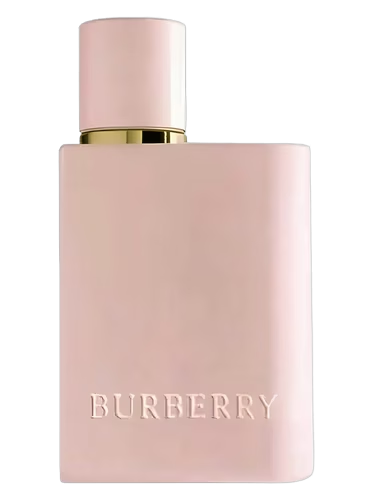
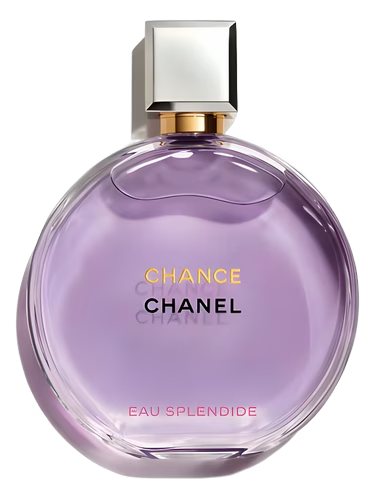
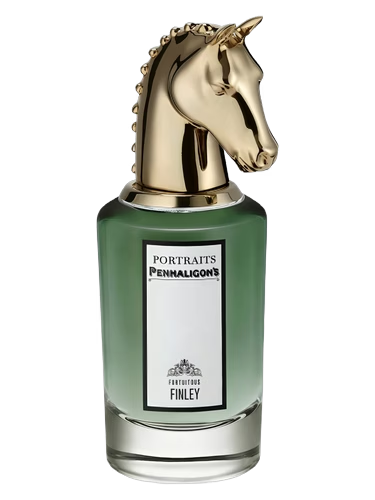
Most Popular Scents Using Cyclamen
What is Cyclamen?
Cyclamen is a delicate floral note in perfumery, primarily native to Europe and the Mediterranean, known for adding a fresh, green, and sophisticated lift to fragrance compositions.What does Cyclamen smell like?
It offers a bright, clean, and slightly sweet aroma reminiscent of lilies or roses, often accompanied by watery-aquatic nuances and a subtle hint of spicy pepper.Is natural Cyclamen oil used in perfumes?
No, natural cyclamen is notoriously difficult to extract and its scent is volatile; therefore, perfumers recreate its fragrance using synthetic molecules like Cyclamen Aldehyde.What are some top perfumes featuring Cyclamen?
Notable fragrances include Issey Miyake L'eau d'Issey, Byredo Bal d'Afrique, Dior J'adore, and Giorgio Armani Acqua di Gio.When is Cyclamen in season?
Depending on the species, blooming typically occurs from autumn through winter and into early spring, with the plant entering a dormant phase during the hot summer months.