Fragrance Notes Are Layers Of Scent That Are Layered To Form The Final Fragrance. Fragrance Notes Are Categorised Into Three Main Elements Based On How Long They Take To Evaporate, And How Long They Typically Last Following Application: Top Notes, Heart Notes And Base Notes.
Currant Leaf and Bud
Currant Leaf and Bud offers an intense, complex character, combining vibrant green-fruity sparkle with a distinctive sulphurous "catty" or ammoniac undertone. It evolves to woody-earthy sophistication with exceptional tenacity, prized for adding unique depth and boldness to fine perfumery.

Origin & Extraction Of Currant Leaf and Bud
The history of Currant Leaf and Bud (often derived from Blackcurrant Bud, or *Bourgeon de Cassis* absolute) in perfumery is relatively modern but significant. While the plant has been cultivated for centuries, its use as a concentrated fragrance material gained prominence in the 20th century. Historically, it was highly valued in French perfumery, particularly in the city of Grasse, where its intensely potent absolute was used primarily to give fruity, green, and slightly earthy nuances to fine fragrances. It is an ingredient that offers immediate vibrancy and an unusual, long-lasting green depth.
Blackcurrant Bud absolute is best known for providing the distinctive, complex green-fruity note (sometimes described as "catty" or sulfurous) crucial to the Chypre and modern Fruity-Floral families. Its highly concentrated nature means that even minute amounts can dramatically influence a composition, providing lift and an elegant sophistication that bridges sparkling top notes with deeper, mossy, or floral heart notes. It remains a prized, though expensive, material for adding unique character and exceptional tenacity to luxury compositions.
Extraction Methods of Currant Leaf and Bud
The primary method for extracting the aromatic essence of black currant buds is solvent extraction to produce an absolute. Historically, this involves harvesting dormant buds during the winter months and using volatile solvents like petroleum ether or hexane to isolate the fragrant compounds. This traditional process captures the heavy, sulfurous, and fruity "catty" notes that are highly prized in fine perfumery. Additionally, hydrodistillation and steam distillation are used to produce an essential oil, typically resulting in a pale green liquid with a fresh, cymene-like odor, though high heat can sometimes alter the delicate aromatic profile.
Modern extraction techniques have introduced more efficient and high-purity alternatives. Simultaneous distillation-extraction (SDE) and advanced solvent systems using specialized cosmetic fluids are employed for research and high-end applications to ensure a more precise capture of aliphatic and oxygenated terpenes. Furthermore, supercritical carbon dioxide (CO2) extraction has emerged as a superior latest method, operating at lower temperatures to yield a product that more closely resembles the natural scent of the fresh plant while avoiding the use of harsh chemical solvents.
The Currant Leaf and Bud note, often referred to as Cassis Absolute, is highly valued for its green, complex, and subtly fruity character, giving it a distinctive role in many iconic modern fragrances. One of the most famous examples is L'Ombre Dans L'Eau Eau de Toilette by Diptyque (1983), a groundbreaking scent that captures the essence of a blackcurrant bush, blending the leaf note's green sharpness with rose and blackcurrant fruit.
- * * *
In contemporary and luxury perfumery, this ingredient is used to provide sophisticated depth and longevity, often bridging sharp citrus openings with richer hearts. The note appears in fragrances like Gucci Eau de Parfum II (2004) and Aqua Allegoria Forte Rosa Rossa by Guerlain (2022). Furthermore, high-end houses use the note to amplify certain accords, such as Maison Francis Kurkdjian, where it is present in compositions like Baccarat Rouge 540 and OUD satin mood, contributing a nuanced green-fruity lift.
- * * *
Currant Leaf and Bud is also a staple in the revitalization of classic fragrance structures, particularly in modern Eaux de Cologne and fresh scents. Its inclusion in Eau d'Orange Verte by Hermès (2009) ensures a lively, crisp green opening that complements the traditional citrus structure. The note is essential for adding that distinctive, vibrant 'pop' and green texture that keeps fresh compositions from becoming too simple or fleeting.
Sustainability Of Currant Leaf and Bud
Sustainability of Currant Leaf and Bud
- Utilizing agricultural side-streams by repurposing blackcurrant leaves, which are often discarded as waste during berry production, into high-value raw materials for perfumery and nutraceuticals
- Adopting mechanical harvesting innovations, such as specialized bud-separating machines, to improve efficiency and ensure better economic returns for farmers
- Implementing responsible sourcing practices through third-party certifications like For Life, ensuring ethical labor conditions and environmental accountability
- Promoting organic farming and sustainable cultivation methods that prioritize soil health, biodiversity, and the reduction of synthetic chemical use
- Supporting circular economy principles by developing natural, environmentally-friendly extraction processes that minimize the carbon footprint of production
- Advancing germplasm preservation through cryopreservation of dormant buds to protect genetic diversity and ensure the long-term resilience of the species
Trivia
Blackcurrant buds are known in perfumery for a sulfurous compound that gives them a notorious "cat pee" scent, an animalic edge that perfumers carefully expert-blend to add bold, unique depth to high-end fragrances.
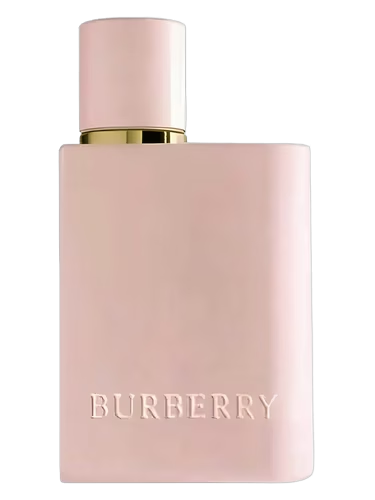
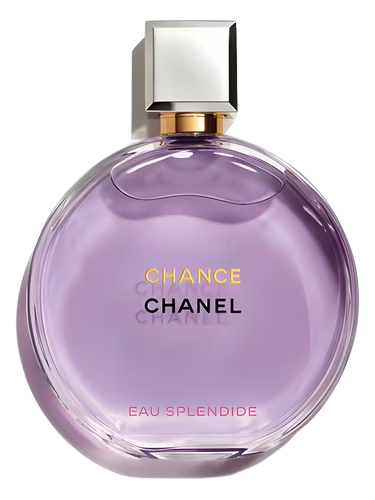
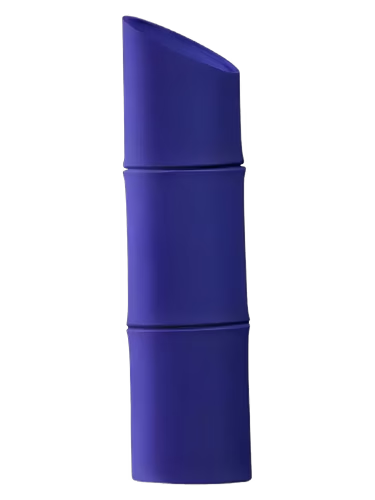
Most Popular Scents Using Currant Leaf and Bud
What is Currant Leaf and Bud?
Currant Leaf and Bud, often derived from the blackcurrant bush (Ribes nigrum), is a fragrance material used to provide intense green-fruity nuances and exceptional tenacity to fine perfumes.What does Currant Leaf and Bud smell like?
It offers a complex character combining vibrant green-fruity sparkle with a distinctive sulphurous "catty" or ammoniac undertone, evolving into a woody-earthy sophistication.How is Currant Leaf and Bud extracted?
The aromatic essence is primarily obtained through solvent extraction to create an absolute, though distillation and modern CO2 extraction methods are also utilized.What are some top perfumes featuring Currant Leaf and Bud?
Notable fragrances include Diptyque L'Ombre Dans L'Eau, Giorgio Armani Si, Maison Crivelli Hibiscus Mahajád, and Hermès Eau d'Orange Verte.When is Currant Leaf and Bud in season?
The plant follows a spring to summer growth cycle, with dormant buds traditionally harvested during the winter months for optimal aromatic extraction.