Fragrance Notes Are Layers Of Scent That Are Layered To Form The Final Fragrance. Fragrance Notes Are Categorised Into Three Main Elements Based On How Long They Take To Evaporate, And How Long They Typically Last Following Application: Top Notes, Heart Notes And Base Notes.
Cucumber Flower
A delicate, dewy, and highly aqueous green floral scent, combining the crisp, refreshing coolness of fresh cucumber with subtle sweet and transparent botanical notes. It imparts an ethereal, light, and clean watery freshness to compositions, often evoking the pure, damp air of a morning garden.

Origin & Extraction Of Cucumber Flower
The history of the cucumber fruit itself dates back over 3,000 years, originating in India and Nepal, and spreading to ancient civilizations like Egypt and Greece. However, the specific "Cucumber Flower" note, characterized by its delicate, dewy, and aqueous green floral scent, is a relatively modern invention in fine perfumery. It does not possess the long, classical history of traditional botanicals. Instead, its emergence aligns with the late 20th and early 21st century trends that favored sheer, clean, and photorealistic notes, particularly the rise of aquatic and "transparent" fragrances.
The incorporation of Cucumber Flower into fragrances is often achieved through modern headspace technology or synthetic reconstruction, allowing perfumers to capture its ethereal, light, and watery freshness without relying on traditional volatile oils. It is used to impart a sense of pure, damp air and clean sophistication, often bridging the gap between crisp citrus top notes and soft, musky bases in contemporary light compositions, rather than serving as a foundational element in classical perfume structures.
Historically, the aromatic and medicinal compounds of cucumber flowers were obtained through simple traditional methods like maceration and infusion. Fresh or dried flowers were steeped in solvents such as methanol, water, or carrier oils to capture their volatile oils and secondary metabolites. In botanical research, liquid-liquid extraction (LLE) using solvents like hexane, chloroform, and n-butanol, followed by solid-phase extraction (SPE) on polyamide sorbents, was used to isolate specific flavonoid fractions for analysis.
Modern extraction techniques have become significantly more sophisticated to ensure high purity and potency. Current laboratory and industrial standards utilize ultrasonic-assisted extraction (sonication) combined with high-performance liquid chromatography (HPLC) and electrospray ionization mass spectrometry (LC-MS) for profiling and purifying delicate metabolites. Additionally, innovative approaches like microwave drying are employed to preserve the moisture-sensitive chemical profile of the flowers before extraction, while phloem sap extraction using capillary-air pressure methods allows for the rapid collection of plant-derived secondary products without degrading the sample.
The Cucumber Flower note, characterized by its sheer, dewy, and aquatic green floral scent, is a signature ingredient in contemporary fragrances aiming for ultimate freshness and transparency. Due to its modern profile—a clean, watery essence that evokes the damp air of a morning garden—it has become highly valued in compositions seeking to move beyond traditional sharp citrus openings. This note often appears in light, luminous eau de colognes and sheer perfumes, offering a long-lasting, sophisticated freshness.
-
One of the most celebrated usages of this profile is in the realm of fresh, feminine fragrances that emphasize serenity and gentle sweetness. For example, Earl Grey & Cucumber by Jo Malone London utilizes the note to convey a delicate coolness, contrasting the aromatic tea and bergamot heart. Similarly, scents like Green Tea Cucumber by Elizabeth Arden and Be Delicious by Donna Karan (DKNY) incorporate this crisp, aqueous facet to amplify their vibrant, uplifting, and clean characteristics, ensuring an immediate and invigorating impression.
-
In more sophisticated or niche interpretations, the cucumber note (or its flower equivalent) is deployed to add a complex, vegetal freshness to alcoholic or mineral accords. Roses On Ice by By Kilian is a prime example, where the icy, aqueous cucumber note provides a chilling, crisp counterpoint to the juniper and rose, lending the fragrance a unique, cocktail-inspired brilliance. This versatility allows the note to bridge the gap between sparkling top notes and deeper, often woody or musky, drydowns, as seen in other modern compositions seeking clean sophistication.
Although the Cucumber Flower note itself is a modern construct, its popularity reflects a broader trend toward photorealistic and comforting fresh aromas that resonate with consumers looking for simple, clean sophistication. It is a cornerstone ingredient for houses specializing in airy, transparent, and effortlessly casual scents, ensuring the opening is not just zesty, but also delicately cool and uniquely natural.
Sustainability Of Cucumber Flower
Sustainability of Cucumber Flower
- Adopting organic farming practices and integrated pest management to manage cucumber beetles and other pests without synthetic chemicals
- Utilizing water-efficient drip irrigation and soil moisture management to ensure consistent hydration while conserving local water resources
- Implementing vertical trellising systems to maximize space efficiency and improve air circulation, reducing the need for fungicides
- Promoting biodiversity by limiting pesticide use and planting diverse flora to support essential bee populations for pollination
- Reducing the carbon footprint of production by utilizing high tunnels or row covers to extend growing seasons and improve crop resilience
Trivia
The phrase "cool as a cucumber" is rooted in scientific fact: the internal temperature of a cucumber can be up to 20 degrees Fahrenheit cooler than the outside air due to its 95% water content.
Most Popular Scents Using Cucumber Flower
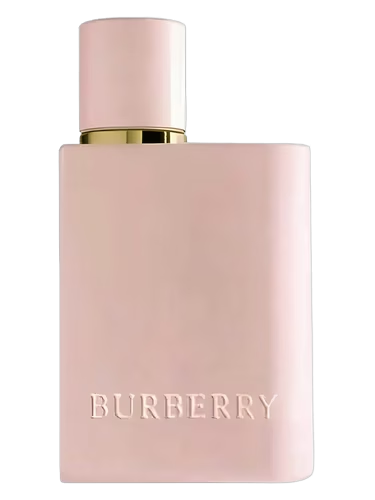
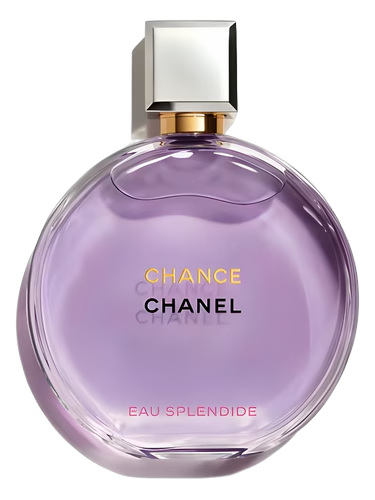
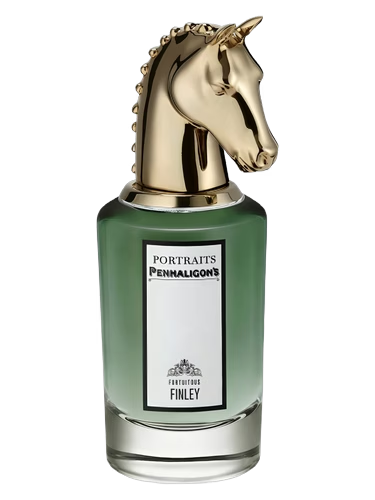
What is Cucumber Flower?
Cucumber Flower is a modern fragrance note that captures the delicate, dewy, and aqueous green floral scent of the blossoms from the cucumber plant, which originated in South Asia.What does Cucumber Flower smell like?
It offers a crisp, refreshing coolness combined with subtle sweet and transparent botanical notes, evoking the clean watery freshness of a morning garden.How is Cucumber Flower essence extracted?
While historically obtained through maceration or infusion, modern perfumery uses advanced techniques like headspace technology or ultrasonic-assisted extraction to preserve its delicate chemical profile.What are some top perfumes featuring Cucumber Flower?
Notable fragrances include By Kilian Roses on Ice, Jo Malone London Earl Grey & Cucumber, DKNY Be Delicious, and Elizabeth Arden Green Tea Cucumber.When is Cucumber Flower in season?
The flowers typically bloom during the summer months, with the primary flowering and fruit-bearing season running from July through September.