Fragrance Notes Are Layers Of Scent That Are Layered To Form The Final Fragrance. Fragrance Notes Are Categorised Into Three Main Elements Based On How Long They Take To Evaporate, And How Long They Typically Last Following Application: Top Notes, Heart Notes And Base Notes.
Crimson Fruits
Crimson Fruits present a rich, intense, and deeply succulent aroma, blending notes of dark red berries like cherry, cranberry, and plum. This profile offers a sweet yet slightly tart juiciness, often featuring winey or liqueur-like undertones. It provides a luxurious, velvety texture and a vibrant, long-lasting fruity heart in compositions.

Origin & Extraction Of Crimson Fruits
The concept of "Crimson Fruits," encompassing rich, dark red berries like cherry, plum, and cranberry, is largely a modern trend in perfumery. Historically, while simple fruit notes like peach or apple have occasionally appeared, dark berries were challenging to capture in a long-lasting, non-synthetic way. The true surge in popularity for these deep, succulent fruity notes came with the rise of gourmand and oriental fragrances in the late 20th and early 21st centuries. Perfumers began utilizing complex synthetic molecules and specialty extractions to achieve the authentic, intense aroma, moving past the light, volatile nature of traditional citrus or simple summer fruits.
The relevance of Crimson Fruits in modern compositions lies in their ability to offer a luxurious, velvety texture and a vibrant, long-lasting heart, often substituting for traditional floral or spice heart notes. Unlike fleeting top notes, these deep, liqueur-like aromas provide depth, sweetness, and a sophisticated, slightly tart juiciness. They are frequently employed in niche and designer fragrances to lend a sense of drama, intensity, and richness, making them central to highly popular modern scent categories like "dark fruit chypre" and opulent oriental compositions.
Extraction Methods of Crimson Fruits
Historically, the extraction of aromatic and antioxidant compounds from crimson fruits, such as berries, cherries, and pomegranates, relied on traditional maceration and simple cold pressing. Maceration involved grinding the raw fruit and soaking it in solvents like ethanol or water to slowly draw out the pigments and essences. Cold pressing, one of the oldest physical extraction methods, was used to obtain juices and oils without the application of heat, thereby preserving the delicate, heat-sensitive volatile molecules and antioxidant-rich liquids from the inner fruit.
Modern commercial extraction has evolved to include more efficient and environmentally friendly techniques. Advanced methods such as supercritical carbon dioxide (sCO2) extraction are now used to isolate pure stable pigments and essences without leaving solvent residues. Additionally, ultrasonic-assisted extraction (UAE) and microwave-assisted extraction (MAE) utilize high-frequency waves or radiation to accelerate the breakdown of cell walls, significantly increasing yield and reducing processing time. Enzyme-assisted extraction (EAE), employing pectinase and cellulase, is also widely used for soft crimson fruits to maximize aromatic recovery while maintaining the structural integrity of the natural compounds.
The "Crimson Fruits" note is central to modern fragrances seeking dramatic depth, moving beyond light, airy fruit scents to capture the intense, liqueur-like sweetness of dark berries, cherry, and plum. This richness often finds its home in opulent oriental or gourmand compositions. For instance, the popular fragrance house Tom Ford has famously utilized this intense profile to create best-selling scents that emphasize luxury and saturation. The use of this note provides a velvety texture and deep hue, positioning these perfumes as statements of sophistication.
- A prime contemporary example is Tom Ford’s
- The depth of crimson fruits can also be found in scents like Kilian’s
- The depth of crimson fruits can also be found in scents like Kilian’s
In designer perfumery, Crimson Fruits are used to inject a sense of modern femininity and passion. By blending these deep fruit notes with white florals or warm spice, perfumers achieve a balance between vibrant tartness and lasting warmth. This sophisticated blend ensures the fruit note is enduring, acting as a rich heart note rather than a fleeting top note. This technique allows for the creation of complex fragrance profiles that appeal to a wide audience seeking both sweetness and longevity.
- A significant example in the designer sphere is Yves Saint Laurent’s
The rise of niche perfumery has further cemented the importance of Crimson Fruits, where they are often pushed to their most abstract or intense limits. Brands frequently pair these notes with heavy materials like patchouli, leather, or oud to produce complex "dark fruit chypre" fragrances. These opulent scents utilize the natural tanginess of crimson fruits to cut through and brighten dense, earthy bases, resulting in compositions that are both intensely dark and vibrantly luminous.
Sustainability Of Crimson Fruits
Sustainability of Crimson Fruits
- Sourcing ingredients from regions known for fruit cultivation and working closely with growers to ensure high-quality and ethical farming practices
- Utilizing lab-synthesized aroma molecules to recreate the scent of fruits like strawberries and cherries, reducing the environmental impact and land use associated with large-scale natural extraction
- Prioritizing the use of rare, precious, and ethically farmed sustainable ingredients, particularly for high-end accords produced in fragrance hubs like Grasse
- Adopting toxin-free and cruelty-free manufacturing standards, ensuring products are free from parabens, phthalates, and animal testing
- Implementing circular economy initiatives such as refillable bottle programs to minimize packaging waste and reduce the carbon footprint of the fragrance lifecycle
Trivia
It is impossible to extract a natural essential oil from most crimson fruits like strawberries and raspberries; instead, perfumers must "recreate" their juicy scents in a laboratory using synthetic aroma molecules.
Most Popular Scents Using Crimson Fruits
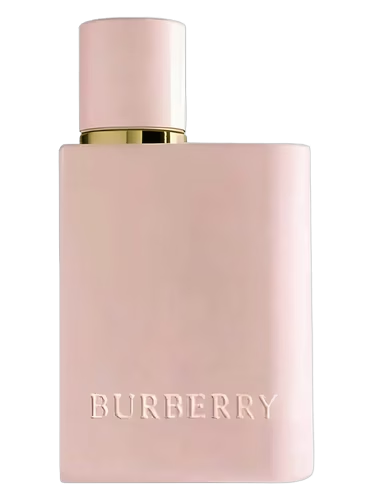
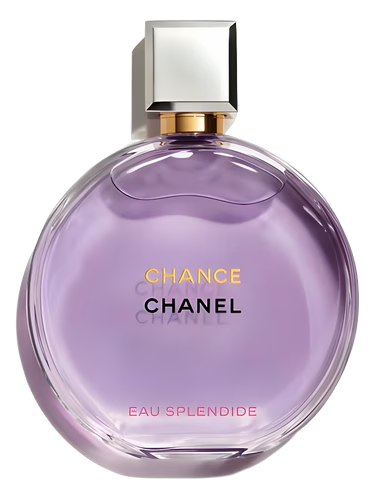
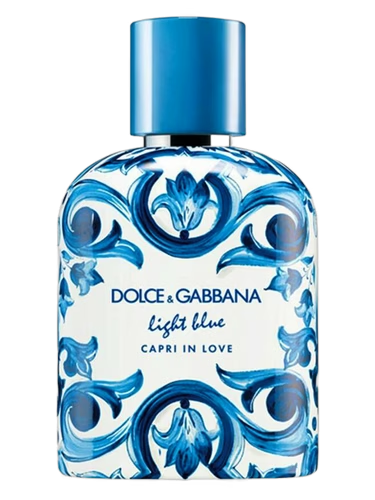
What are Crimson Fruits?
Crimson Fruits is a modern fragrance category encompassing rich, dark red fruits like cherry, plum, and cranberry, valued for their succulent and luxurious aroma.What do Crimson Fruits smell like?
They offer a rich, intense, and deeply succulent scent that blends sweet and slightly tart juiciness with sophisticated winey or liqueur-like undertones.How is the Crimson Fruits note extracted?
While historically obtained through maceration or cold pressing, modern perfumery uses advanced methods like supercritical CO2 extraction or recreates the scent using synthetic molecules.What are some top perfumes featuring Crimson Fruits?
Notable fragrances include Tom Ford Lost Cherry, Kilian Black Phantom, Lattafa Nebras, and Guerlain La Petite Robe Noire.When are Crimson Fruits in season?
They are typically linked to the sun-drenched months from late spring through late autumn, starting with strawberries in May and ending with late-season raspberries in November.