Fragrance Notes Are Layers Of Scent That Are Layered To Form The Final Fragrance. Fragrance Notes Are Categorised Into Three Main Elements Based On How Long They Take To Evaporate, And How Long They Typically Last Following Application: Top Notes, Heart Notes And Base Notes.
Creamy Flowers
Creamy Flowers offer a rich, smooth, and opulent floral profile, characterized by luxurious white florals like gardenia, tuberose, and ylang-ylang, often fused with lactonic (milky) and soft vanilla or almond facets. This creates a velvety, heady, slightly sweet, and immensely sensual texture in fragrance.

Origin & Extraction Of Creamy Flowers
The history of "Creamy Flowers" in perfumery is rooted in the long-standing tradition of utilizing potent white floral notes, such as jasmine, tuberose, and gardenia. Historically, these luxurious flowers were mainstays in perfumery, dating back centuries, and were often associated with royalty and opulence. These heady, rich scents provided a dense, deeply floral character, forming the core of classical, sensual fragrances.
The specific "creamy" interpretation—characterized by a smooth, velvety texture often incorporating lactonic (milky) notes, vanilla, or almond facets—is a more refined and contemporary development. While the opulent white florals provided the foundation, the addition of creamy facets in modern perfumery allows for a softer, more sensual, and gourmand-leaning profile, moving away from the purely heady style of older compositions to create a luxurious and immensely smooth experience popular in 20th and 21st-century fragrances.
Extraction Methods of Creamy Flowers
The extraction of "creamy" floral notes—typically derived from white flowers like tuberose, gardenia, jasmine, and frangipani—is traditionally focused on preserving delicate, heat-sensitive molecules like lactones and indoles that provide their characteristic milky richness. Historically, the most revered method for these fragile blooms was cold enfleurage. This labor-intensive process involved layering fresh petals onto frames coated with odorless animal fats (tallow or lard) or vegetable fats like cocoa and shea butter. The fat would absorb the flower's volatile oils over several days, and the process was repeated with fresh petals until the fat was saturated, creating a "pomade" that was then washed with alcohol to produce a high-quality absolute.
In modern perfumery, while enfleurage is still used for niche applications, the standard industrial method is solvent extraction. This involves using volatile non-polar solvents like hexane or petroleum ether to dissolve the aromatic compounds, waxes, and pigments into a solid "concrete." This concrete is then washed with ethyl alcohol and chilled to separate the fragrant oils from the plant waxes, resulting in a potent absolute. Recently, advanced techniques such as supercritical CO2 extraction have become more prevalent. This method uses pressurized carbon dioxide as a solvent, which allows for extraction at lower temperatures without chemical residues, capturing a scent profile that is often closer to the fresh, living flower. Additionally, innovative "cellular extraction" and molecular distillation are now employed to isolate specific creamy facets, such as methyl benzoate or lactones, while removing undesirable "dirty" top notes.
The "Creamy Flowers" profile, characterized by its smooth, sensual blend of white florals and soft, lactonic or vanilla facets, is prominent in many luxurious modern fragrances. Houses like Parfums de Marly frequently utilize this opulent texture to convey richness and femininity. For example, some compositions might showcase a blend of gardenia and tuberose softened by almond or cream accords, creating a deeply luxurious and enveloping scent trail.
- * * *
The contemporary interpretation of this note is often seen in niche perfumery, where the focus shifts toward amplifying the velvety smoothness. While specific classic fragrances rely on tuberose and gardenia (such as Dior's Hypnotic Poison, which incorporates creamy almond facets), modern examples, including those from Ministry of Scent, are embracing this note for its comforting yet sensual depth. These fragrances move beyond simple floral sweetness to include gourmand elements that enhance the "creamy" sensation, making the floral notes feel dense and lasting.
- * * *
The Creamy Flowers accord is also adaptable across fragrance styles, lending a rich heart to both airy and heavy compositions. The presence of creamy notes ensures that the white florals, which can sometimes be sharp, are rounded and smooth. Although specific famous names like **Tahara Vanilla** (Gulf Orchid) or others listed on Fragrantica, use this note explicitly, the style is exemplified by any major white floral fragrance—especially those with significant vanilla, coconut, or ylang-ylang—that aims for a velvety, opulent finish.
Sustainability Of Creamy Flowers
Sustainability of Creamy Flowers
- Promoting a circular economy by composting organic plant debris and repurposing waste into nutrient-rich soil for local farmers
- Reducing environmental impact through the use of reusable mechanics like chicken wire and metal flower frogs instead of non-biodegradable floral foam
- Sourcing from local, certified sustainable farms to reduce carbon emissions associated with long-distance transportation and cold-chain storage
- Implementing waste-reduction strategies by donating surplus arrangements to community centers and upcycling unsold blooms into dried floral decor
- Minimizing plastic consumption by using recyclable kraft paper, natural fiber ribbons, and encouraging the return and reuse of glass vases
Trivia
In Victorian England, young women were reportedly forbidden from entering tuberose gardens at night because the flower's intensely creamy and carnal scent was feared to be so powerful it could accidentally trigger a spontaneous orgasm.
Most Popular Scents Using Creamy Flowers
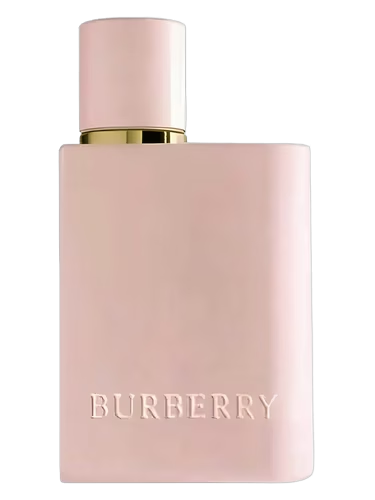
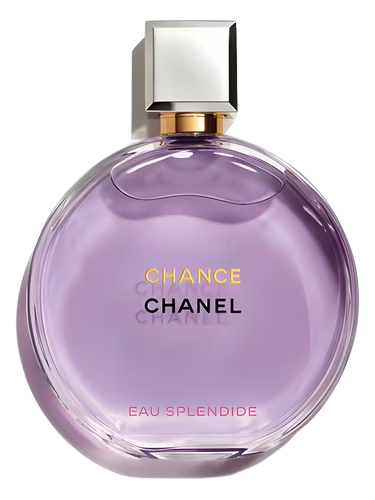
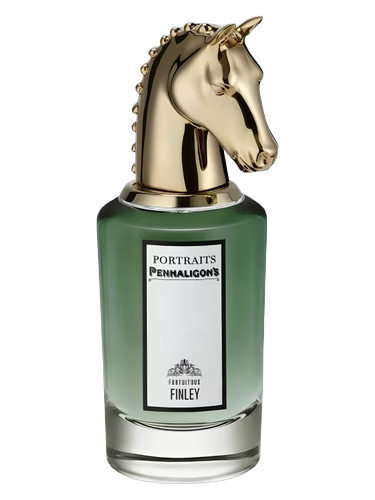
What are Creamy Flowers in perfumery?
Creamy Flowers refer to a rich, opulent fragrance profile based on white florals like gardenia, tuberose, and ylang-ylang, enhanced with smooth, lactonic, or vanilla facets for a velvety texture.What do Creamy Flowers smell like?
They offer a heady, smooth, and immensely sensual aroma that is slightly sweet and milky, providing a dense and luxurious finish to perfumes.How is the scent of Creamy Flowers extracted?
While historically achieved through cold enfleurage, modern perfumery uses solvent extraction or supercritical CO2 extraction to capture the delicate, milky richness of the living flowers.What are some top perfumes featuring Creamy Flowers?
Notable fragrances include Creed Wind Flowers, Parfums de Marly Oriana, Giardini di Toscana BoraBora, and Herdahl-Thorsing Cream Flower.When is the best time to wear Creamy Flower fragrances?
While versatile for any time of year, these dense and opulent scents are especially popular for fall and winter occasions, weddings, and evening events.