Fragrance Notes Are Layers Of Scent That Are Layered To Form The Final Fragrance. Fragrance Notes Are Categorised Into Three Main Elements Based On How Long They Take To Evaporate, And How Long They Typically Last Following Application: Top Notes, Heart Notes And Base Notes.
Cotton Flower
Cotton Flower is a clean, musky, and comforting note, reminiscent of freshly laundered linen. It offers a crisp, airy freshness with delicate, soft floral nuances and a subtle powdery facet. This synthetic accord adds purity, softness, and tranquility to a fragrance, often supporting white musk and light florals.

Origin & Extraction Of Cotton Flower
The "Cotton Flower" note in perfumery is primarily a modern, conceptual, and synthetic creation rather than an extract from the actual flower, which is typically unscented. Its relevance to perfumery grew alongside the popularity of the "clean" and "fresh laundry" fragrance categories starting in the mid to late 20th century. While historically, cleanliness scents were dominated by notes like lavender and traditional soaps, perfumers began seeking more abstract and comforting aromatic elements to convey purity, softness, and tranquility.
The concept became firmly established with the introduction of white musks and highly stable synthetic molecules, such as Cashmeran (1970s) and Deltamuscenone, which offered a 'clean cashmere' or powdery facet. These molecules allowed for the creation of the Cotton Flower accord—a clean, musky, airy blend that evokes the softness of cotton and the crispness of freshly laundered linen, securing its place as a crucial note in modern, delicate, and comforting fragrances.
Extraction Methods of Cotton Flower
Historically, capturing the essence of cotton flowers involved traditional solvent extraction or hot water extraction. These conventional methods were often complicated and time-consuming, requiring long soaking periods in ethanol or water to pull active compounds from the plant material. Because the delicate aromatic and bioactive components of cotton are sensitive to heat and prolonged processing, these older techniques often resulted in lower yields and less potent extracts.
Modern extraction has evolved toward more efficient and environmentally friendly biotechnological processes. One advanced approach involves in vitro cell culture, where specific plant cell strains are grown in a controlled nutritive medium and stimulated with UV or visible light to produce high concentrations of active metabolites. The cells are then harvested through filtration and sonication to release the extract. Additionally, contemporary pharmaceutical and cosmetic applications utilize ultrasound-assisted extraction (UAE) and subcritical water extraction (SWE). UAE uses high-frequency sound waves to rupture cell walls, significantly increasing the yield of flavonoids and polyphenols while remaining a green and economical alternative to traditional chemical solvents.
The Cotton Flower note, prized for its clean, musky, and comforting aroma that evokes fresh linen, is a staple in modern perfumery focused on tranquility and softness. Although the note is often a synthetic accord designed to convey the texture and purity of cotton rather than a natural floral extract, it has become crucial in creating delicate, 'skin scent' fragrances. It serves to enhance white musk and light floral compositions, lending a sophisticated, airy freshness.
A notable fragrance that features the Cotton Flower note is Invisible Musk by Juliette Has A Gun. In this eau de parfum, Cotton Flower is utilized as a heart note, providing a soft, airy quality that complements the brightness of jasmine in the top and the foundational warmth of white musk in the base. This strategic placement ensures the scent remains delicate and transparent while adding a cocooning, clean floral character.
Another excellent example of this note's deployment is in A Chant D'Amour by Prada. Here, the Cotton Flower is woven into the heart notes, where it blends seamlessly with classic florals like orange blossom, jasmine, and lily of the valley. Its role is to add a delicate, soft floral nuance that enhances the overall composition's floral, woody, and musky profile, contributing to a sense of purity and tender comfort.
Sustainability Of Cotton Flower
Sustainability of Cotton Flower
- Promoting organic cultivation by avoiding harmful chemicals and synthetic pesticides to protect soil health and consumer safety
- Implementing water-efficient practices, such as precision irrigation and rainwater harvesting, to reduce the high water footprint of conventional cotton farming
- Supporting regenerative agriculture initiatives that focus on soil restoration, biodiversity protection, and carbon sequestration
- Advancing social sustainability through Fair Trade partnerships that ensure fair wages, safe working conditions, and community development for farmers
- Utilizing circular economy principles by incorporating recycled cotton fibers and upcycled materials into textile production to minimize waste
- Establishing transparent and traceable supply chains through third-party certifications like BCI, GOTS, and Fairtrade to verify ethical sourcing
Trivia
Cotton flowers possess a unique color-changing ability, opening as a creamy white or yellow before darkening to a deep pink or dusky rose within just 24 hours of blooming.
Most Popular Scents Using Cotton Flower
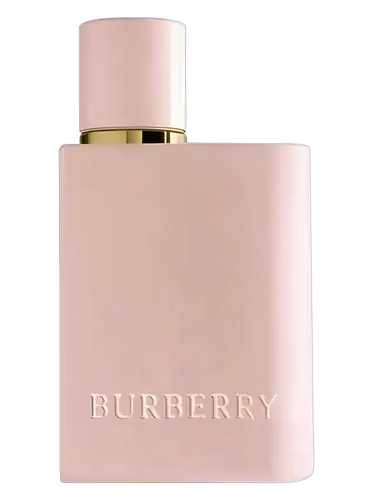
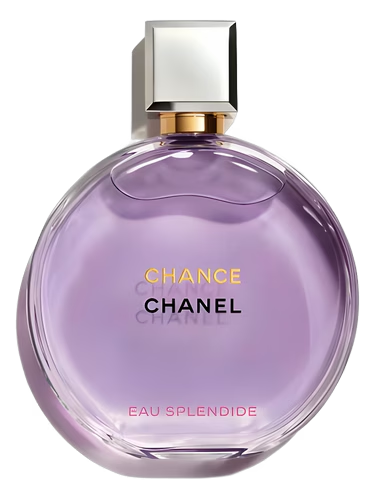
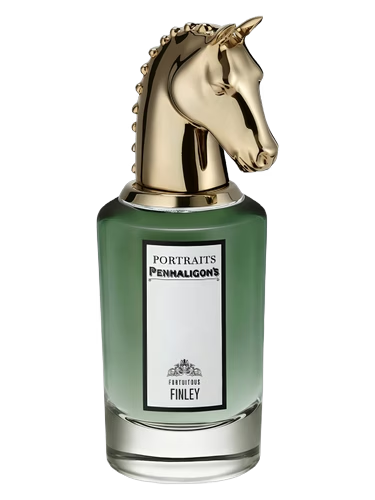
What is Cotton Flower in perfumery?
Cotton Flower is a modern, synthetic fantasy accord designed to evoke the scent of clean laundry and softness, as the actual flowers of the cotton plant are typically unscented.What does Cotton Flower smell like?
It offers a clean, musky, and comforting aroma with airy floral nuances and a subtle powdery facet, often compared to the smell of freshly laundered linen.How is the Cotton Flower essence extracted?
Because the natural flower yields no essential oil, the note is created synthetically using white musks and molecules like Cashmeran to reconstruct its conceptual fragrance.What are some top perfumes featuring Cotton Flower?
Notable fragrances include Juliette Has A Gun Musc Invisible, Shay & Blue London Cotton Flower, and Prada A Chant D'Amour.When is the Cotton Flower in season?
The cotton plant typically blooms during the peak heat of summer, with flowers that change color from creamy white to deep pink within 24 hours of opening.