Fragrance Notes Are Layers Of Scent That Are Layered To Form The Final Fragrance. Fragrance Notes Are Categorised Into Three Main Elements Based On How Long They Take To Evaporate, And How Long They Typically Last Following Application: Top Notes, Heart Notes And Base Notes.
Cosmos Flower
A delicate, sophisticated floral note with distinctive facets. It features a blend of ethereal, airy petals, fresh green nuances, and a surprisingly warm, powdered sweetness often compared to natural cocoa or vanilla. It lends a subtle, refined depth to floral and gourmand compositions.

Origin & Extraction Of Cosmos Flower
The Cosmos Flower note is considered a modern and abstract addition to the perfumer's palette, as the natural flower itself does not yield an essential oil through traditional extraction methods. Its scent profile—a delicate, airy floral mixed with unexpected notes of natural cocoa, vanilla, or sweet powder—is typically recreated synthetically or through headspace technology. This approach allows perfumers to capture its unique, subtle complexity that bridges the gap between classic florals and emerging gourmand categories.
Because the note relies on sophisticated modern techniques, Cosmos Flower lacks the centuries-long history in perfumery associated with foundational notes like rose or jasmine. Its relevance is tied to contemporary trends, where it is used to add a refined, tranquil elegance and a gentle depth, often enhancing light floral and sweet compositions. This use highlights the move toward creative, synthesized notes that offer nuanced and distinctive olfactory facets.
Extraction Methods of Cosmos Flower
Historically, cosmos flower aromatic compounds and pigments were obtained through simple traditional techniques such as air-drying the blooms in well-ventilated areas or shade, followed by maceration and infusion. Ancient and traditional folk methods involved steeping the dried or fresh flower heads in solvents like honey, alcohol, or vegetable oils for several weeks to capture their volatile oils and medicinal properties. For artisanal dyeing and printing, the flowers were often pressed or simmered to extract natural pigments.
In modern practice and scientific research, more advanced and efficient extraction methods are employed to isolate specific phytochemicals like flavonoids, tannins, and terpenoids. This often involves exhaustive extraction using 70% ethanol or methanol in heated reflux systems or through orbital shaking in dark conditions to prevent the degradation of sensitive compounds. Recent developments also include the use of horizontal airflow ovens for controlled dehydration and high-performance thin-layer chromatography (HPTLC) to identify and verify the purity of extracted bioactive components for pharmaceutical and nutraceutical applications.
The Cosmos Flower note, valued for its unique blend of airy floral, green nuances, and powdered sweetness (often resembling cocoa or vanilla), is primarily featured in high-end, niche, and modern fragrances. It is not a classical, centuries-old ingredient, but a complex, reconstructed aroma that bridges traditional floral categories with contemporary gourmand tendencies. This sophisticated profile is often used to impart a tranquil elegance and subtle depth.
- The most famous and celebrated fragrance built around this abstract note is arguably **Queen Anne Cosmos Flower** by Clive Christian. This perfume utilizes the note's complex profile to create a chypre fruity composition. It leverages the note's cocoa facet in the heart, blending it with top notes of citrus and deep base notes like benzoin, showcasing the Cosmos Flower's ability to act as a sophisticated, multifaceted bridge between different scent families.
Because the Cosmos Flower note relies on synthetic recreation to capture its ethereal scent, its appearances are less common than traditional florals like Rose or Jasmine, making the fragrances that feature it distinctive niche creations. When used, as in **Queen Anne Cosmos Flower**, it offers an unconventional sweetness—not sugary, but airy, powdery, and slightly spicy—differentiating it from more common fruit or floral accords and appealing to connoisseurs looking for unique and refined depth in modern perfumery.
Sustainability Of Cosmos Flower
Sustainability of Cosmos
- Promoting biodiversity and supporting local ecosystems by providing essential nourishment for bees, butterflies, and other beneficial pollinators
- Supporting local flower farms and regenerative agriculture to minimize carbon footprints associated with long-distance transportation and industrial farming
- Adopting low-maintenance cultivation practices that require minimal water and no synthetic fertilizers, reducing resource consumption and chemical runoff
- Implementing zero-waste floristry by utilizing biodegradable or recyclable packaging and avoiding single-use plastics and floral foam
- Advocating for seasonal-led sourcing to ensure flowers are grown in harmony with natural cycles, enhancing environmental resilience
Trivia
The cosmos flower was named by Spanish priests in Mexico who were so struck by its perfectly symmetrical and evenly placed petals that they called it "Cosmos," the Greek word for a harmonious and orderly universe.
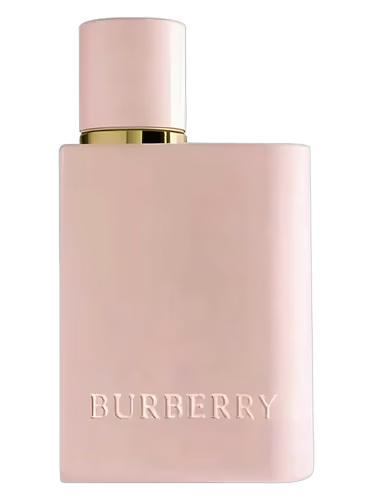
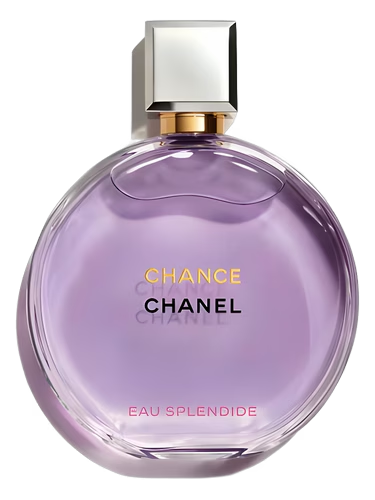
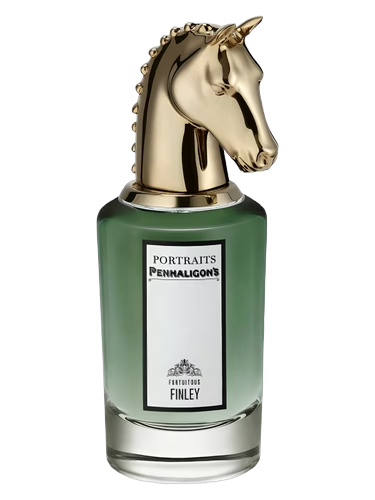
Most Popular Scents Using Cosmos Flower
What is Cosmos Flower?
Cosmos Flower is a modern and abstract floral note in perfumery, typically recreated using synthetic accords or headspace technology because the natural flower does not yield a traditional essential oil.What does Cosmos Flower smell like?
It features a delicate, airy floral profile with fresh green nuances and a signature powdered sweetness that is often compared to natural cocoa or vanilla.How is the scent of Cosmos Flower produced for perfumes?
Since there is no commercial natural extract, perfumers create a "fantasy accord" using a blend of vanillic, green, and transparent floral materials to capture the flower's ethereal aroma.What are some top perfumes featuring Cosmos Flower?
Prominent fragrances include Clive Christian Cosmos Flower, Noble Collection VII Cosmos Flower, and Queen Anne Cosmos Flower Extrait de Parfum.When is the Cosmos Flower in season?
Cosmos are warm-season annuals that typically bloom from mid-summer through the autumn, reaching their peak as summer days begin to shorten.