Fragrance Notes Are Layers Of Scent That Are Layered To Form The Final Fragrance. Fragrance Notes Are Categorised Into Three Main Elements Based On How Long They Take To Evaporate, And How Long They Typically Last Following Application: Top Notes, Heart Notes And Base Notes.
Coffee Blossom
Coffee Blossom offers a rare, exotic, and complex bouquet of sweet, ethereal florals and bright citrus accents, deepened by rich gourmand undertones of spicy vanilla, toasted espresso, and subtle chocolate. It is an invigorating, surprisingly sweet, and elegant note, lending depth and a warm, sophisticated edge to compositions.

Origin & Extraction Of Coffee Blossom
The use of Coffee Blossom in perfumery is a relatively modern and specialized trend. Historically, while the coffee bean (or "espresso" note) has been utilized since the late 20th century to lend a rich, gourmand, and slightly addictive quality to fragrances, the delicate white flower of the coffee plant was largely overlooked. This is due to its extremely short blooming season and the difficulty in extracting a stable, consistent, and cost-effective absolute. Early perfumery focused on more traditional and easily sourced florals. The note gained prominence as perfumers sought to create more complex, photorealistic, and natural compositions that captured the entire life cycle of a plant, moving beyond simple gourmand or traditional floral notes.
In contemporary fine fragrance, particularly in niche and high-end designer houses, Coffee Blossom is valued for its unique duality: it offers ethereal white floral sweetness (often compared to jasmine or orange blossom) alongside subtle undertones of spicy citrus and unroasted coffee bean. Its inclusion often signifies a sophisticated, multi-faceted composition that bridges fresh, floral, and warm gourmand families. Its growing popularity reflects a desire for notes that are both exotic and comforting, lending a warm elegance and depth that traditional florals often lack.
Extraction Methods of Coffee Blossom
The extraction of coffee blossom essence is a meticulous process due to the delicate and fleeting nature of the white flowers. Historically, capturing the scent of such fragile blossoms was achieved through traditional methods like enfleurage, which involves layering fresh petals on fat to absorb their aroma, or simple water distillation. However, because the blossoms appear only briefly before turning into coffee cherries, traditional methods were often labor-intensive and yielded limited quantities of the botanical's true, honeyed profile.
In modern commercial production, coffee blossom absolute is primarily obtained through organic solvent extraction. This method uses hexane-free or food-grade solvents to wash the flowers, creating a concrete that is then processed with alcohol to produce a highly concentrated absolute. This technique is preferred for its ability to preserve the complex, jasmine-like floral notes with subtle green and honeyed undertones. Recent advancements also include steam distillation to produce rare coffee blossom essential oils and hydrosols, as well as innovative CO2 supercritical extraction, which uses pressurized carbon dioxide to pull out aromatic compounds without the use of high heat, ensuring a pure and high-quality fragrance profile.
Coffee Blossom, appreciated for its rare duality of sweet, ethereal white florals and subtle gourmand depth, has been adopted by contemporary perfumery to create sophisticated and multi-layered compositions. While the note is less common than the roasted coffee bean itself, its inclusion signals a fragrance designed to be both invigorating and warm. One significant fragrance that elevates this delicate note is **Black Opium Nuit Blanche** by Yves Saint Laurent. This flanker utilizes the coffee blossom to lighten and add a shimmering, almost nocturnal floral sweetness to the rich signature of the original fragrance, highlighting its citrus and white floral facets before transitioning to the vanilla and musk base.
- The note is often chosen to provide an exotic, luminous floral contrast to heavier, more oriental or gourmand elements.
Another popular use of the Coffee Blossom note can be found in fragrances that aim to capture a realistic, complete portrait of the coffee plant. In scents like **Bond No. 9 I Love New York for All**, the blossom is featured to inject a touch of green, spicy elegance into an otherwise cozy, comforting gourmand composition. The ephemeral sweetness of the flower acts as a bright counterpoint to the roasted espresso and sweet hazelnut notes, preventing the overall scent profile from becoming too heavy or strictly edible, instead lending it a refined, slightly airy quality.
- Due to its complexity—blending citrus, white floral, and subtle gourmand spice—Coffee Blossom is a sophisticated ingredient that bridges several fragrance categories, appealing to lovers of both white flowers and warm, addictive scents.
In niche perfumery, where the pursuit of unique and photorealistic notes is paramount, the Coffee Blossom note is utilized for its exotic rarity. Though specific high-profile niche examples focusing solely on the blossom are limited, its essence is often incorporated into elaborate floral-gourmand structures to add textural dimension. For instance, in lines specializing in delicate florals or complex spice blends, the blossom provides a creamy, rich depth that complements notes like tuberose or jasmine, giving the final composition an unexpected, warm, and highly elegant backbone that is less overtly "coffee" and more subtly floral-spicy, leading to a sophisticated drydown.
Sustainability Of Coffee Blossom
Sustainability of Coffee Blossom
- Promoting a circular economy by upcycling coffee flowers, which are typically a byproduct, into high-value products like herbal teas and floral infusions
- Supporting income diversification for coffee farmers by creating new revenue streams from coffee blossoms and coffee blossom honey, reducing their vulnerability to market price fluctuations
- Implementing regenerative agricultural practices that utilize fallen blossoms as natural compost to return essential nutrients to the soil and improve health
- Encouraging biodiversity by maintaining healthy coffee trees that serve as habitats for pollinators, insects, and microorganisms within the broader ecosystem
- Partnering with global research organizations and sustainability challenges to invest in science-based solutions for climate resilience and farm-level sustainability projects
- Adopting ethical sourcing and transparency standards to ensure fair wages and socio-economic stability for smallholder producer communities
Trivia
Coffee blossoms are self-pollinating, meaning they do not rely on bees or insects to reproduce, and they are often triggered to bloom simultaneously across an entire plantation by a single heavy rainfall.
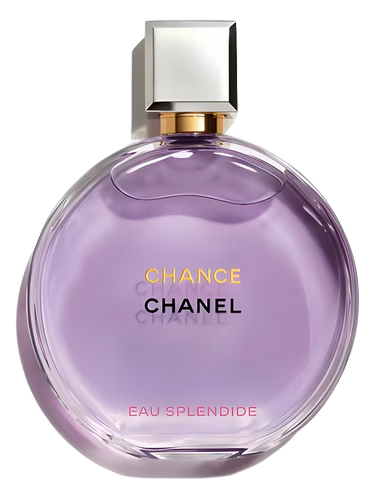
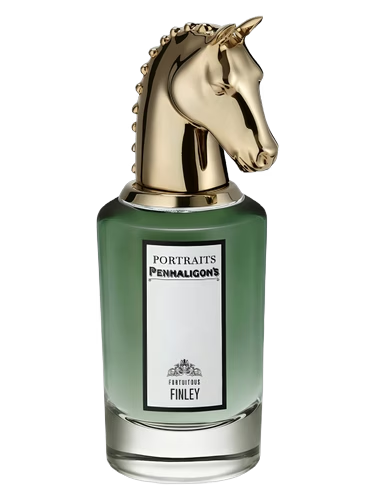
Most Popular Scents Using Coffee Blossom

What is Coffee Blossom?
Coffee Blossom refers to the delicate, white, star-shaped flowers of the coffee plant, primarily Coffea arabica, which are prized in niche perfumery for their rare and complex aroma.What does Coffee Blossom smell like?
It offers a sweet, ethereal white floral scent similar to jasmine or orange blossom, accented by bright citrus, subtle green notes, and a warm gourmand undertone of spicy vanilla and toasted espresso.Does Coffee Blossom smell like brewed coffee?
No, the blossom possesses a honeyed, floral delicacy that is distinct from the robust, earthy scent of roasted coffee beans, though it may have faint hints of unroasted coffee.How is Coffee Blossom essence extracted?
Due to their fragile nature, the blossoms are primarily processed through organic solvent extraction to create an absolute, though innovative CO2 supercritical extraction and steam distillation are also used to preserve their complex profile.What are some top perfumes featuring Coffee Blossom?
Notable fragrances include Black Opium Nuit Blanche by Yves Saint Laurent, Bond No. 9 I Love New York for All, DS & Durga Brown Flowers, and Hugo Boss The Scent for Her Eau de Parfum Intense.When is Coffee Blossom in season?
Blooming is triggered by heavy rainfall after a dry spell, typically occurring between March and May in Central America and between September and October in the Southern Hemisphere.