Fragrance Notes Are Layers Of Scent That Are Layered To Form The Final Fragrance. Fragrance Notes Are Categorised Into Three Main Elements Based On How Long They Take To Evaporate, And How Long They Typically Last Following Application: Top Notes, Heart Notes And Base Notes.
Coconut Water
Coconut Water offers a clean, ultra-sheer aquatic sweetness, capturing the refreshing, subtle aroma of the liquid rather than the creamy flesh. It presents a light, dewy, and slightly green profile with a delicate tropical lift. It is used to add a moist, airy transparency, perfect for fresh, summer, and beachy compositions, providing hydration and crystalline softness.

Origin & Extraction Of Coconut Water
The use of coconut notes in perfumery traditionally focused on the rich, creamy, and lactonic scent of coconut milk or flesh, notes that gained popularity in the mid-20th century, often associated with sunscreens, tropical cocktails, and beach culture. However, the specific note of "Coconut Water" is a more recent development, driven by the shift in the fragrance market toward sheer, aquatic, and transparent compositions, emerging prominently in the late 20th and early 21st centuries.
Coconut Water essence, prized for its subtle sweetness, light dewy greenness, and refreshing aquatic quality, reflects a modern consumer preference for naturalistic, less heavy tropical scents. Perfumers utilize it, often through synthetic accords, to add a contemporary, airy freshness and subtle hydration effect to fragrances, distinguishing it from the dense, gourmand quality of traditional coconut milk. It is primarily featured in modern summer, sport, and aquatic-floral perfumes, where it provides a crystalline lift and beachy transparency.
Extraction Methods of Coconut Water
Historically, coconut water was extracted using basic manual techniques centered on the fruit's three "eyes" or germination pores. Traditional methods involve using a sharp object, such as a screwdriver, knife, or specialized metal opener, to puncture the softest eye and drain the liquid. Alternatively, the coconut is cracked open by striking its natural seam with a heavy tool like a hammer or stone to split the shell into two halves, allowing the water to be collected directly. In agricultural settings, young green coconuts are often opened with a single precise cut from a machete or cleaver to access the refreshing liquid immediately after harvest.
Modern commercial extraction utilizes automated machinery designed to maintain sterile conditions and prevent oxidation. One primary method involves high-speed mechanical drills that pierce the shell near the eyes to extract the clear liquid into a closed, stainless steel vat system. Another industrial approach uses automated elevators and cutting devices that detect and halve the fruit, collecting the water in a tank with lower labor intensity. Recent technological advancements include the integration of UHT (Ultra-High Temperature) pasteurization, aseptic filling systems, and centrifugal oil separators to ensure purity and extend shelf life while preserving the natural electrolyte and nutrient profile of the water.
The Coconut Water note, valued for its sheer, aquatic sweetness, has found a distinct home in modern summer and beach-themed fragrances, differentiating itself from the heavier, creamy coconut milk profile. This note offers a crystalline freshness and subtle tropical lift, making it a favorite for compositions seeking an airy transparency. While traditionally coconut was used for rich, gourmand accords, the water essence enables a lighter, more refreshing interpretation in contemporary perfumery.
- * * *
Several specialized fragrances highlight this note, such as the widely celebrated **Água de Coco L'Occitane Au Brésil**, a unisex scent known for its naturalistic and refreshing rendition of coconut water. Other noteworthy examples in the modern fragrance landscape include the tropical collaboration **Sol de Janeiro X ANITTA** and niche offerings like **Tigre d'Eau 22.1 Pierre Guillaume Paris**, demonstrating the note's versatility across different perfume houses.
- * * *
While often used as a background element to enhance freshness, the Coconut Water note provides crucial hydration and a dewy quality, elevating popular scents designed for warmth and sunlight. It contrasts with more traditional coconut notes found in perfumes like **Maison Margiela REPLICA' Bubble Bath Eau de Toilette** or **KAYALI UTOPIA VANILLA COCO | 21 Eau De Parfum Intense**, which focus on creamier, lactonic facets. This makes Coconut Water essential for creating light, sophisticated aquatic and floral compositions that appeal to consumers seeking less dense tropical aromas.
Sustainability Of Coconut Water
Sustainability of Coconut Water
- Utilizing solar-powered manufacturing facilities and energy-efficient processing systems to reduce the carbon footprint of production
- Promoting a circular economy by repurposing coconut shells and husks into fuel, fiber, and organic materials, minimizing agricultural waste
- Adopting lightweight and recyclable packaging, such as FSC-certified paper cartons, to reduce transportation energy and environmental impact
- Supporting organic farming practices and sustainable plantations that protect local biodiversity and soil health
- Establishing transparent supply chains and fair-trade initiatives to ensure economic resilience and fair income for smallholder farmers
Trivia
Coconut water is often referred to as nature's sports drink because its high electrolyte content is so biologically compatible with human chemistry that it was reportedly used as an emergency intravenous hydration fluid during World War II.
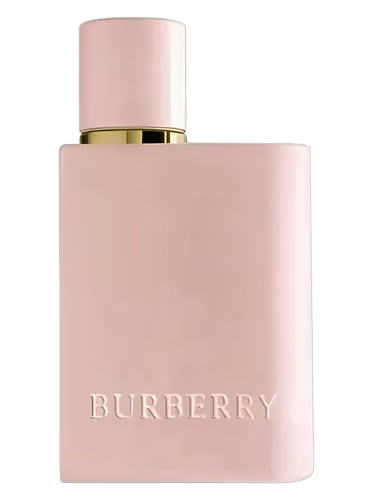
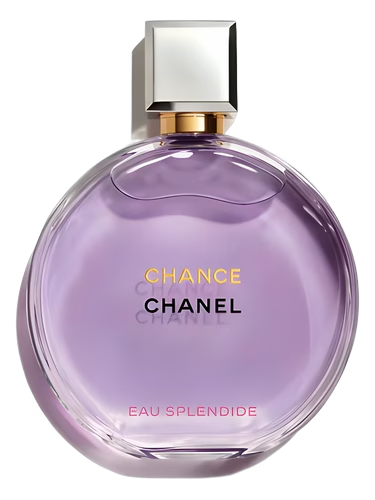
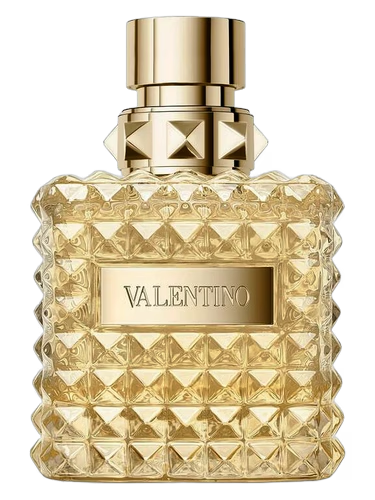
Most Popular Scents Using Coconut Water
What is Coconut Water?
Coconut Water is the clear liquid found inside young green coconuts, used in modern perfumery to provide a sheer, aquatic alternative to the creamier, denser notes of coconut milk and flesh.What does Coconut Water smell like?
It offers a clean, ultra-sheer sweetness with light, dewy, and slightly green facets, providing a moist and airy transparency that feels refreshing and tropical.How is Coconut Water essence extracted?
It is obtained by puncturing the coconut shell and draining the liquid, with modern commercial methods utilizing high-speed mechanical drills and sterile stainless steel vat systems to preserve purity.What are some top perfumes featuring Coconut Water?
Notable fragrances include Juliette Has A Gun Lust for Sun, Clean Reserve Whipped Cherry, Skylar Lime Sands, and The 7 Virtues Coconut Sun.When is Coconut Water in season?
Coconut palms produce fruit year-round, allowing coconut water to be a consistent and season-less staple in fragrance compositions regardless of the calendar month.