Fragrance Notes Are Layers Of Scent That Are Layered To Form The Final Fragrance. Fragrance Notes Are Categorised Into Three Main Elements Based On How Long They Take To Evaporate, And How Long They Typically Last Following Application: Top Notes, Heart Notes And Base Notes.
cocoa shell
Cocoa shell offers a subtle, nutty, and earthy chocolate aroma. It is richer, creamier, and deeper than cocoa powder, with distinct woody notes and a slightly bitter, sophisticated nuance. It provides a warm, comforting, and velvety texture, often used to enrich gourmand and oriental compositions.

Origin & Extraction Of cocoa shell
The history of cocoa in perfumery is long, tracing back to the early use of cocoa beans by ancient Mesoamerican civilizations. While the primary cocoa note in fragrance often comes from the bean or liquor, the specific use of the cocoa shell is a more modern, nuanced development. Historically, chocolate or cocoa accords were introduced to Western perfumery as early as the 19th century but gained significant popularity in the late 20th and early 21st centuries with the rise of the gourmand fragrance category. These earlier applications generally sought a rich, edible sweetness.
Cocoa shell specifically emerged as a note valued not just for its chocolate sweetness, but for its dry, earthy, and slightly woody complexity. Perfumers use the shell essence to achieve a sophisticated, less overtly sugary cocoa character—one that provides a velvety texture and an aromatic bridge between gourmand accords and deeper oriental or woody bases. This note is frequently utilized in contemporary compositions seeking a comforting, warm depth that anchors brighter top notes and enriches the heart of the fragrance.
Extraction Methods of Cocoa Shell
Historically, cocoa shells were considered a waste product of the chocolate industry, separated from the bean during pre-roasting or after roasting via winnowing. Traditional extraction for flavor and color involved basic aqueous methods, such as simmering the shells in a water bath at temperatures of 95 to 100°C for approximately one hour. Another established historical method utilized acidified ethanol solutions (often with citric or tartaric acid) under reflux to hydrolyze and esterify components, producing a liquid extract with characteristic berry-like notes for use in beverages.
Modern extraction techniques have shifted toward high-efficiency, sustainable "green" technologies to valorize this byproduct. A leading contemporary method is ultrasonic-assisted extraction (UAE), which uses acoustic cavitation to rupture the cellular structure of the shells, significantly increasing the yield of antioxidants, theobromine, and cocoa butter in a fraction of the time required by traditional methods. Other advanced techniques include microwave-assisted extraction (MAE), supercritical CO2 extraction, and the use of deep eutectic solvents (DESs). Recent innovations even explore using natural edible solvents like stingless bee honey combined with high-intensity sound waves to create nutrient-dense superfoods without toxic chemicals.
The cocoa shell note is highly valued in contemporary perfumery for offering a dry, sophisticated, and less overtly sweet chocolate character, contrasting with the richer cocoa absolute or liquor. It frequently appears in high-end gourmand and oriental fragrances where perfumers seek to add a subtle, earthy bitterness and a warm, velvety texture without overpowering the composition with sugar. Its woody undertones help bridge the gap between edible notes and deeper, often resinous or amber bases.
- * * *
One notable example where the dry, aromatic quality of cocoa shell is highlighted is **Serge Lutens Chergui**, although this perfume is often cited for its dominant honey, hay, and incense notes. The subtle, dusty cocoa shell works to deepen the amber structure and contribute to the fragrance's signature warm, golden texture. Another significant use is found in more modern interpretations of chocolate, such as **Guerlain L'Homme Idéal Eau de Parfum**, where it complements the almond and leather notes to build a rich, masculine gourmand accord that is comforting and sophisticated rather than strictly edible.
- * * *
In niche perfumery, the cocoa shell note provides a complex depth often utilized to anchor ethereal or spicy compositions. For instance, in some dark chocolate-themed fragrances, the shell note prevents the scent from becoming cloying, emphasizing the raw, slightly savory side of cocoa. This note ensures the fragrance maintains a refined, lingering warmth, making it a favorite for oriental and cold-weather scents that require longevity and a comforting, enveloping presence.
Sustainability Of cocoa shell
Sustainability of Cocoa Shell
- Upcycling and waste reduction by repurposing the outer casing of cocoa beans, which accounts for up to 20% of the bean's weight and is typically discarded as a byproduct of chocolate production
- Promoting a circular economy through the transformation of shells into high-value raw materials for use in perfumery, cosmetics, pharmaceuticals, and functional foods
- Sourcing from ethically managed farming cooperatives, such as those in the Ivory Coast and Brazil, to provide additional income streams for smallholder farmers and improve rural livelihoods
- Implementing zero-waste agricultural practices by using shells as nutrient-rich organic mulch or biofertilizer to improve soil vitality, retain moisture, and suppress weeds without chemical herbicides
- Reducing environmental impact by preventing the accumulation of decomposing waste in fields, which can spread crop diseases like black pod rot
- Developing bio-based alternatives to plastic packaging and synthetic exfoliants by utilizing the high fiber, pectin, and lignin content found in the shells
- Supporting carbon-neutral goals through the use of upcycled ingredients that have a lower carbon footprint compared to traditional raw materials
Trivia
Cocoa shells make up about 10% to 17% of a cocoa bean's total weight and were historically considered a waste product, but they are so rich in nutrients that they were once used as a source of vitamin D to supplement livestock during the dark winter months.
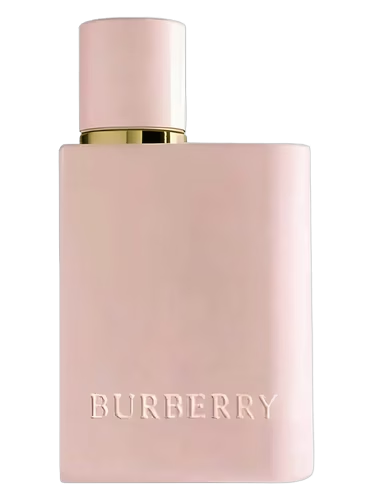
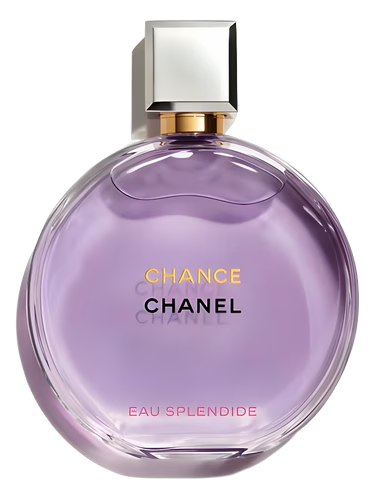
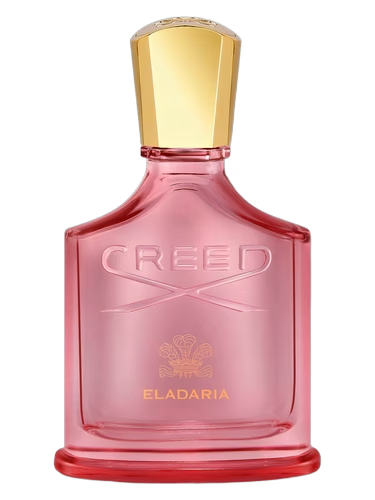
Most Popular Scents Using cocoa shell
What is cocoa shell?
Cocoa shell is the outer casing of the cocoa bean, traditionally a byproduct of chocolate production now used in perfumery for its dry, earthy, and sophisticated chocolate character.What does cocoa shell smell like?
It offers a subtle, nutty, and earthy chocolate aroma that is richer and deeper than cocoa powder, providing a warm, velvety texture with distinct woody notes.How is cocoa shell essence extracted?
The essence is primarily obtained through solvent extraction or modern "green" technologies like ultrasonic-assisted extraction to repurpose the shells from the roasting process.What are some top perfumes featuring cocoa shell?
Notable fragrances include Henry Rose Dave, Aerin Rose Cocoa, Byredo Velvet Haze, Liis Choux Choux, and Tom Ford Tobacco Vanille.When is cocoa shell in season?
The availability is tied to the cacao pod harvest, which typically peaks between October and January, ensuring a steady supply as a byproduct of the roasting process.