Fragrance Notes Are Layers Of Scent That Are Layered To Form The Final Fragrance. Fragrance Notes Are Categorised Into Three Main Elements Based On How Long They Take To Evaporate, And How Long They Typically Last Following Application: Top Notes, Heart Notes And Base Notes.
Clematis
Clematis offers a nuanced floral profile, varying by species. It can range from a delicate, sweet, and honeyed scent to more unusual facets, sometimes featuring minty or subtle chocolate-like nuances. It lends a distinct, complex, and gently fragrant floralcy to compositions.

Origin & Extraction Of Clematis
Clematis, a genus of flowering plants, is not a traditionally extracted material in fine perfumery, unlike notes such as Rose or Jasmine. Its scent profile, which can range from delicate, sweet, and honeyed to subtle minty or chocolate-like facets, is often too subtle or variable for natural distillation. Therefore, its history in fragrance is tied to modern aroma chemistry. As perfumers moved away from exclusively natural extracts and began exploring hyper-realistic or abstract floral accords in the late 20th and early 21st centuries, the unique characteristics of Clematis were replicated using synthetic molecules to lend a distinct, gently complex floralcy to compositions.
The relevance of the Clematis note today lies in niche and contemporary designer fragrances seeking unusual or tender floral nuances. It is used to provide a sense of ephemeral freshness and soft complexity that avoids the heavy, classic feel of traditional white florals. Its presence often indicates a modern composition focused on botanical accuracy or light, airy structures, appealing to consumers looking for unique, understated floral bouquets rather than historically defined fragrance genres.
Extraction Methods of Clematis
Historically, the extraction of medicinal compounds from Clematis, particularly its roots (Radix Clematidis), relied on traditional maceration and decoction methods. In these practices, plant material was often soaked in water or alcohol to extract active principles like saponins. For horticultural propagation, traditional techniques such as layering—where a vine is encouraged to root while still attached to the parent plant—and simple internodal cuttings have been used for centuries to clone desirable varieties.
Modern extraction methods for pharmaceutical and phytochemical purposes have become significantly more advanced, utilizing ultrasonic-assisted extraction (UAE) and membrane separation technologies. Current industrial processes often involve crushing the root and using ethanol solutions combined with ultrasonic frequencies (20-40KHz) to improve the yield of total saponins. These extracts are then refined using ultrafiltration and nanofiltration membranes to remove impurities efficiently with lower energy consumption. In perfumery and aromatherapy, high-purity solvents like methanol or petroleum ether are used in Soxhlet extraction followed by vacuum evaporation to capture the plant's delicate volatile compounds.
The Clematis note is often employed in modern, abstract, and light floral compositions, especially by niche and designer houses aiming to create a sense of ethereal freshness and garden complexity that moves beyond traditional powerhouse florals like rose and jasmine. Because Clematis essence is typically too subtle for natural extraction, its fragrance is often synthesized to capture its unique profile, which can range from delicate sweetness to subtle minty or aquatic facets. These contemporary compositions utilize the note to add an understated yet distinctive floral signature.
- While Clematis is not a central component in many blockbuster fragrances, it often serves a crucial supporting role, adding bright greenness and subtle complexity to modern bouquets. A fragrance that features a prominent Clematis accord is **Eclat d’Arpège** by Lanvin. In this scent, Clematis contributes to a fresh, aquatic, and transparent floral heart, blending seamlessly with other light notes to create a luminous and feminine aura.
Niche perfumers value the note for its botanical accuracy and its ability to lend an unusual, sophisticated twist to simple floral themes. It appeals to consumers who prefer soft, airy structures over heavy classic scents. Another example where a Clematis-like accord is present to achieve a specific floral texture is in **Gucci Bloom Acqua di Fiori**, where the green and fresh facets of the composition rely on these complex floral-green notes to provide an invigorating lift that complements the richer tuberose and jasmine base.
Sustainability Of Clematis
Sustainability of Clematis
- Utilizing vertical greening systems to enhance urban biodiversity, reduce air pollution, and provide natural cooling effects for buildings
- Adopting organic cultivation practices, including the use of compost, leaf mold, and balanced organic fertilizers to maintain soil health
- Implementing biological pest control and strict sanitation protocols to reduce reliance on synthetic pesticides and minimize crop losses
- Reducing carbon footprints by prioritizing domestic production and local sourcing of native species to restore regional ecosystems
- Promoting water conservation through precision irrigation, mulching to retain soil moisture, and the use of water-holding soil amendments
- Encouraging ethical horticultural practices by discouraging the illegal digging of wild plants and focusing on sustainable propagation by cuttings
Trivia
The Clematis plant is often called the Devil's Darning Needle in the United States due to an old folklore association with the devil, yet its sap is technically caustic and can cause painful skin blistering upon contact.
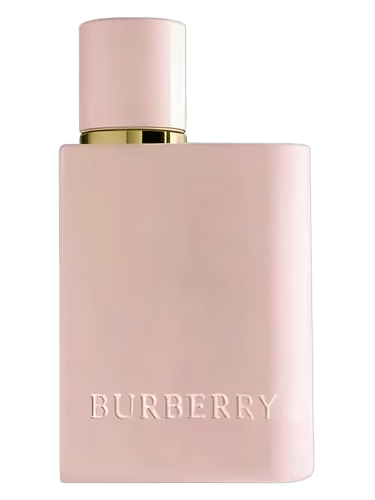
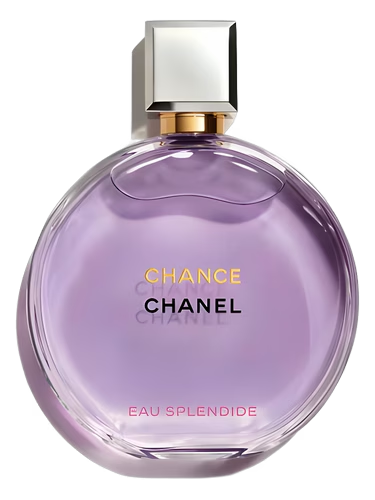
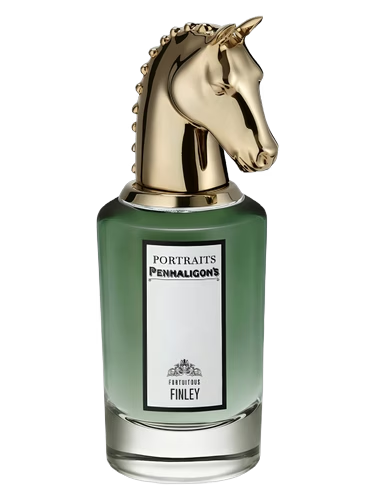
Most Popular Scents Using Clematis
What is Clematis?
Clematis is a genus of flowering plants whose nuanced floral profile is used in modern perfumery to provide ethereal freshness and soft complexity.What does Clematis smell like?
The scent varies by species, ranging from delicate, sweet, and honeyed notes to unusual facets featuring minty or subtle chocolate-like nuances.How is Clematis essence extracted?
Because the natural scent is often too subtle or variable for distillation, the note is typically replicated in perfumery using synthetic molecules and modern aroma chemistry.What are some top perfumes featuring Clematis?
Fragrances featuring Clematis or its accords include Lanvin Eclat d’Arpège, Gucci Bloom Acqua di Fiori, Xerjoff Dama Bianca, and Schiaparelli Shocking.When is Clematis in season?
Clematis vines have a diverse flowering season that can span nearly the year, with different varieties blooming from early spring through late fall and even into mid-winter.