Fragrance Notes Are Layers Of Scent That Are Layered To Form The Final Fragrance. Fragrance Notes Are Categorised Into Three Main Elements Based On How Long They Take To Evaporate, And How Long They Typically Last Following Application: Top Notes, Heart Notes And Base Notes.
Citrus Water
Citrus Water offers a sheer, refreshing, and clean aquatic interpretation of citrus notes. It combines the bright, sparkling zest of various citruses, such as lemon, bergamot, and grapefruit, with a cool, watery transparency. The scent is light, ethereal, and subtly invigorating, conveying a sense of damp freshness and dewy fruit peel, often used to lend a vibrant, airy lift to compositions, particularly in summer or sport fragrances.

Origin & Extraction Of Citrus Water
The concept of "Citrus Water" in perfumery is primarily a modern development, emerging alongside the rise of aquatic and sheer fragrance categories in the late 20th and early 21st centuries. While classic Eau de Colognes have always centered on bright citrus oils (like bergamot and lemon), Citrus Water represents a sophisticated, synthesized interpretation that focuses on the aqueous, dewy freshness of the fruit, moving away from the volatile, sharp zest. This evolution allowed perfumers to create lighter, more ephemeral compositions, perfect for the growing market of sport and summer fragrances seeking a clean, non-acidic lift.
As fragrance technology advanced, Citrus Water became highly valued for its ability to convey transparency and freshness without adding weight, functioning often as a versatile structural component. It helps bridge traditional citrus top notes with lighter floral or synthetic aquatic heart notes. Its continuous use in recent releases, such as in certain celebrity and modern designer fragrances (like Fantasy Sheer or Indigo Dreams), confirms its role as a relevant ingredient for providing a delicate, sparkling, and contemporary aqueous transparency to scent profiles.
The "Citrus Water" note, characterized by its sheer, aquatic freshness, is a cornerstone in contemporary light and airy fragrance design, particularly within the 'transparent' or 'sport' categories. While many fragrances feature a general aquatic-citrus blend, those truly emphasizing this "watery" quality often aim for maximal refreshment and lightness. A key example is **Acqua di Gioia** by Giorgio Armani, which, while not exclusively focused on "Citrus Water," uses a prominent citrus top note blended with a strong aquatic element to evoke the scent of cool, fresh water infused with bright citrus.
- This note is frequently utilized in modern, minimalist scents where clarity and invigoration are paramount.
Another popular application of this note is in the evolution of classic Eau de Colognes into lighter, more modern versions. These fragrances often use the transparency of the "Citrus Water" accord to dilute the traditional density of floral or woody notes, making the scent ultra-clean and highly diffusive. Fragrances in the **CK One** family, particularly its numerous flankers, often employ a sparkling, watery citrus mix to maintain their iconic unisex, clean-laundry profile while adapting to aquatic trends.
- The subtle, ethereal nature of Citrus Water makes it versatile, allowing it to support bolder notes without weighing them down.
In niche perfumery, where the quest for unique textures is constant, "Citrus Water" is used to create hyper-realistic sensory experiences. For instance, brands focusing on natural freshness might use this accord to simulate the scent of dewy fruit peel or a cool sea spray immediately following a Mediterranean rain shower. The result is an elegant, understated freshness that adds longevity and refinement, making it ideal for sophisticated summer scents that rely on a clean, non-cloying lift.
- The note is valued for providing excellent projection and an immediate "feel good" factor without heavy musk or sweetness.
Sustainability Of Citrus Water
Sustainability of Citrus Water
- Adopting precision irrigation technologies like micro-sprinklers and drip systems to deliver water directly to the root zone and minimize waste
- Utilizing soil moisture sensors, tensiometers, and automated weather stations to optimize irrigation schedules based on real-time tree needs and environmental conditions
- Implementing regenerative soil management practices, such as mulching with organic materials or black mesh, to improve water retention and reduce evaporation by up to 50%
- Using recycled organic matter, compost, and urban plant debris to enhance soil water-holding capacity and reduce reliance on synthetic fertilizers
- Establishing well-maintained drainage systems and reservoirs to manage water availability during drought periods and protect local watersheds from nutrient runoff
Trivia
The term citrus water historically refers to refreshing sherbets and floral waters developed using ancient Persian distillation techniques, which were so prized they were used for both medicinal healing and as luxury culinary treats.
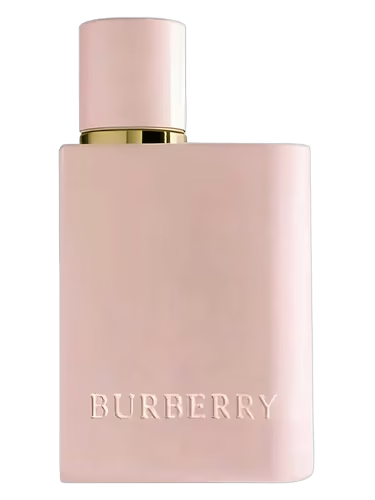
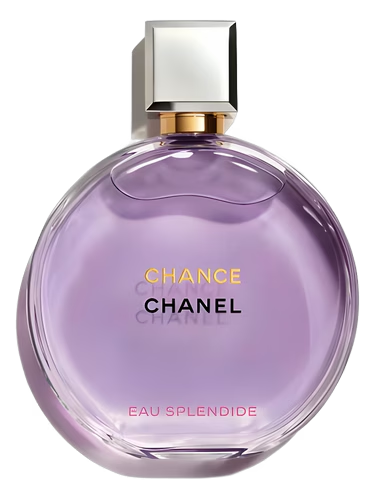
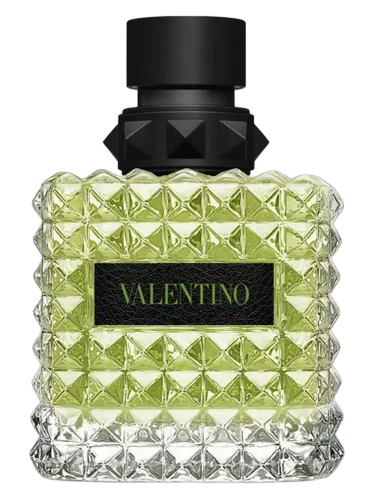
Most Popular Scents Using Citrus Water
What is Citrus Water?
Citrus Water is a sheer, clean, and refreshing aquatic interpretation of citrus notes like lemon and bergamot, used to provide an airy lift to fragrances.How is Citrus Water extracted?
Modern methods recover high-purity fruit water from citrus juice using advanced evaporative, vacuum concentration, or freeze concentration techniques.What does Citrus Water smell like?
It offers a light, ethereal aroma that combines sparkling citrus zest with a cool, watery transparency and the scent of dewy fruit peel.What are some famous perfumes with Citrus Water?
Iconic scents include Giorgio Armani Acqua di Gio, Dolce & Gabbana Light Blue, Issey Miyake L'Eau d'Issey Pour Homme, and Versace Man Eau Fraiche.When is Citrus Water produced?
Production is most prominent during the spring months of April and May, coinciding with the peak bloom of citrus trees in Mediterranean climates.