Fragrance Notes Are Layers Of Scent That Are Layered To Form The Final Fragrance. Fragrance Notes Are Categorised Into Three Main Elements Based On How Long They Take To Evaporate, And How Long They Typically Last Following Application: Top Notes, Heart Notes And Base Notes.
Citron
Citron offers a bright, intensely fresh, and slightly sweet citrus aroma. It is sharper and less sweet than lemon, with prominent zesty, greenish, and aromatic nuances derived from the thick rind. In perfumery, it provides a vivid, uplifting opening, often used in Eau de Colognes and refreshing compositions for a bracing, clean effect.

Origin & Extraction Of Citron
The Citron (Cédrat) note is a celebrated element in the history of citrus fragrances, especially within the Eau de Cologne tradition. Its intense freshness and zesty aroma are highly prized. While it shares common ground with lemon and bergamot, Citron offers a unique, highly aromatic profile derived from its thick rind, lending a bracing, clean effect that has anchored numerous classic and modern compositions aimed at providing an immediate, invigorating lift.
Modern perfumery continues to value the Citron note for its versatility and complexity, using it not only as a traditional top note but also integrating it into the heart of a fragrance to maintain longevity and a clean, luminous structure. Its ability to be both sharp and slightly sweet makes it a perfect counterpoint to heavier floral, woody, and aquatic accords, ensuring its enduring relevance across various fragrance genres.
Extraction Methods of Citron
The primary method for extracting citron essential oil is cold expression of the fruit's thick, aromatic peel. Historically, this was achieved through labor-intensive manual techniques such as the sponge method, where the rinds were pressed by hand against sponges to collect the oil, or the "ecuelle a piquer" method, which involved rolling the fruit in a bowl lined with sharp needles to puncture the oil glands. These traditional processes were valued for preserving the delicate, top-heavy citrus notes that high heat can easily destroy.
Modern commercial production has shifted toward mechanical expression using specialized machines that rasp or squeeze the peel under a water spray to create an emulsion, which is then separated using high-speed centrifugation. In addition to expression, steam distillation and hydrodistillation are used to extract oils, particularly when a different aromatic profile is desired. Recent technological advancements have introduced more efficient and sustainable methods, such as microwave-assisted extraction (MAE) and supercritical CO2 extraction, which allow for higher purity and the preservation of thermally unstable compounds without the use of chemical solvents.
The refreshing note of Citron, or Cédrat, is foundational to the classical structure of Eau de Cologne, a fragrance category that champions bright, clean freshness. One of the most famous examples of its use is in **Acqua di Parma Colonia**, where Citron is integral to the initial sparkling burst. Its zesty, slightly greenish aroma contributes significantly to the fragrance's sophisticated, timeless, and invigorating opening, setting the standard for refined Italian freshness.
- Citron's bright, bracing quality makes it a staple in light, energetic compositions.
In modern perfumery, Citron is often used to add unique luminosity and structure to compositions beyond traditional colognes. It plays a significant role in scents like **Dior Homme Cologne**, where its clean, tart, and expansive nature is amplified to create a modern, minimalist interpretation of freshness. The Citron here ensures the opening is sharp and crystal clear, maintaining an elegant simplicity that appeals to contemporary tastes.
- The note is valued for its thick rind nuances, which lend complexity and slight bitterness, distinguishing it from common lemon notes.
Niche perfumery also embraces the distinctive character of Citron for sophisticated, often Mediterranean-inspired creations. In **Atelier Cologne's Cedrat Enivrant**, the note is celebrated as the central element, showcasing its full spectrum—from vivid zest to subtle aromatic depth. This emphasis demonstrates how Citron, when allowed to shine, can carry a fragrance, offering a long-lasting, sophisticated freshness that remains vibrant throughout the wear time.
Sustainability Of Citron
Sustainability of Citron
- Upcycling citrus waste by extracting essential oils from peels discarded during juice and food production to reduce environmental burden
- Utilizing biodegradable, plant-derived oils as natural alternatives to synthetic chemicals in cleaning and personal care products
- Implementing biological pest control measures, such as the use of beneficial insects, to reduce reliance on chemical pesticides in citrus groves
- Promoting crop diversification and the cultivation of under-researched varieties to mitigate the impacts of climate change and support biodiversity
- Adopting energy-efficient practices and precision irrigation to minimize the carbon footprint and water consumption of farming and extraction
Trivia
The citron is considered one of the three original "ancestor" citrus species from which almost all other citrus fruits, including lemons and limes, were eventually bred.
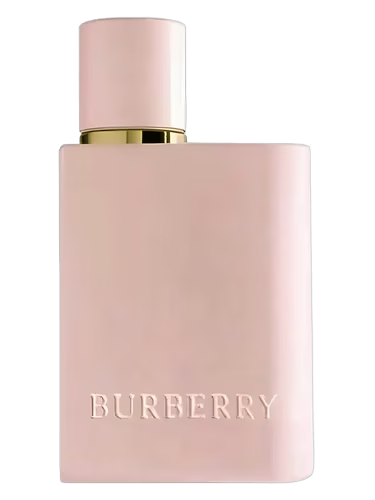
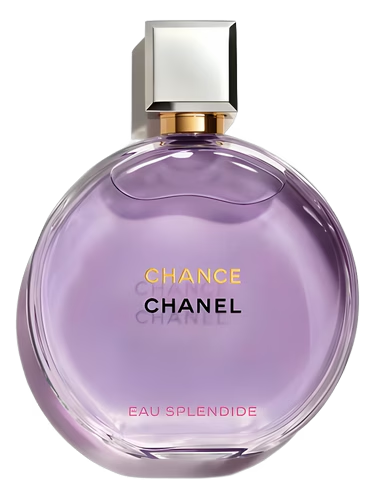
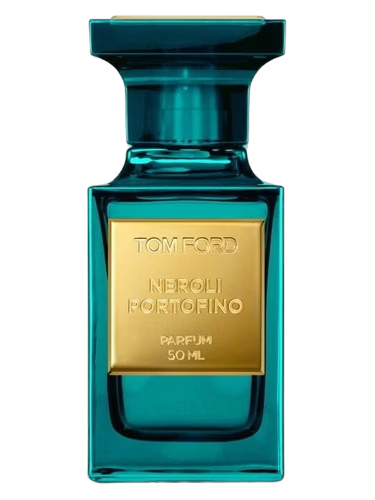
Most Popular Scents Using Citron
What is citron?
Citron (Cédrat) is one of the three original ancestor citrus species, known for its large size, thick aromatic rind, and very little juice or pulp.What does citron smell like?
It offers a bright, intensely fresh, and slightly sweet citrus aroma that is sharper than lemon, featuring prominent zesty and greenish nuances.How is citron oil extracted?
The essential oil is primarily obtained through cold expression of the fruit's thick peel, though modern methods like supercritical CO2 extraction are also used to preserve its delicate compounds.What is the difference between citron and lemon?
Citron is an ancient ancestor of the lemon; it is larger with a much thicker rind and possesses a drier, more aromatic, and less sweet scent profile.What are some famous perfumes with citron?
Notable fragrances featuring citron include Acqua di Parma Colonia, Dior Homme Cologne, Atelier Cologne Cedrat Enivrant, and Maison Margiela Replica Under the Lemon Trees.When is citron in season?
While the tree can bear fruit year-round in certain climates, the fruit generally reaches peak maturity and is harvested between late fall and early winter.