Fragrance Notes Are Layers Of Scent That Are Layered To Form The Final Fragrance. Fragrance Notes Are Categorised Into Three Main Elements Based On How Long They Take To Evaporate, And How Long They Typically Last Following Application: Top Notes, Heart Notes And Base Notes.
Cistus Incanus
Cistus (Rock Rose) is a prized note offering a unique, warm, amber fragrance. Its resin (labdanum) is musky, potent, and balsamic, often serving as a rich base note and excellent fixative. It features a deep, warm complexity, indispensable in oriental, woody, and chypre compositions for a sensual, refined trail.

Origin & Extraction Of Cistus Incanus
The history of Cistus Incanus, or Rock Rose, is intrinsically linked to its resin, Labdanum, which is one of the oldest fragrant materials used by humankind. Historically, Labdanum was collected from the wool of goats and sheep grazing on the Cistus shrubs in the Mediterranean, where the sticky resin clung to their coats. Ancient Egyptians used it extensively in incense and unguents, and it was widely traded across the Near East. Due to its potent, rich, and balsamic aroma, it was quickly adopted into early perfumery as a foundational component, offering warmth, depth, and a sensual, animalic touch.
In classical European perfumery, Labdanum (derived from Cistus) became indispensable, especially within the Chypre and Oriental fragrance families, where its complex, amber profile acted as a crucial fixative, lending longevity to volatile notes. The transition from ancient collection methods to modern solvent extraction solidified its status as a vital base note. Today, it remains highly valued in fine fragrance for its ability to simulate the scent of true amber and musk, providing a deep, leathery, and rich undertone that is both sophisticated and enduring.
Extraction Methods of Cistus Incanus
Historically, the aromatic resin of Cistus incanus, known as labdanum, was collected through labor-intensive manual methods. Shepherds would use a tool called a ladanisterion—a rake-like instrument with leather thongs—to sweep the shrubs and collect the sticky gum. In some regions, it was even gathered by combing the beards and fur of goats and sheep that had grazed among the plants. For therapeutic use in traditional medicine, the leaves were often prepared as water infusions (teas) or simple tinctures using alcohol to extract bioactive polyphenols.
Modern extraction techniques have evolved to yield more specific fragrance and medicinal materials. Cistus essential oil is primarily produced through steam distillation of the aerial parts (leaves and branches). To obtain the concentrated resinoid, solvents are used to process the plant material, which can then be further refined into labdanum absolute through alcohol washing. Recent advancements also include optimized solid-liquid solvent extractions using methanol or ethanol, Soxhlet extraction, and sophisticated water-alcoholic methods to maximize the yield of antioxidant compounds and antiviral properties for pharmaceutical and cosmetic applications.
Cistus Incanus, specifically its resin Labdanum, is a cornerstone of the classic Chypre and Oriental fragrance families, prized for its ability to simulate the rich, complex aroma of true amber. This deep, balsamic, and slightly musky note provides exceptional longevity and a sensual trail, making it indispensable for iconic, enduring scents. In the original, foundational Chypre fragrances, Labdanum worked harmoniously with oakmoss and bergamot to create a sophisticated, warm structure. A prime historical example is **Guerlain's Shalimar**, which relies on a heavy dose of Cistus/Labdanum to provide its legendary warm, vanillic, and leathery amber accord, cementing its status as one of the most celebrated Oriental perfumes of all time.
- The versatility of Cistus/Labdanum extends beyond traditional Oriental fragrances, proving crucial in modern woody and leathery compositions. It is often used to impart a sophisticated, slightly animalic warmth that gives the dry-down complexity and depth. Its resinous quality allows it to merge seamlessly with rich materials like patchouli, incense, and vetiver.
In contemporary niche perfumery, Cistus remains highly utilized, often serving as the primary ingredient in high-end "amber" accords due to its natural warmth and fixative properties. For instance, the note is prominently featured in Cistus-heavy fragrances like **Amouage Interlude Man**, where it contributes to the dense, smoky, and balsamic core, providing a luxurious, dark texture. Furthermore, Labdanum is often central to modern interpretations of the classic leather genre, exemplified by fragrances such as **Tom Ford Tuscan Leather**, where its deep, leathery-amber facets lend richness and intensity to the overall composition.
Sustainability Of Cistus Incanus
Sustainability of Cistus Incanus
- Promoting biodiversity by cultivating a hardy pioneer plant that thrives in barren, rocky soils and helps green degraded landscapes
- Adopting pesticide-free and organic farming practices, particularly in high-elevation regions like Mt. Othrys, to protect local ecosystems and ensure product purity
- Utilizing low-impact, traditional harvesting methods such as hand-picking and gentle air-drying to minimize energy consumption and preserve the plant's potent polyphenols
- Reducing environmental waste through the use of 100% biodegradable and compostable starch or cellulose-based packaging for finished tea products
- Supporting socio-economic resilience by sourcing from family-owned farms and cooperatives that have maintained traditional medicinal herb cultivation for generations
Trivia
In ancient times, labdanum resin from the Cistus plant was collected by combing it directly out of the sticky beards and leg hair of goats that grazed on the shrubs.
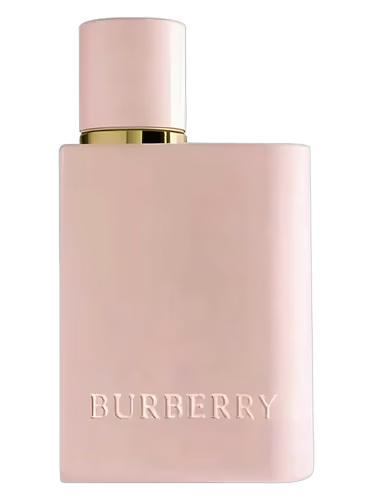
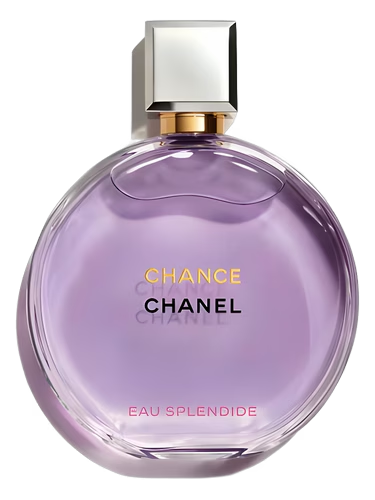
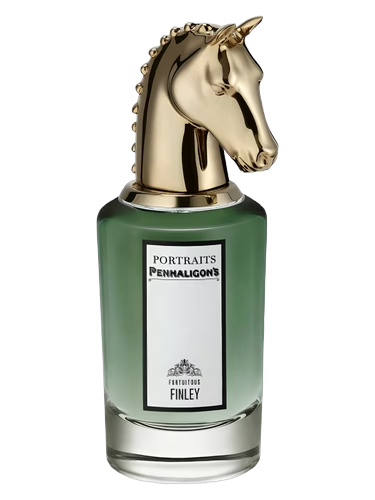
Most Popular Scents Using Cistus Incanus
What is Cistus Incanus?
Cistus Incanus, also known as Rock Rose, is a Mediterranean shrub highly valued in perfumery for its aromatic resin called labdanum, which serves as a foundational amber note.What does Cistus Incanus smell like?
It offers a unique, warm, and complex fragrance characterized by musky, potent, and balsamic facets with deep leathery and ambery undertones.How is Cistus Incanus essence extracted?
The resin is typically solvent-extracted to produce resinoids or absolutes, while the leaves and branches can be steam-distilled to produce Cistus essential oil.What are some top perfumes featuring Cistus Incanus?
Notable fragrances include BDK Parfums Gris Charnel Extrait, Amouage Jubilation 40 Man, Byredo De Los Santos, and Tom Ford Tuscan Leather.When is Cistus Incanus in season?
The plant typically flowers in late spring and through the summer, transitioning its leaf structure to survive the dry Mediterranean heat of late summer.