Fragrance Notes Are Layers Of Scent That Are Layered To Form The Final Fragrance. Fragrance Notes Are Categorised Into Three Main Elements Based On How Long They Take To Evaporate, And How Long They Typically Last Following Application: Top Notes, Heart Notes And Base Notes.
Chrysanthemum
Chrysanthemum offers an herbal and complex floral profile in perfumery, distinct from traditional sweet flowers. It presents a slightly musty, earthy quality alongside prominent green, vegetal facets. This core profile is often enhanced by subtle spicy undertones, resulting in a refined, unique scent that adds an autumnal, naturalistic complexity to compositions.

Origin & Extraction Of Chrysanthemum
Chrysanthemum, a flower with a deep cultural history in Asia, particularly China and Japan, where it symbolizes longevity and nobility, does not have the centuries-long legacy in Western perfumery enjoyed by notes like rose or jasmine. Traditionally used in herbal teas and medicine, its aromatic profile—earthy, green, and slightly musty—is distinct from typical Western sweet florals. The incorporation of this note into fine fragrance is a relatively modern development, reflecting a trend toward incorporating unique, naturalistic, and complex aromatic elements that move beyond traditional floral structures.
In contemporary perfumery, the Chrysanthemum note is primarily utilized in niche and artisanal compositions to provide an element of sophisticated greenness and autumnal complexity. Perfumers use it to evoke the smell of a garden transitioning into cooler weather, often pairing its sharp, vegetal facets with moss, spices, or subtle woods. Its unique profile allows it to add an intellectual, slightly melancholic, or naturalistic layer, rather than a romantic floral heart, making it a key element in conceptual and modern green fragrances.
Extraction Methods of Chrysanthemum
Historically, the extraction of chrysanthemum essence was rooted in traditional practices dating back over 3,000 years, primarily involving the preparation of medicinal decoctions, infusions, and herbal teas. In traditional Chinese medicine, dried flower heads were simmered in hot water to create healing soups or steeped in alcohol to produce tinctures. Simple steam distillation was also employed to capture the plant's volatile oils, while maceration in carrier oils allowed for the extraction of lipid-soluble compounds for topical applications.
Modern extraction techniques have become significantly more sophisticated to maximize the yield of bioactive compounds like flavonoids and anthocyanins. Contemporary methods include pressurized hot water extraction (PHWE), which is valued as an eco-friendly approach, as well as ultrasonic-assisted and microwave-assisted extractions that improve efficiency. Advanced industrial processes also utilize supercritical CO2 extraction and high-pressure homogenization to capture delicate aromatic molecules without thermal degradation. Furthermore, innovative bioprocessing methods, such as fermentation with specific yeast strains like Saccharomyces longiosa, are now used to develop unique aroma-rich extracts for high-end perfumery and specialized industrial applications.
The Chrysanthemum note, valued for its complex herbal, green, and slightly earthy profile, is predominantly featured in niche and conceptual perfumery rather than mainstream heritage scents. One of the most famous examples utilizing this unique note is **De Profundis** by Serge Lutens. Launched in 2011, this fragrance is renowned for its melancholic and sophisticated composition, where the chrysanthemum plays a vital role in creating a damp, funerary, and green-floral atmosphere, often paired with incense and earth notes.
- *
In modern perfumery, particularly among niche houses, the chrysanthemum is employed to add an intellectual and naturalistic complexity, moving beyond simple sweetness. Amouage notably used the note in their paired releases, **Myths Man** and **Myths Woman**, both launched in 2016. In these compositions, the chrysanthemum’s vegetal facets contribute to a highly symbolic and sometimes unsettling green undertone, reflecting the brand’s characteristic dramatic and complex storytelling.
- *
The note also appears in independent and artisanal fragrances seeking a specific, photorealistic freshness or a dark, subtle twist. **Private Collection** by Estée Lauder (1973) is a rare classic that utilizes the green and crisp qualities of the flower to enhance its sharp green and chypre structure. More recently, houses like Demeter use the note, such as in **Funeral Home**, to evoke specific, evocative settings where the unique, slightly musty floral scent is central to the concept.
Sustainability Of Chrysanthemum
Sustainability of Chrysanthemum
- Utilizing natural pest control solutions by harvesting pyrethrins from flower heads, which serve as a biodegradable and environmentally friendly alternative to synthetic pesticides
- Implementing Integrated Pest Management (IPM) strategies to reduce chemical reliance, including the use of yellow sticky traps and rotating products to prevent pest resistance
- Adopting water-efficient practices such as drip irrigation systems and the use of soil moisture sensors to minimize waste and optimize plant health
- Promoting a circular economy by upcycling plant waste into organic compost or peat to improve soil drainage and reduce the need for synthetic fertilizers
- Enhancing socio-economic resilience by supporting local farmer networks and cooperatives, ensuring fair market access and stable livelihoods for cultivation communities
- Reducing the carbon footprint of production through the use of energy-efficient greenhouse systems, including shade-nets and solar-optimized polyhouses
Trivia
In Japan, the chrysanthemum is so highly revered that the Emperor's throne is known as the Chrysanthemum Throne and the flower serves as the official seal of the Imperial Family.
Most Popular Scents Using Chrysanthemum
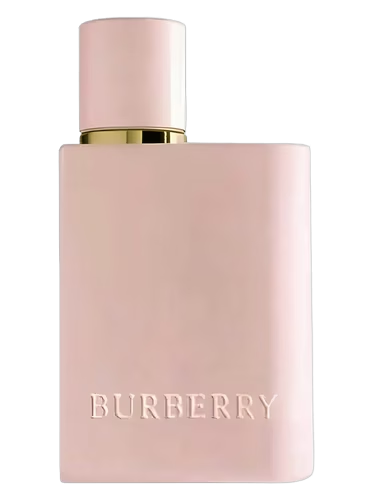
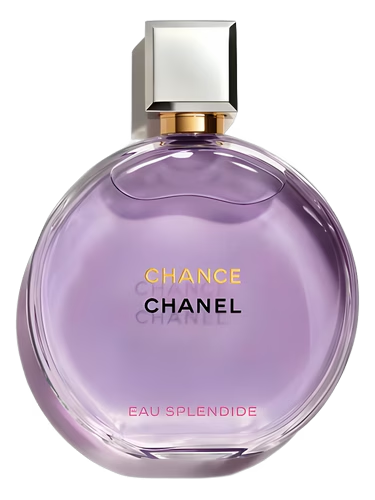
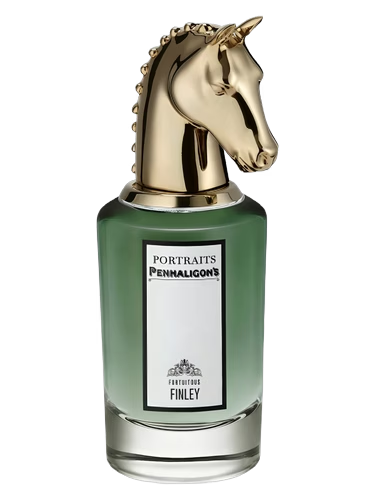
What is Chrysanthemum?
Chrysanthemum is a floral note with a deep cultural history in Asia, primarily used in niche perfumery to provide a sophisticated, herbal, and earthy character that differs from traditional sweet florals.What does Chrysanthemum smell like?
It offers a complex, naturalistic profile featuring green, vegetal facets and slightly musty, earthy qualities, often accompanied by subtle spicy or camphoraceous undertones.How is Chrysanthemum essence extracted?
In modern perfumery, essence is obtained through advanced methods like steam distillation, supercritical CO2 extraction, and innovative bioprocessing to capture its delicate aromatic molecules.What are some top perfumes featuring Chrysanthemum?
Notable fragrances include Serge Lutens De Profundis, Amouage Myths Man, Amouage Myths Woman, and Estée Lauder Private Collection.When is Chrysanthemum in season?
Chrysanthemums are quintessential autumn perennials that typically bloom from mid-August through mid-January, with their flowering triggered by shortening day lengths and cooling temperatures.