Fragrance Notes Are Layers Of Scent That Are Layered To Form The Final Fragrance. Fragrance Notes Are Categorised Into Three Main Elements Based On How Long They Take To Evaporate, And How Long They Typically Last Following Application: Top Notes, Heart Notes And Base Notes.
Christmas Tree or Flame Tree
A crisp, fresh, and intensely green woody note, capturing the aroma of pine and fir needles. It features bright herbal facets (clove, mint, rosemary) and a cool, camphorous core, supported by deep, resinous undertones of balsam and oakmoss. It is invigorating, clean, and long-lasting.

Origin & Extraction Of Christmas Tree or Flame Tree
The "Christmas Tree" or "Flame Tree" note, generally derived from materials like pine, fir, or certain evergreens (often synthetic blends capturing the crisp, resinous scent), is a relatively modern and atmospheric element in fine perfumery. While pine-related materials like turpentine and balsam have been used historically for medicinal and embalming purposes, their aesthetic application in luxury fragrance grew primarily during the 20th century. This note gained particular traction in the post-WWII era, coinciding with the rise of aromatic fougère and masculine chypres, where perfumers sought to evoke ruggedness, nature, and the invigorating scent of the outdoors.
The contemporary relevance of this note often ties to its unique ability to be both clean and deeply woody. It is frequently employed in niche and seasonal perfumery, leveraging its strong association with winter holidays or dense forests. Modern fragrances use this note not only for its brisk top notes but also for its camphorous, long-lasting resinous core, providing a sophisticated, cool, and green contrast to warmer elements like amber or spices, allowing for complex and evocative forest-themed compositions.
Extraction Methods of Christmas Tree
Historically, the aromatic essence of the Christmas tree (typically pine, spruce, or fir) was obtained through simple infusion and maceration techniques. Traditional methods involved steeping needles in hot water to create herbal teas or infusions for culinary stocks, as well as macerating them in hot vinegar or sugar syrups to capture their balsamic, resinous flavors. These methods were often used for both medicinal purposes and as a means to preserve the tree's health-giving properties after the holiday season.
In modern practice and commercial extraction, steam distillation is the primary method used to produce high-quality essential oils from the needles and twigs. Recent advancements have introduced sophisticated solid-liquid extraction techniques using phosphate-buffered saline (PBS) or methanol to isolate specific biologically active compounds (BACs), such as phenols and flavonoids. Additionally, innovative processes like supercritical CO2 extraction are now employed to capture the full, delicate aromatic profile of the tree while avoiding the thermal degradation associated with traditional boiling or steam methods.
The Christmas Tree or Flame Tree note, which captures the crisp, resinous scent of pine and fir, is utilized effectively across various fragrance categories. In the realm of niche perfumery, this distinct note adds authenticity to forest-themed compositions. For example, the fragrance Resina by Oliver & Co. is known to feature this resinous evergreen quality, appealing to those seeking a deep, woody, and natural scent profile.
- Other modern interpretations include Winslow's by Solstice Scents and Holiday Fir by Lost Tribe, both of which capture the nostalgic and invigorating scent of a freshly cut evergreen, making them popular choices for seasonal or evocative wear.
While often used for its fresh, masculine appeal in aromatic fougères, this note also appears in more experimental and modern releases. Lush's Smell of Freedom Part 1: Fire Tree showcases how the Christmas Tree note can be blended with other bold elements, providing a cool, camphorous core that contrasts against warmer notes. This versatility allows the note to bridge the gap between traditional woody scents and contemporary, atmospheric compositions.
- The note also sees use in general fresh and slightly spiced fragrance oils, such as those that blend the pine and balsam fir with secondary notes like apple and cinnamon to emphasize a festive, cozy holiday theme.
The "Christmas Tree" aroma is also found in fragrances that aim for a photorealistic depiction of the outdoors. Joie de Vert by Aftelier is another example where perfumers leverage the bright, herbaceous facets of the evergreen note to create a vibrant, green experience. Even mainstream lines occasionally utilize this profile, as seen with Oriflame's Amazing Paradise, demonstrating its broad appeal for adding a distinctive, clean, and refreshing woodiness.
Sustainability Of Christmas Tree or Flame Tree
Sustainability of Christmas Tree (Flame Tree)
- Adhering to strict government regulations, such as those by SERFOR in Peru, which prohibit cutting living trees and only authorize the collection of naturally fallen wood
- Implementing reforestation initiatives, including the planting of over 50,000 seedlings and native trees to restore degraded ecosystems and maintain biodiversity
- Supporting local socio-economic resilience by partnering with indigenous communities and families to ensure fair trade standards and ethical labor practices
- Promoting a circular economy by encouraging the recycling of real trees into mulch, lumber, or compost to prevent methane emissions in landfills
- Utilizing third-party audits and certifications to verify sustainable harvesting practices and ensure the long-term health of dry forestlands
- Advancing carbon sequestration efforts by preserving existing forests and planting native species that act as natural carbon sinks to mitigate climate change
Trivia
The Christmas Tree of Western Australia, Nuytsia floribunda, is a hemiparasite that uses specialized hydraulic "blades" to slice through the roots of neighboring plants, including underground cables, to steal water and nutrients.
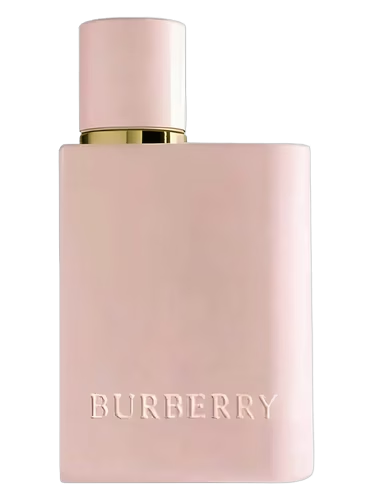
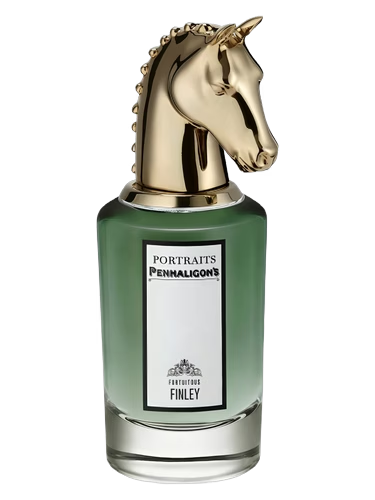
Most Popular Scents Using Christmas Tree or Flame Tree

What is the Christmas Tree or Flame Tree note?
It is a modern and atmospheric element in perfumery derived from evergreens like pine and fir, used to evoke the invigorating scent of the outdoors and winter holidays.What does the Christmas Tree note smell like?
It offers a crisp, intensely green woody aroma with bright herbal facets of clove and mint, a cool camphorous core, and deep resinous undertones of balsam and oakmoss.How is Christmas Tree essence extracted?
Modern commercial extraction primarily utilizes steam distillation of needles and twigs, though advanced methods like supercritical CO2 extraction are also employed to preserve its aromatic profile.What are some top perfumes featuring this note?
Notable fragrances include Lush Smell of Freedom Part 1: Fire Tree, Oriflame Amazing Paradise, Oliver & Co. Resina, and Solstice Scents Winslow's.When is the Christmas Tree in season?
The Western Australian Christmas tree typically blooms with vivid flowers between late October and January, while the note is often associated with the winter holiday season in fine perfumery.