Fragrance Notes Are Layers Of Scent That Are Layered To Form The Final Fragrance. Fragrance Notes Are Categorised Into Three Main Elements Based On How Long They Take To Evaporate, And How Long They Typically Last Following Application: Top Notes, Heart Notes And Base Notes.
Chocolate Flower
The Chocolate Flower (Berlandiera lyrata) offers a rich, delicate, and often bittersweet gourmand note in perfumery, characterized by a creamy, delicious cocoa aroma with subtle floral, earthy, and sometimes musky undertones. It captures the essence of fresh, natural chocolate fragrance.

Origin & Extraction Of Chocolate Flower
The Chocolate Flower (Berlandiera lyrata) offers a natural, delicate cocoa aroma, but its use, along with other edible notes, became prominent in perfumery relatively recently. While chocolate itself has a history dating back to ancient Mayan and Aztec civilizations, its incorporation into fine fragrances only began to flourish in the late 20th century as perfumers sought to create rich, comforting scents. This movement was part of the emergence of the "gourmand" fragrance family.
The debut of Thierry Mugler's *Angel* in 1992, which prominently featured synthetic notes recreating chocolate and caramel, is generally acknowledged as the launch of the modern gourmand genre. Since then, whether derived directly from the flower or recreated via synthetic accords, notes evoking chocolate, cocoa, and confectionery have become beloved ingredients. The Chocolate Flower note specifically provides a natural, slightly earthy alternative to these synthetic dessert notes, offering a sophisticated interpretation of the cocoa aroma.
Extraction Methods of Chocolate Flower
Historically, the aromatic essence of the chocolate flower (Berlandiera lyrata) was captured through the traditional method of enfleurage. This cold extraction technique involves placing the fragrant yellow blossoms near layers of purified fats, such as cocoa butter, which naturally absorb the flower's volatile chocolate-scented compounds over several days. This manual, labor-intensive process was favored for preserving the delicate, heat-sensitive molecules that give the flower its characteristic cocoa aroma.
Modern extraction methods have evolved to include advanced techniques such as solvent extraction and supercritical CO2 extraction. These contemporary processes use liquid solvents or pressurized carbon dioxide to efficiently isolate the aromatic oils from the petals, resulting in a highly concentrated absolute. Additionally, in culinary and pastry arts, the "chocolate flower" is often a physical creation made by melting and tempering real chocolate or using modeling chocolate, which is then shaped using techniques like dipping cold eggs, using silicone molds, or piping petals onto parchment paper to create realistic floral garnishes.
The Chocolate Flower note, with its delicate, earthy cocoa aroma, is a specialized ingredient that follows the massive success of the modern gourmand category. While many popular chocolate scents use synthetic cocoa and caramel accords, the Chocolate Flower offers a more refined, natural approach to this delicious scent profile. It provides a unique, slightly musky richness that stands apart from the overly sweet dessert interpretations, appealing to perfumers who seek depth and authenticity.
- One of the most famous examples of a fragrance utilizing a prominent cocoa/chocolate accord, which paved the way for notes like the Chocolate Flower, is **Thierry Mugler's Angel**. Launched in 1992, **Angel** is credited with launching the gourmand genre by blending patchouli with intensely sweet, edible notes of chocolate and caramel. This iconic use proved that chocolate notes could be sophisticated, enduring, and central to a high-end fragrance composition.
For a contemporary interpretation featuring cocoa that aligns with the richness of Chocolate Flower, **Tom Ford's Black Orchid** often incorporates deep, dark chocolate facets within its complex, luxurious structure. Although the specific use of the natural Chocolate Flower extract (Berlandiera lyrata) is still more common in niche and artisanal perfumery, these globally recognized scents demonstrate how a dark, creamy cocoa profile adds significant warmth, sophistication, and lasting power to a composition, making it a beloved element in modern fragrance design.
Sustainability Of Chocolate Flower
Sustainability of Chocolate Flower
- Promoting water-wise landscaping (xeriscaping) due to the plant’s high drought and heat tolerance once established
- Enhancing local biodiversity by serving as a pollinator-friendly species that attracts bees, butterflies, and birds
- Supporting naturalistic garden designs through its ability to readily reseed and naturalize with minimal human intervention
- Reducing the need for chemical fertilizers and soil amendments as it thrives in poor, well-draining, and sandy soils
- Providing a low-maintenance, sustainable alternative to high-water-usage ornamental plants in arid and semi-arid climates
Trivia
Chocolate flower (Berlandiera lyrata) genuinely smells like dark chocolate because it contains significant levels of the same volatile compounds found in cocoa, but it releases its strongest scent specifically between 6:00 AM and 10:00 AM, before dropping sharply by noon.
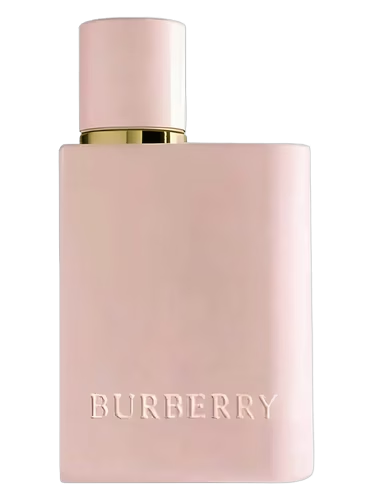
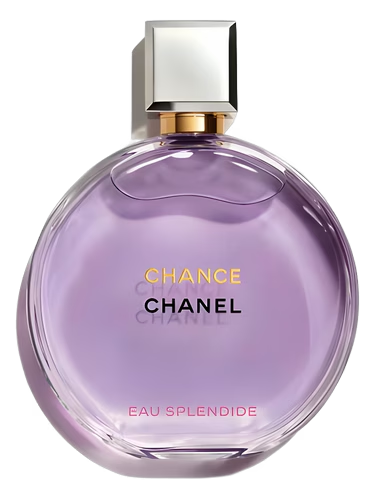
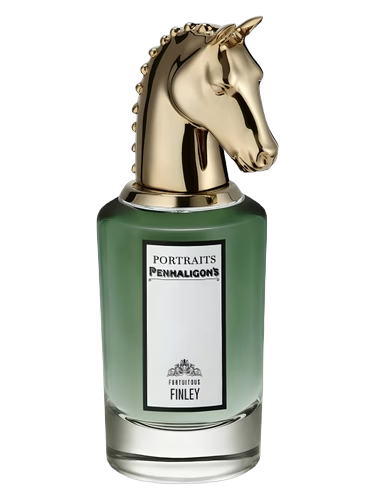
Most Popular Scents Using Chocolate Flower
What is Chocolate Flower?
The Chocolate Flower, or Berlandiera lyrata, is a wildflower native to the Southwestern United States and Mexico, prized in perfumery for its natural, delicate cocoa aroma.What does Chocolate Flower smell like?
It offers a rich, creamy, and bittersweet gourmand scent reminiscent of dark chocolate, often accompanied by subtle floral, earthy, and musky undertones.How is Chocolate Flower essence extracted?
Historically captured through enfleurage, modern methods now include solvent extraction and supercritical CO2 extraction to produce a concentrated absolute.What are some top perfumes featuring Chocolate Flower or cocoa accords?
Notable fragrances include Thierry Mugler's Angel, Tom Ford's Black Orchid, New Notes Musk Complexity, and Avon Soft Musk Delice Fleur de Chocolate.When is the Chocolate Flower scent strongest?
The flower releases its most intense chocolate fragrance in the early morning hours, typically between 6:00 AM and 10:00 AM, before the scent fades in the midday heat.