Fragrance Notes Are Layers Of Scent That Are Layered To Form The Final Fragrance. Fragrance Notes Are Categorised Into Three Main Elements Based On How Long They Take To Evaporate, And How Long They Typically Last Following Application: Top Notes, Heart Notes And Base Notes.
Chinotto
A complex citrus note offering a distinctly bitter and zesty profile, reminiscent of a Seville orange but with unique herbaceous and aromatic undertones. It features a bright, refreshing initial burst that settles into a darker, slightly spicy bitterness, often paired with facets of juniper, cardamom, and subtle amber.

Origin & Extraction Of Chinotto
The Chinotto, a small bitter orange native to the Mediterranean region, particularly Italy and Malta, has a history in flavor and scent dating back centuries, though its specific application in fine perfumery is a more modern phenomenon. Traditionally, the fruit is most famous as the key ingredient in the Italian soft drink of the same name, celebrated for its unique dark, complex, and bittersweet profile. This culinary and beverage heritage laid the groundwork for its recognition as a sophisticated aromatic ingredient.
In contemporary perfumery, Chinotto has emerged as a distinctive alternative to conventional bright citrus notes like lemon and bergamot. It is valued for its ability to deliver an initial, invigorating zest combined with a refined, darker bitterness and aromatic complexity, often featuring herbaceous and subtle spicy undertones. Its versatility allows it to be used in high-end compositions to add structure and longevity, integrating seamlessly into middle and base notes—a characteristic that distinguishes it from more volatile top-note citruses, providing a complex signature that is both fresh and enduring.
The primary method for extracting chinotto essential oil from the fruit's peel is cold expression (pressing), a process where the rinds of the mature or unripe fruits are squeezed to break the secretory glands and release the volatile oils. Historically, this was often a manual process involving the sponge method or simple mechanical presses. In modern production, this is achieved through industrial mechanical peelers that rasp or press the skin, sometimes using solvents like n-hexane to collect and concentrate the oil from the rinds.
For the production of chinotto beverages and liqueurs, the fruit is often processed through maceration or infusion. Traditionally, this involves roasting the fruits to caramelize them before macerating them in sugar syrup for several weeks. Modern industrial extracts are frequently produced by creating an aqueous-alcoholic infusion of softly pressed unripe fruits, which is then filtered and blended with other aromatic spices like cinnamon, rhubarb, and gentian to achieve a consistent bittersweet profile.
The small Italian house of Abaton is arguably the most dedicated to this unique note, building its entire Chinotto Collection around the fruit, a tribute to its hometown of Savona. This collection includes the joyful, caramel-vanilla gourmand scent Chinotto Gourmand; the fresh, green, and mysterious Chinotto Dark (which blends bitter chinotto leaves with juniper and absinthe); and the feminine, floral Fior di Chinotto, which showcases the delicate chinotto flower alongside orange blossom and rose.
A more mainstream but equally significant use is in the popular Acqua di Parma Chinotto di Liguria, a sophisticated citrus-aromatic fragrance that captures the essence of the Ligurian Riviera by blending chinotto's bittersweet notes with mandarin, jasmine, and musk. Another high-profile inclusion is in the modern designer scent Versace Eros Flame, where the chinotto note provides a bright, zesty, and slightly bitter opening to a warm, spicy composition.
Chinotto's complex profile, which can range from bitter and green to sweet and floral, makes it a favored note in contemporary niche perfumery for creating unique twists on classic structures. For example, the note is also found in fragrances like D.S. & Durga Italian Citrus, Novellista Calypso Fountain, and Agatho Parfum Olimpoverde, where it is celebrated for its ability to add a dark, aromatic depth or a sophisticated, long-lasting zest, bridging traditional fresh compositions with more modern, complex accords.
Sustainability Of Chinotto
Sustainability of Chinotto
- Preserving biodiversity by cultivating the Citrus myrtifolia, a rare citrus variety primarily grown in specialized microclimates in Liguria, Italy
- Promoting a circular economy by utilizing the entire fruit, with peels used for essential oils and juices used in traditional beverages and preserves
- Implementing organic farming standards and slow-food practices to ensure the long-term viability of historic chinotto groves
- Adopting energy-efficient cold expression techniques to extract essential oils while minimizing the carbon footprint of production
- Supporting local heritage and socio-economic resilience by maintaining artisanal harvesting and processing traditions
Trivia
The Chinotto plant was historically considered a lucky charm by 17th-century sailors, who carried it on their ships as a protective amulet against disease and danger at sea.
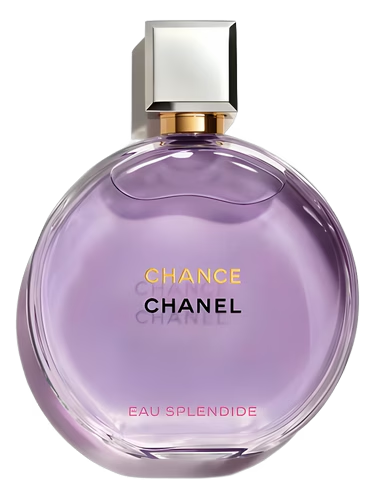
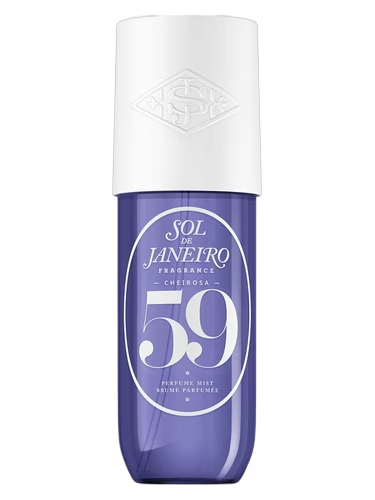
Most Popular Scents Using Chinotto

-
What is chinotto?
Chinotto is a small, bitter citrus fruit from the Citrus myrtifolia tree, primarily grown in Italy and Malta, and is famous as the key ingredient in a popular Italian bittersweet soft drink. -
What does chinotto smell like?
It offers a complex, bittersweet aroma with zesty top notes, herbaceous and aromatic undertones, and a dry, woody finish reminiscent of dark marmalade or Seville orange. -
How is chinotto oil extracted?
The essential oil is primarily obtained through cold expression (pressing) of the fruit's peel, a process that breaks the secretory glands to release the volatile aromatic compounds. -
What are some top perfumes featuring chinotto?
Notable fragrances include Acqua di Parma Blu Mediterraneo Chinotto di Liguria, Abaton Chinotto Dark, Abaton Chinotto Gourmand, and Versace Eros Flame. -
When is chinotto in season?
The chinotto tree typically blooms in winter and spring, while the fruit is harvested from mid-September through December to capture its peak aromatic qualities.