Fragrance Notes Are Layers Of Scent That Are Layered To Form The Final Fragrance. Fragrance Notes Are Categorised Into Three Main Elements Based On How Long They Take To Evaporate, And How Long They Typically Last Following Application: Top Notes, Heart Notes And Base Notes.
China Rose
China Rose offers a complex Oriental Floral profile. It begins with bright fruity top notes of Peach and Raspberry, accented by herbaceous Sage. The heart is defined by classic Rose, softened by Violet and Geranium, and warmed with a spicy hint of Clove. The scent finishes with a rich, velvety base of Amber, Vanilla, and Patchouli.

Origin & Extraction Of China Rose
China Rose, originating from Asia and belonging to the *Rosa chinensis* species, has a significance in perfumery that is distinct from the classic Western roses like Rosa Damascena (Damask Rose) or Rosa Centifolia (Centifolia Rose). While traditional rose notes were foundational to perfumery for centuries, China Rose's impact is often more related to its use in complex, exotic, and Oriental compositions, particularly as fragrance development expanded to incorporate non-European floral elements. It is generally recognized not just for its scent but also for its cultural association with silk, porcelain, and long-distance trade routes, linking it to themes of luxury and the Orient in scent.
In modern perfumery, the China Rose note is rarely used as a singular, raw extract but is often interpreted via specific accords to capture its unique profile, which is sometimes described as softer, slightly fruity, or less overtly 'classic' than its European counterparts. Its relevance today lies in providing a complex, historical, and slightly stylized floral heart, blending traditional rose characteristics with the specified fruity (Peach, Raspberry) and spicy (Clove) nuances mentioned in its odor profile. It helps create the rich, velvety, and multi-faceted Oriental Floral structure it is known for.
Extraction Methods of China Rose
The extraction of China Rose (Rosa chinensis) essence and active compounds historically relies on simple aqueous methods, such as boiling petals in distilled water to create natural pH indicators or medicinal decoctions. Traditional techniques also include maceration in honey or syrups and manual crushing with a mortar and pestle to release juices. For medicinal use, traditional decoction involves boiling the dried buds or petals multiple times to create concentrated extracts.
Modern commercial and scientific methods have evolved to include solvent extraction using ethanol or ethyl acetate to isolate specific antioxidants like polyphenols and flavonoids. Advanced industrial techniques now utilize steam distillation to produce essential oils rich in citronellol and geraniol, while innovative approaches such as ultrasonic-assisted extraction and freeze-melting cycles are used to refine natural color pigments. For standardized extracts, water-only extraction processes are employed to maintain high levels of polyphenols for pharmaceutical and nutraceutical applications.
The China Rose note, valued for its complex and slightly fruity Oriental Floral profile, is a feature in several modern niche and artisanal fragrances seeking a sophisticated twist on traditional rose. This note provides an intricate floral heart that bridges bright top notes with rich, velvety bases.
- Among the fragrances utilizing China Rose is Baron by Pana Dora (2019), a unisex scent that showcases the complexity of this Asian floral.
- The note also appears in Arena by Somens (2020), contributing to its exotic and complex character.
Niche perfumery frequently highlights the unique qualities of China Rose to create memorable, evocative compositions. These scents often rely on the note to convey themes of luxury and distant cultural associations, moving beyond the standard European Damask or Centifolia rose profiles.
- A more recent example is Rosa Hiemalis by Rosae Virtus (2023), which features China Rose in a modern context.
- Another noteworthy use is in Song Of Everlasting Sorrow by Auphorie (2020), where the note likely contributes to a dramatic, multi-layered Oriental structure.
The use of China Rose extends across various fragrance types, from unisex to female-focused compositions, demonstrating its versatility when interpreted through different accords. Its slightly softer, sometimes sweeter profile makes it ideal for blending with gourmand or green notes for contemporary appeal.
- The note can also be found in fragrances like Lake Maden (Дева Озера) by Kamila Robinson (2023), a female perfume.
- Other examples include China Rain (Remedy Northwest, 2018) and Gümüş (January Scent Project, 2022), illustrating the China Rose note’s relevance in creating sophisticated, distinct, and highly sought-after modern perfumes.
Sustainability Of China Rose
Sustainability of China Rose
- Promoting ecological resilience by planting roses to prevent soil erosion and anchor soil with robust root systems
- Supporting local biodiversity by attracting and providing habitat for key pollinators like honey bees and butterflies
- Implementing organic gardening practices such as using plant materials in compost piles to naturally enrich soil health
- Reducing chemical dependency through Integrated Pest Management (IPM) techniques, including the use of beneficial insects like ladybugs
- Advocating for environmental sustainability and conservation to protect natural resources and promote harmony between humanity and nature
Trivia
Every modern repeat-blooming rose in existence today traces its genetic history back to the China rose, which revolutionized Western gardens in the 18th century by introducing the ability to bloom multiple times a year rather than just once.
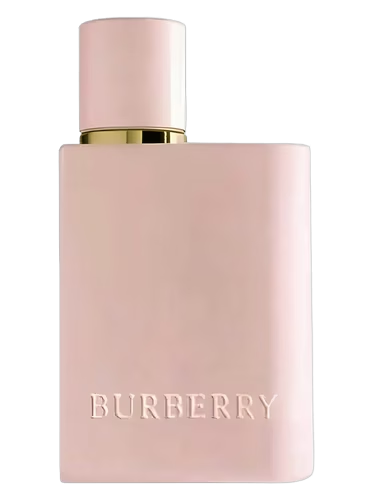
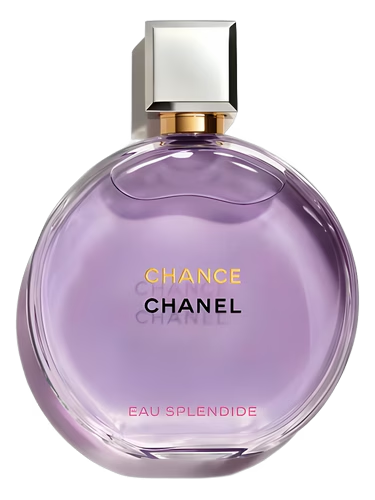
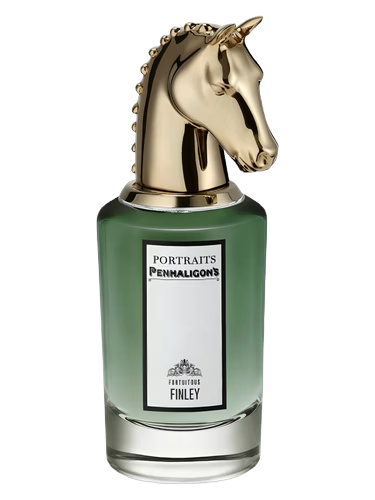
Most Popular Scents Using China Rose
What is China Rose?
China Rose, or Rosa chinensis, is a species of rose native to Southwest China that is highly valued in perfumery for its complex Oriental Floral profile and historical significance as a repeat-blooming ancestor of modern roses.What does China Rose smell like?
It offers a sophisticated, multi-faceted aroma characterized by a velvety rose heart blended with fruity accents of peach and raspberry, spicy hints of clove, and a rich base of amber and vanilla.How is China Rose essence extracted?
In modern perfumery, its essence is primarily obtained through steam distillation to produce essential oils rich in aromatic compounds or via solvent extraction to isolate specific floral characteristics.What are some top perfumes featuring China Rose?
Notable fragrances include Floris China Rose, Tom Ford Rose de Chine, Auphorie Song Of Everlasting Sorrow, and Pana Dora Baron.When is China Rose in season?
China Rose is a celebrated repeat-bloomer that typically flowers from late spring through autumn, often continuing until the first frost in warm and temperate climates.